Shells and Summer Days

IMG_20200518_181650

I started to add tags to my photo and realised that most things associated with the beach start with the letter ‘S’ and I’d barely scratched the surface.  Sand, sea, swimming, shells.  I paused at shells because a sunbeam tinged my glass bowl of seashells which holds countless memories.

… I drifted away… the smell of sunscreen and the feel of sand sifting through my fingers… one day I will take those shells back to the ocean…

In case you missed my front page Photo Of The Week, below I have reproduced the wording which accompanied a close-up photo of my shell collection.  More scientific than personal but nonetheless I found it fascinating:


SHELLS are made of calcium carbonate, in the mineral form of calcite or aragonite.  Animals build their shells by extracting the necessary ingredients—dissolved calcium and bicarbonate—from their environment.  As the animal grows, its home—the protective shell that surrounds it—must get bigger, and so they grow their shells layer upon layer, creating ‘growth-bands’, or growth increments, within the shell.

“Some of these growth increments are visible on the external surface of the shell, while others are only visible in the internal structure.  But the interesting thing about the growth increments is that their width, or thickness, is affected by environmental conditions, like temperature.  Some growth increments are a reflection of tidal cycles, some show annual periodicity.

“So the series of growth increments within a shell are essentially a record of the animal’s lifetime and, similar to the study of tree-rings, some scientists study them to make interpretations about the environment where that animal lived and grew.  The oldest known individual animal lived in a shell—a specimen of the shellfish Arctica islandica has been documented to be 507 years old.”

For colours, shapes, biodiversity visit Academy of Science
https://www.science.org.au/curious/earth-environment/sea-shells

FOSSIL collector, dealer and palaeontologist Mary Anning (1799 –1847) was the inspiration for the tongue twister “She sells sea shells by the sea shore” from the original song written in 1908 by Terry Sullivan relating to Mary Anning’s beach-combing lifestyle.  Anning is known for the important finds she made in Jurassic marine fossil beds in the cliffs along the English Channel at Lyme Regis in the county of Dorset in Southwest England.

The fascinating truth behind the old tongue twister
https://www.littlethings.com/she-sells-seashells-meaning

Gretchen Bernet-Ward

IMG_20200518_182427

Shortbread Surprise in Self-Isolation

When you are stuck at home for weeks on end, the stuff and junk around your home can become unbearable.

It does at my place.

Shelves seem crowded, cupboards appear to bulge, clothes hang on available doorknobs, and too many cardboard boxes hold bits and pieces of my memories.

IMG_20200518_154505

During my Covid-inspired clean-up, I unearthed one particular item decades old.

DRUM ROLL PLEASE, MAESTRO…


IMG_20200504_105537

McKENZIE’S RICE FLOUR SHORTBREAD RECIPE

225g plain flour
1 pinch salt
115g rice flour
115g castor sugar
225g butter

Sieve flour, rice flour, sugar into basin, rub in butter and knead until smooth paste formed.  Turn on to floured board, make shape or shapes as desired, prick with a fork.  Place on cold greased slide, cook in a slow oven ¾ hour to an hour, until a pale brown.

MY FATHER’S FAVOURITE SHORTBREAD RECIPE

Reproduced in original style from my mother’s PWMU Cookery Book 1976
Printed in Australia by Simpson Halligan Co Pty Ltd
Distributed by Jolly Book Supplies, Brisbane
Twenty-first edition revised and enlarged with over 200,000 copies issued

Mix 227g (1/2 lb) butter and 113g (1/4 lb) fine white sugar or icing sugar; add pinch salt and .45kg (1 lb) plain flour; knead all well together; roll out to the thickness of about half an inch, cut into rounds or finger lengths; prick with fork.  Note 340g (¾ lb) flour and 113g (1/4 lb) rice flour may be substituted for .45g (1 lb) flour.  Bake in slow oven about 40 minutes until fawn colour.

IMG_20200528_150249

Bought new rice flour

Put the kettle on

Time for a cuppa!

Gretchen Bernet-Ward

Tale of a Cat Refugee

IMG_20200406_111232

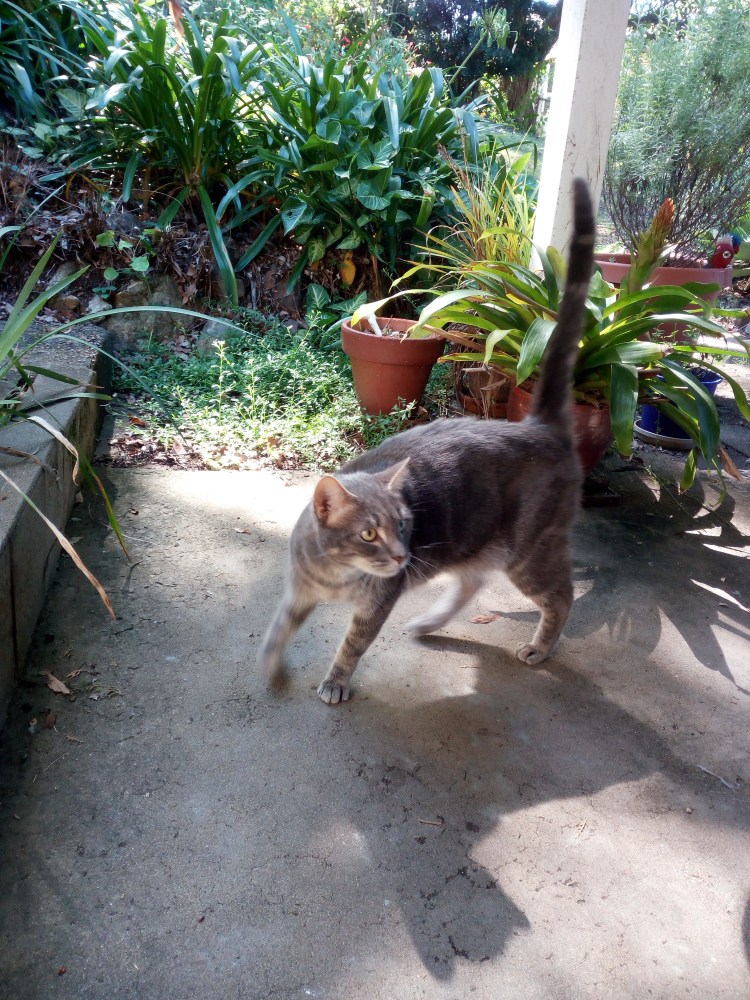
The cat stared through the screen door as though Darth Vader was chasing him.  “You are my only hope, G-Obi-Wan Kenobi.”  I doubted that, but knew in these pandemic-plagued times there are thousands of pets being abandoned just when a person-pet bond is needed the most.

The day before materialising at our back door, this grey cat had meowed in a distressed and pitiful fashion outside our house.

Like a feline Romeo, he looked up at our balcony hoping for a comforting word and perhaps a tasty treat…

I had seen him doing similar acts of desperation at other houses.  One evening when I left to buy groceries, he ran across the road in front of my car.  “That darn cat,” I muttered.

And then later, well, I leaned over and a small piece of sausage happened to hit the concrete below the balcony—it was pounced upon and disappeared immediately.

The cat licked his lips and the glint in his eye said “Foolish move, human”.

IMG_20200406_103853

Next morning he was waiting outside the door as I filled the kettle with water and popped bread into the toaster.

Tentatively he began to meow.  Gradually he started a high-pitched, upset-cat mewling.  As he wailed, he placed a paw on the screen door.  He started twanging on the metal mesh.

One claw at a time.  Ping, ping, ping…

The noise reverberated around the metal door frame.  I told him to cut it out or he might impale himself “Hanging by one paw won’t get you sympathy”.  Ping.  Ping.  Ping.  He timed it just right.  Every.  Time.

I gave him some cooked chicken and he practically breathed it in.

Our late lamented dog would have been disgruntled to see a cat lapping at her water bowl.  But I think she would have appreciated the irony; the ceramic pattern of dogs and bones.

It became apparent that he was desperate to come inside.  Just what I did not need.  An inside cat.  With my allergies.

He was quickly named Jo-Jo.  As we try to navigate the back door, you may recall The Beatles song and understand why this name stuck.

As befitted a homeless feline, Jo-Jo was lean with dull, dusty fur.  I visited the local pet supplies warehouse and came out with a heavy carry bag and a lighter bank balance.

Nothing fancy, I said, he’s not my cat…

One week later and Jo-Jo is still yowling at the back door and pinging the mesh screen.

But our stray is sleeker, his meow is less anxious, and his is more accepting of the morning-evening no snacking between meals timeline.  He doesn’t have the luxury of grazing because other creatures, like ants and possums, are partial to cat food.

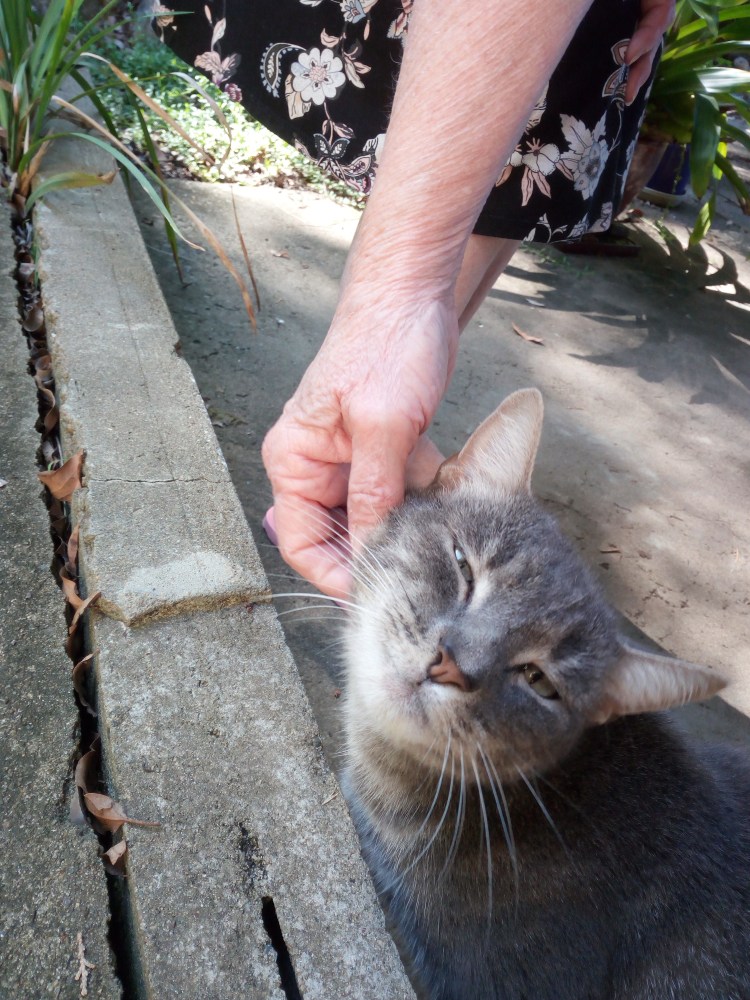
Jo-Jo is partial to a chin-scratch.

IMG_20200406_103958

As I type this today, Jo-Jo is languishing on our doormat in the warm autumn sun, fur gently ruffled by the breeze, safe in the knowledge that there is a cat cubby to snuggle into when the evenings grow cooler.  Dozing, sleepy now…

Food source assured; a smile curves as he sleeps…

Yesterday was different.  I saw a mysterious lump in the grass of our backyard.  A blob of something which blowflies were finding mighty interesting.

It was a bird, a dead bird.  Minus its wings.  A murder scenario was easy to reconstruct, but hard to fathom.  It looked more like a destructive act than a burning desire for a fresh meal.  The next bird was brought to the backdoor as an offering.

A decision will have to be made on the future of Jo-Jo.  Find his owner?  Find a foster home?  Send him to the animal shelter?  Take him to the vet for a microchip scan?  Cat-proof the house…?  Time will tell.

A discovery has already been made—our stray waif is a ‘she’ not a ‘he’.

Gretchen Bernet-Ward


Information

RSPCA Australia COVID-19 Response

Like all of us, the RSPCA is closely monitoring the coronavirus/COVID-19 situation.  We’re very aware of the possible risk to our people and impact on animals.  It’s possible that minimising this risk may require some changes to our operations.  For helpful advice to avoid inconvenience, please check our website and social media (Facebook, Twitter) regularly.

Information on COVID-19 and Companion Animals

There is no evidence that companion animals play a role in the spread of this human disease or that they become sick if they are exposed to the virus.  However, you should stay informed about how to minimise the effects of self-isolation or hospitalisation on your pets.  View all articles related to COVID-19 on the RSPCA Knowledgebase.


Email – Aunt Jenny’s Doll

Hello M,

Attached are photos of Aunt Jenny’s doll.

I inherited Jenny’s doll.

There’s a special clause in Jenny’s will regarding said doll.

The doll must go to me.

But carrying no explanation.

Jenny’s doll is at least 60 years old.

Our cousin JR mailed the doll to me.

In pink tissue paper in a cardboard box.

I don’t remember the doll.

I don’t remember her name.

A happy childhood anecdote linked to this doll?

JR does not know details.

Just that Jenny always wanted me to have the doll.

JR does not know the doll’s name.

Her temporary name is Margaret.

The name of my childhood friend.

Gretchen and Margaret mean the same thing.

We both wore bows in our hair.

All our aunts are gone now.

Would anyone in the family know the story?

Did I spend my toddler years with this doll?

She must have been as tall as me then.

But not cool for a teenager.

Poor doll, re-wrapped in pink tissue paper.

Wearing a boring flannelette nightie.

What shall I do with her now she’s mine?

Love Gretchen


Email to My Cousin © Gretchen Bernet-Ward
Friday 3rd April 2020

Old Books – Timeless or Laughable?

It is time to attack my bookberg.  Book sorting!  Only another book lover will know this task is emotional, dusty work with frequent trips back and forth to the reject box to retrieve a volume you just can’t live without.

I did not factor in the impact of nostalgia.  As I sifted and culled, I was overwhelmed by the memories which came flooding back.

Relating to the photograph above, here’s a small sample of the tip of my bookberg:

  • Those aching muscles as I tried to emulate actress and fitness guru Jane Fonda using her inspiring 1981 ‘Workout Book’.  The less said about the front cover the better.


  • My 1986 major motion picture tie-in ‘Out Of Africa’ by Karen von Blixen was purchased after I saw the movie because I wanted to see how much the movie had altered the book.  Well, let’s just say it was movie mush.


  • ‘Finest Moments’ the hilarious 1975 antics of Norman Gunston (Australian TV comedian Garry McDonald) were clever but now make me cringe.  Gunston dared to go where no journo had gone before.  McDonald was a good scriptwriter but.


  • I tried and tried to read this 1984 paperback of Aldous Huxley’s ‘Brave New World’.  Even now as I look at its yellowing pages (it cost me $4.50 back then) I don’t think I will ever read it.  Most of it has come true, right?


  • The small yet 383-page book ‘Angels & Fairies’ written 2005 by Iain Zaczek was a surprise.  A gift, seemingly unread, it contains works of art from famous British painters in 1800s Victorian era.  Such luminous illustrations, if ever there was a misnamed book, it’s this one!  Nothing cutesy about it.  A serious study for art aficionados.


IMG_20200302_183938
Need I say more? Heavy old coffee-table books, classic black and white photographs with depth and clarity, each one telling a story.

During re-reading and culling, three things struck me immediately.

  1. The smallness of the paperbacks.
  2. The density of the print.
  3. The amount of information.

I guess smaller books meant cheaper to print, easier to handle.
Because I now need reading glasses, the print looks tiny to me.
Does excessive screen time influence the way we read off screen?
We read less content, larger font and wider spaces today, because of what?

Several of my earlier paperbacks have bios, dedications, illo plates, notes, etc.
Or a pull-out page so you could fill in your details and mail to the publisher to receive the author’s complete booklist.

Fortunately the only thing which hasn’t changed is real bookshops.
They may be fewer in certain countries but they are alive and well where I live.

Getting back to those rejected books, I have cardboard boxes (ah, that smell of cardboard) to pack them in and send off to University of Queensland for their Book Fair.

I was mightily impressed with UQ book wrangling skills, particularly after I visited their Book Auction and saw frantic bidders making the value of old books rise higher and higher until the final bid, the hammer fall, the cry of delight from the successful bidder.

Blogging Image 04My three-part series of UQ Book Fair visits last year—brilliant photos—

PART ONE
https://thoughtsbecomewords.com/2019/04/28/rare-book-auction-and-alumni-book-fair/

PART TWO
https://thoughtsbecomewords.com/2019/05/05/rare-book-auction-and-uq-alumni-book-fair-part-two/

PART THREE
https://thoughtsbecomewords.com/2019/05/08/rare-book-auction-and-uq-alumni-book-fair-part-three/

This post is pure procrastination.  But look at this book on Rome, I was a little bit in love with the professor…

Gretchen Bernet-Ward

IMG_20200301_132250
ROME OF THE CAESARS by Leonardo B. Dal Maso, Professor of Archaeology and Ancient History, Roma. An autographed copy September 1983. Bonechi-Edizioni ‘Ill Turismo’ Via dei Rustici, 5-50122 Firenze. FRONT COVER shows reconstruction model of the centre of Rome in the age of Constantine by architect Italo Gismondi. GOLDEN COIN was issued by Emperor Hadrianus. WAX STATUE personal collection.

The Very Hungry (Ugly) Caterpillar

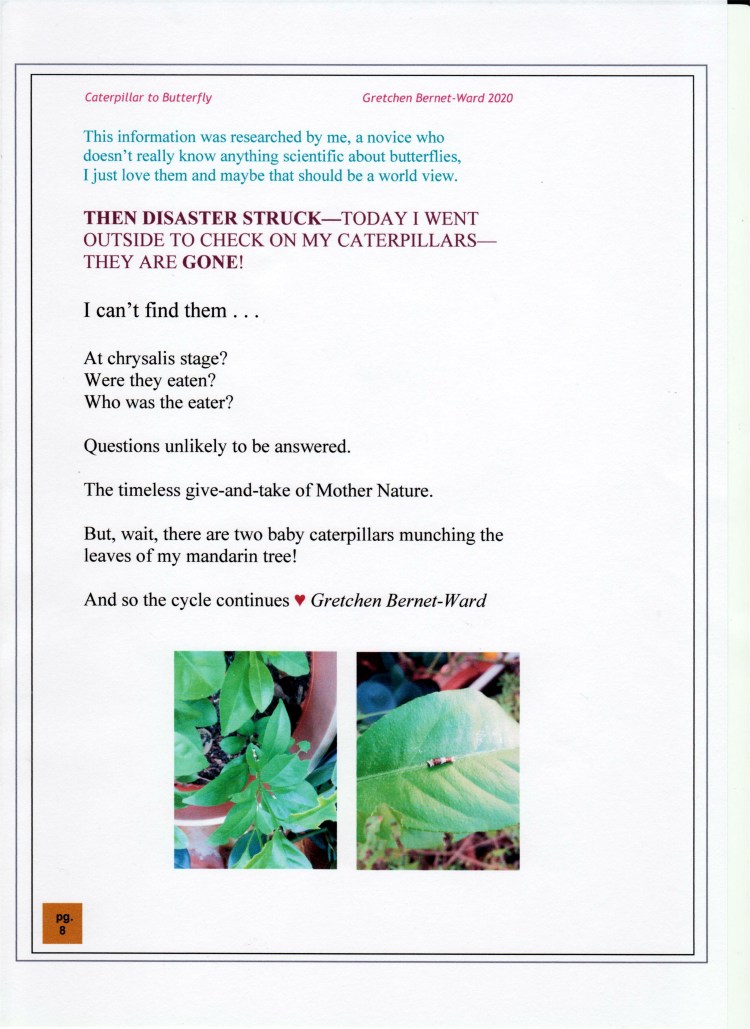
A traumatised mandarin tree, the insect world in disarray, a true caterpillar tale with an accidental cliffhanger. 

Read what happens when two very hungry, very ugly caterpillars dine sumptuously on a modest little mandarin tree.

The long dry spell had finally broken, the tropical summer rains poured down, green vegetation burst forth and so did the insects.

Here is my report.
Gretchen Bernet-Ward Butterfly Caterpillar 01Butterfly Caterpillar 02Butterfly Caterpillar 03Butterfly Caterpillar 04Butterfly Caterpillar 05Butterfly Caterpillar 06Butterfly Caterpillar 07Butterfly Caterpillar 08Butterfly Caterpillar 09

Obviously the hatched butterfly photographs were not taken by me but never say die. GBW.

IMG_20200316_145804
There are five little Orchard Caterpillars on the leaves of this mandarin tree. Protection is in place so hopefully they will survive this time!

My Wall Calendar Fetish

IMG_20200104_181914
The master of mysterious…

Do you keep a favourite wall calendar?  Do you keep an image from a favourite wall calendar?  Do you even buy a wall calendar?  Well, I do.

Each year late in December I peruse the newsagents and stationery stores for The One.  The wall calendar with good images and good size squares to write in.  The paper is also important, not too shiny otherwise the ink smudges, and not too thin otherwise the pages tear and have a tendency to flop forward.  I then have to resort to sticky tape to hold old months out of the way of a new month.  Sometimes I use glider clips (paper clips, metal things bent to slide over paper and hold it together) or if I don’t like the calendar much, I glue the old months together.

Occasionally it annoys me where the hole is punched in some wall calendars because it can affect the hanging process on my coat-hook (in the bedroom) the nail (in the kitchen) and the picture hanger (in the study) and enlarge the hole.

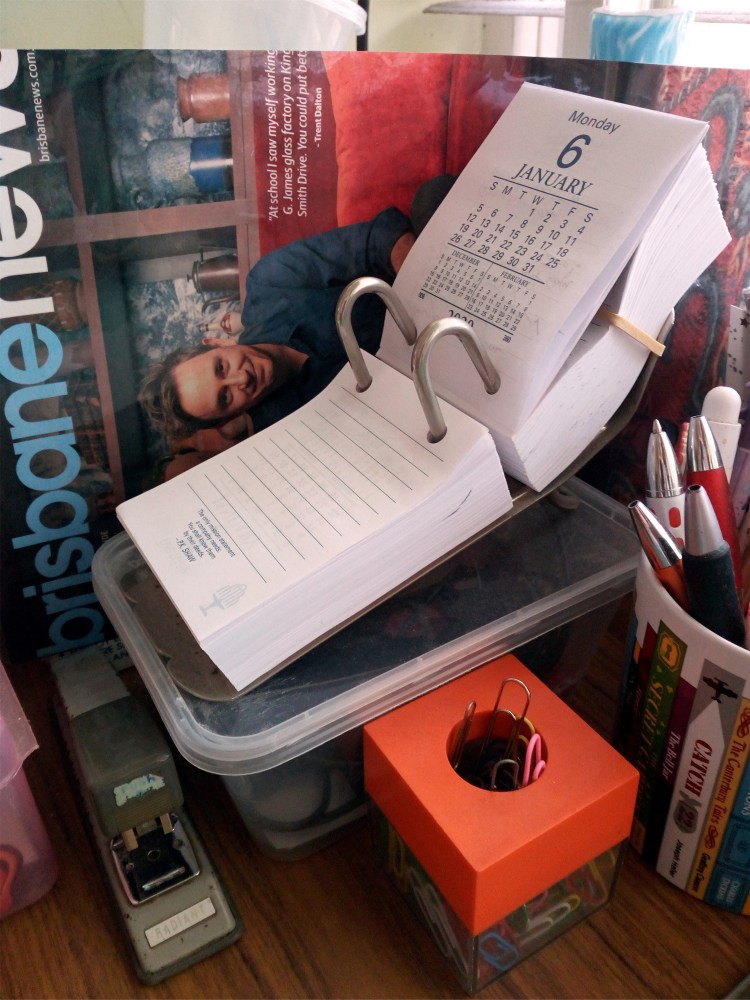
One of the calendar ‘things’ which has been a major item on our Christmas list for many, many years is a Bunch-Of-Dates.  A delightful play on words (perhaps conjured up by a light-hearted printer) it consists of a shaped metal frame which goes through the two holes in a square block of paper containing 365 day leaflets plus a tiny yearly calendar and national holiday dates.  An added bonus is daily quotations from inspiring people.

This pre-internet invention sits on office desks and when the workers begin their day, they flip over yesterday’s date to reveal all the chores they have to do today.  Every job I ever worked in from 1970s onward had Bunches-of-Dates sitting on staff desks or the reception desk.  Yes, I actually still use this old-fashioned device and it is right beside me on my left-hand side.  The date at the top (see photo) with lines at the bottom.  Yesterday, Sunday 5th January 2020, it had approximately seven things written on it, e.g. shopping for a light bulb and To Do things like fill bird bath with water.

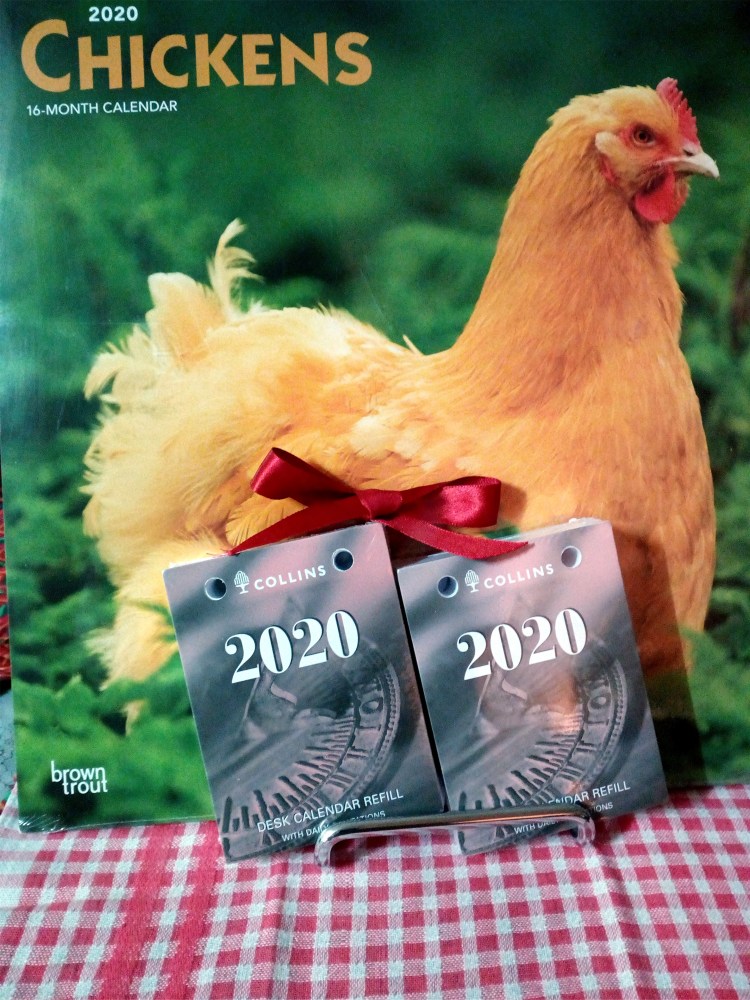
You can buy the Bunch-Of-Dates refills for a couple of dollars (a range of office calendars and diaries are printed by Collins Debden) and every year after 1st January, they are renewed across the country.

If they are not used by lazy coworkers who try to remember things and when they can’t, they blame it on you for not reminding them, their blank Bunch-Of-Dates can be used as scrap paper for note-taking.  I sometimes find some thin old wire, like a twist-tie, which I thread through the holes and firmly bind 365 unused days together.  Just the right size for cryptic notes to colleagues or wayward family members.


IMG_20200106_081409
Happy New Year 2020…

Lately I have taken to keeping the last year’s used Bunch-Of-Dates (with exclamation marks, little drawings, council reminders) because sometimes I jot down an important number and don’t transfer it over to my Contacts file.  At this point, I must mention that I have an electronic calendar.  It is most ingenious but no matter how ingenious, it still needs input.  I am very sparing with what I type into my electronic calendar otherwise a lengthy tirade will pop-up at me in the morning when I least expect it.

Another thing; I never ever put stuff on my mobile phone.  Silly, I guess, but they need to be charged and friends say ‘my battery died’ whenever they are late.  An old-school piece of paper in your pocket will never let you down.  That, and a pen, is all you need to survive in the world of words.

But, you ask, what about keeping your favourite calendar photographs?  Goodness, I don’t know where to start!

I have many beautiful scenery images, all totally scribbled on the back, all years old.  But I love them and I often remember the month that went with them.  Except for the one I framed which is three elephants and their passengers splashing down a river in a jungle.  The shallow water is jade green, as vivid as the lush tropical foliage.  There is a feeling of both pleasure and menace.

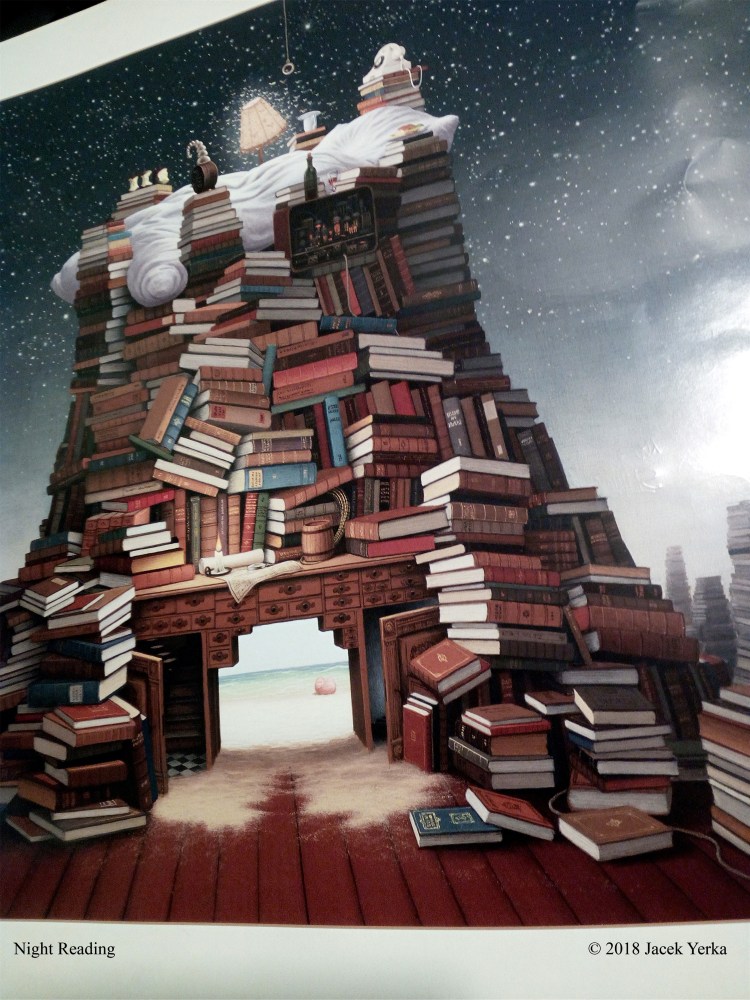
Anyway, a person in my familia has taken a shine to Polish artist Jacek Yerka’s fantasy style and I began to enjoy the ones where he puts hundreds of bookstacks in quirky settings.  I kept this one (see above) perhaps not his strangest, but I get a lot of pleasure out of it.

Every so often I have a surplus calendar, a gift or whatever, so I hammer in an extra nail and hang it up, not as prominent as those I love but I give it hanging space.

And this year?  Oh joy, this year I discovered an Australian Jumbo Big Huge calendar with gigantic squares!  It will take anything I wish to write on it and leave room for more—the down side of this extravagant calendar is no pictures.  There is a tiny strip along the top showing a beach or mountain or city but nothing else.  And one of these images is repeated, not a good look in my eyes.  Ho-hum, can’t have everything.

In the kitchen my next favourite is Chickens, not cooked, just hens displaying glorious feathers in beautiful country settings.  Pecking through, it looks like April hens are ahead of the flock photogenically.  I will have to let you know who gets preserved at the end of the year.  Just a minute, I’ll write a note on my calendar…

Gretchen Bernet-Ward


IMG_20191224_173424
This is not an advertisement, just a bit of calendar styling.

Toadstool 3-Day Lifespan

DAY ONE

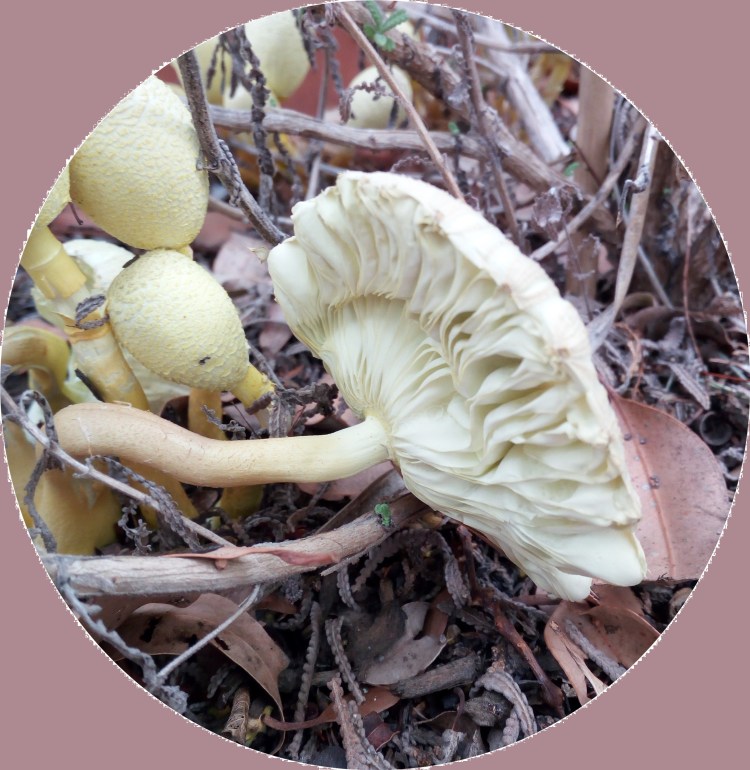
My lavender plant has been struggling in the smokey, dust haze, drought conditions which Queensland faces this Christmas.  We recently had one day of light rain and next morning I went outside to see these amazing toadstools which had spring up overnight.

Here’s what my never-say-die French Lavender planter looked like on Day One.

IMG_20191215_175142

I did not, and still do not, know what particular type they are but I am sure from Don Burke’s description that they are definitely toadstools.  The one in the middle photo (above) has a small split.  When I touched it to see how soft it was, it split and smelled musty.

Here’s what Don Burke, our Aussie gardening guru, says—

MUSHROOM AND TOADSTOOL COMPARISON INFORMATION https://www.burkesbackyard.com.au/fact-sheets/in-the-garden/gardening-tips-books-techniques-and-tools/mushrooms-and-toadstools/

DAY TWO

IMG_20191215_175026

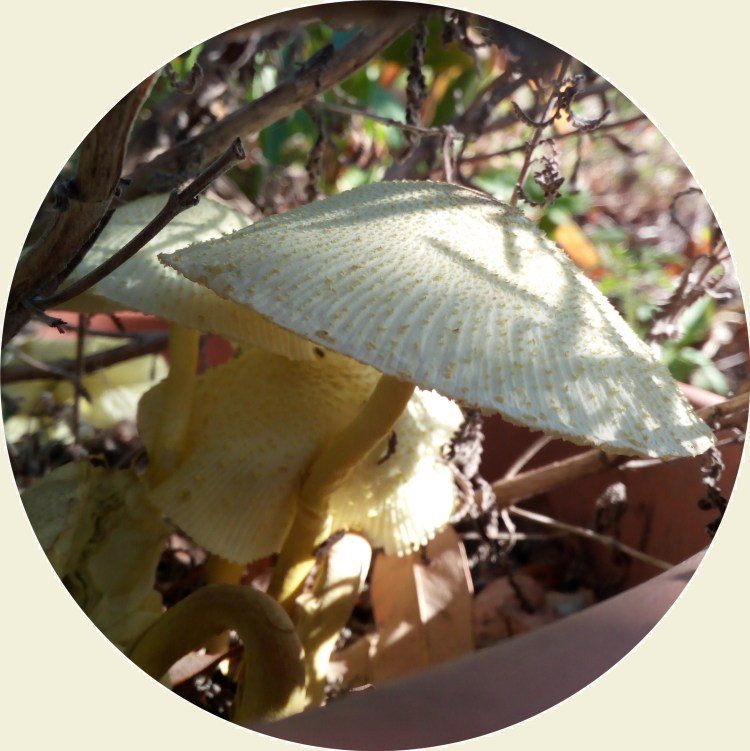
A parasol perfect for a pixie…

IMG_20191216_074416

Thin stem and ridges on the cap – not a mushroom…

The cracks are showing…

IMG_20191216_074315

You can see they are getting a bit ragged as the afternoon wears on…

DAY THREE

Meltdown, a sad sight…

IMG_20191217_082200

Looks like they have deflated in the heat! 

To be fair, at one stage the temperature did reach 43 degrees Celsius – approx 100 degrees Fahrenheit.  Over the next couple of days the caps and stems turned brown, rotted down, then were absorbed back into the compose and leaf-litter in the planter.

Will they rise again?

They are ordinary-looking in comparison to European toadstools.  Contrary to popular belief, not all toadstools are poisonous but I would not eat them.  Fungi grows indiscriminately, open ground and nooks and crannies.  This type had a brief fling with my lavender yet its spores may linger.

What is their purpose?

Interestingly, plants have fungal partners.  Our native eucalypt gum tree has underground mycorrhizal (symbiotic) partners for good health.  Remember fungus puff balls as a kid?  They are one of many varieties of above-ground seed dispersal units.  The Australian National Herbarium has great info for nerds like me!
Check https://www.anbg.gov.au/fungi/what-is-fungus.html 

If you like fungi (or you’re a fun guy) I will include a diagram so that when you are strolling across a paddock, or rambling through a wood, you can recognise what you are about to step on.

Gretchen Bernet-Ward

My Sisters-in-Crime Membership Card

IMG_20191029_133057
I kept the postage stamp but the envelope has been recycled.

How is this for the personal touch!  Sisters-in-Crime mailed a white 9×4 envelope with my address neatly printed on it and a postage stamp stuck in the corner.  The stamp, if you are interested, commemorates 50 years since the moon landing.  Australia had a hand in the Apollo 11 lunar module ‘Eagle’ landing on the moon.

Back to the goodies in the envelope:

A welcome letter from Carmel, Secretary & National Co-convenor.

Diary Dates and information on 26th Scarlet Stiletto Awards.

Leaflet for ‘Murder She Wrote’ Readers and Writers Festival to be held in Tasmania under the title ‘Terror Australis’ .

Bookmark stating all the wonderful things Sisters-in-Crime can offer me.

Info on bookshop discounts, panels, discussions, debates, tours, launches, festivals.

And, of course, my Membership Card!

Every department store in the world wants to give you a plastic card but this is a Crime Card.  Not plastic; written on by hand; the nostalgic beauty of it.

Who or what are the Sisters-in-Crime?  Let me fill you in—

Sisters in Crime Logo 03 2019Sisters-in-Crime is a world-wide organisation but the Australian chapter was launched at the Feminist Book Festival in Melbourne in September 1991, inspired by the American organisation of the same name, which was founded in 1986 by Sara Paretsky (creator of Chicago PI VI Warshawski) and other women crime writers at the Bouchercon crime convention.  Members are authors, readers, publishers, agents, booksellers and librarians bound by their affection for the mystery genre and their support of women who write mysteries.  Chapters currently meet in Melbourne, Perth, and Brisbane.  The Melbourne chapter holds very regular events and partners with festivals, libraries and other organisations.

There are annual crime-writing competitions, the Scarlet Stiletto Awards (big prize money) and the Davitt Awards for the best crime books by Australian women published in the previous year.

I missed ‘Murder She Wrote’, the readers and writers Terror Australis Festival in Huon Valley, Tasmania, from 31 October to 5 November 2019.  It was jam-packed with amazing stuff; panel sessions, masterclasses, Hall of Writers, book launches, Murder Mystery Dinner, etc.  Hear my teeth gnashing…

I am currently reading ‘Dead Man Switch’ by Tara Moss and she attended the Festival.  Quote ‘I would kill to be at the Terror Australis Festival, but thankfully I was invited so I won’t need to.’ – Tara Moss, author.

Maybe next year <sigh>

Gretchen Bernet-Ward

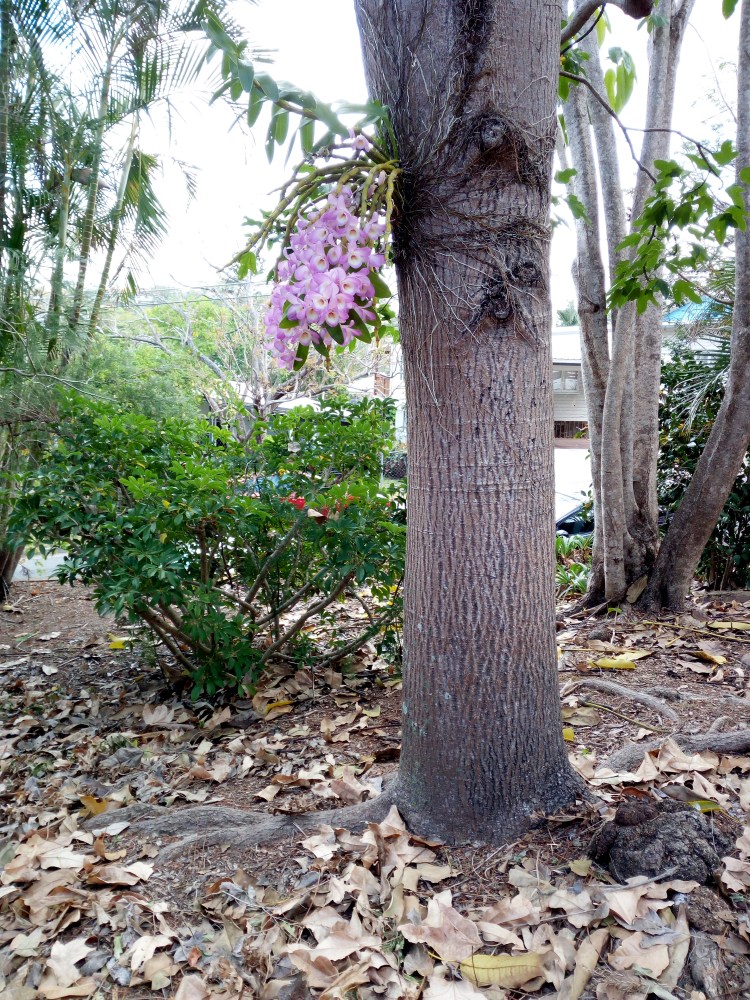
My Tree Orchid with Pink Flowers

Trees are dropping leaves to survive and the ground is like iron.  Just the other morning I watered my Dendrobium orchid and the long buds were tightly closed.  Drought conditions have sent the ants in all directions in search of sustenance but even they were absent.

In the afternoon I returned from lunch with friends and à la voile!  There was my tree orchid in full bloom!

IMG_20190925_130240

Springtime is not properly acknowledged in my garden until this orchid flowers.  It is always my September spectacular.

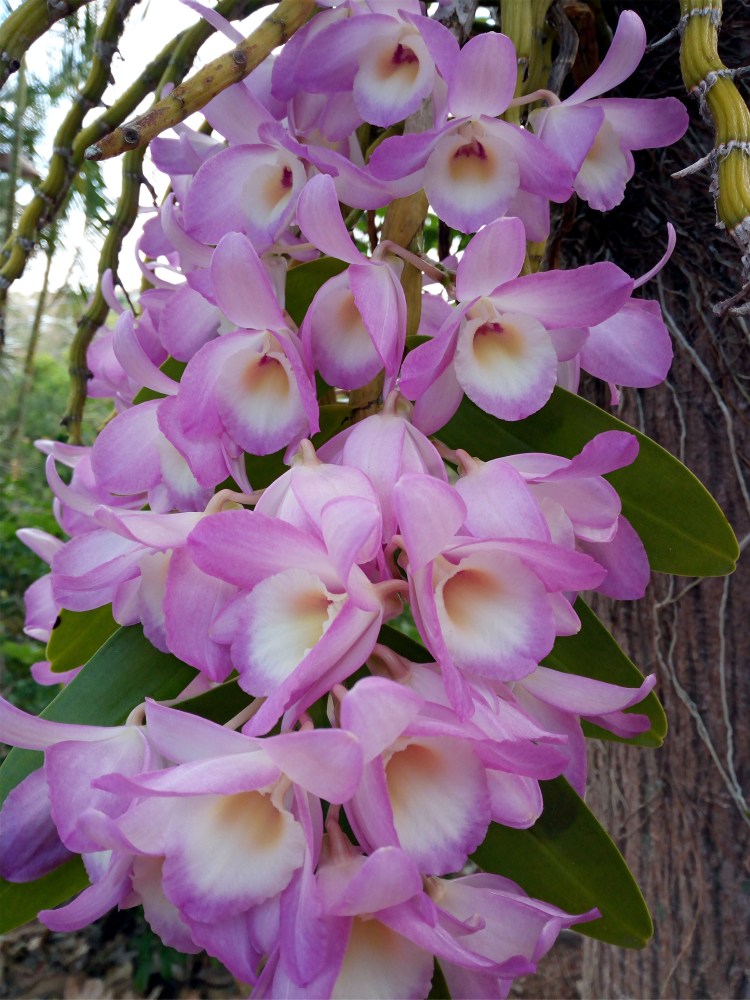
Australian orchids tend to be small, for instance the Cooktown Orchid which is the floral emblem of Queensland, but this species is large and robust.  The dull afternoon light does not do justice to its display.

IMG_20190925_130248

A semi deciduous pink-flowering orchid, it is ‘probably’ native to Australia, a Dendrobium Nobile, and in this case has been grown as an epiphyte – tree hugger.  It has been in the family for over forty years and needs basically no care at all.  The blooms have a very faint fragrance.

Why I say ‘probably’ native to Australia is because I always thought it came from the Pacific region.  In fact, originally its forebears came from northern India/southern China where it would have been quite used to extremes in temperature.

IMG_20190925_130258

Then I discovered hybrids have been produced.  These can be subdivided into two types, the ‘English’ and ‘Japanese’ type, and later I read this historical document courtesy of The Shambles, a country garden at Montville in south-east Queensland:

Dendrobium nobile  Reliable soft cane epiphytic orchid.  We have many unnamed flower colour varieties from mauve, pink and white range.  A trouble-free orchid flowering in spring.  Introduced to Britain c.1836 by Loddiges’ Nursery.  Requested from Loddiges’ Nursery on 1st February 1849 for Camden Park NSW Australia and obtained from them, brought out from England by Captain P. P. King in that year.  India www.qos.org.au 1A.1885, 13.1900/1,15.Camden Orchid walk, West Garden, near back stairs, Blue trellis garden, Rain forest walk.

IMG_20190925_130325

After reading the Wagga Orchid Society PDF (link below) and using a bit of guesstimation, years later my orchid could have been transported from the Riverina region of New South Wales, Australia, on consignment to a Brisbane plant nursery.

I now look at my tree orchid in awe and wonderment – such a lineage.

IMG_20190925_130346

The following shot was taken a few days later in much better sunlight.  There was a bee hovering around but it refused to be photographed.

IMG_20190927_091633

Gretchen Bernet-Ward

P.S. If you are interested in lovely flowers and picturesque settings in rural countryside, I can recommend a visit to the website and blogspot of The Shambles country garden, Montville, Queensland.

https://montvillegarden.com/
https://montvillegarden.blogspot.com/
https://www.facebook.com/montvillegarden
and further reading
http://waggaorchidsociety.org/wp-content/uploads/2016/09/Dendrobium-nobile-orchid-growing.pdf

The Shambles Monsieur Tillier Rose
The Shambles and ‘Monsieur Tillier Rose’