The whole plant was covered in these fast-moving jewel-like bugs! It was fascinating to see them sparkling in the sunlight in a suburban garden.
I am reading “Miss Benson’s Beetle” by Rachel Joyce, wherein Miss Benson and her assistant Enid search for a golden beetle in the wilds of New Caledonia, far removed from the comforts and safety of home, and this book has heightened my interest in insects.
The little Cotton Harlequin bugs (above) were enjoying lunch.
Scientific name: Tectocoris diophthalmus
Size: 2 centimetres
The Australian Cotton Harlequin Bug is a member of the Jewel Bug family named for their bright metallic colouration.
The males and females of the Cotton Harlequin Bug are different colours, with the females mostly orange and the males mostly blue-red.
The Cotton Harlequin Bug lives in urban, agricultural and coastal areas of eastern Australia. It eats sap from many species belonging to the hibiscus plant family (Malvaceae) including ornamental hibiscus species and cotton.
I am a member of U3A, University of the Third Age, an organisation designed for retired or semi-retired people over 50. My focus has been creative writing but U3A provides an opportunity for members to try something different, meet new people, and share and enhance their knowledge and skills in a friendly environment.
World-wide, U3A is making a substantial contribution to societies by helping members to remain healthy and active longer.
University of the Third Age promotes learning for personal enjoyment and well-being for seniors. Keeping the brain active, doing interesting things and making new friends are essential for helping older Australians maximise their chances of independence.
U3A Brisbane is one of many similar U3A branches throughout Australia. Formed in Brisbane in 1986, they are a volunteer organisation. Brisbane locations provide leisure, arts and educational courses to local members at low cost each term.
Classes are conducted on Zoom and in person at a number of venues subject to Covid-19 restrictions.
CLICK A LINK! ENHANCE YOUR SKILLS OR DISCOVER A NEW ONE:
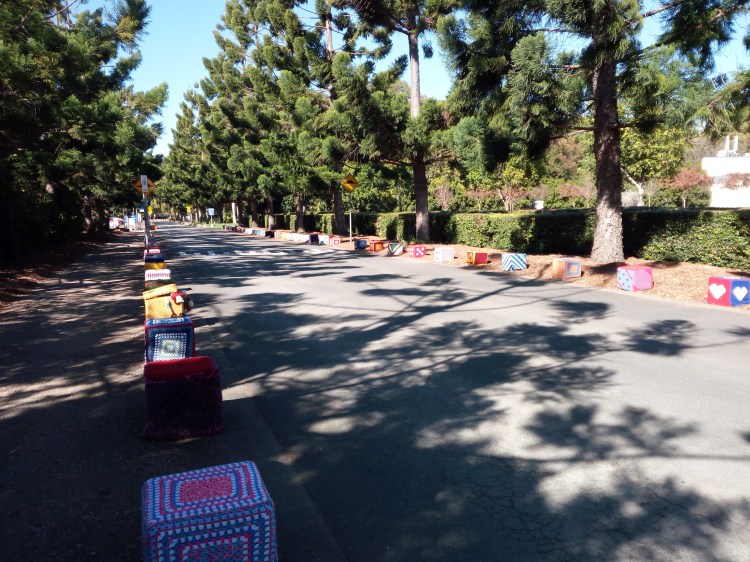
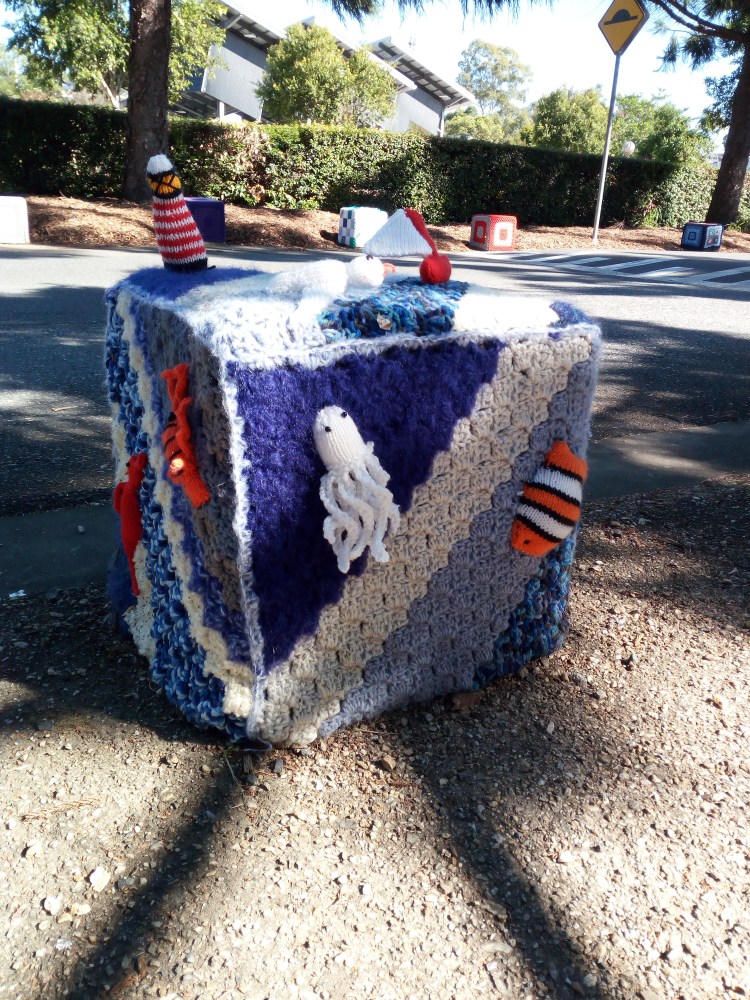
CROCHET is a handicraft in which yarn is made up into a textured fabric by means of a hooked needle. These public art works cover concrete blocks along the entrance driveway to Rocks Riverside Park, Seventeen Mile Rocks, Brisbane, a combined project from Crochet Clubs around the city.
If you are interested in trying this colourful craft, or yarn-bombing trees, here’s a link to Brisbane Crochet Club: https://brisbanecrochetclub.com.au/
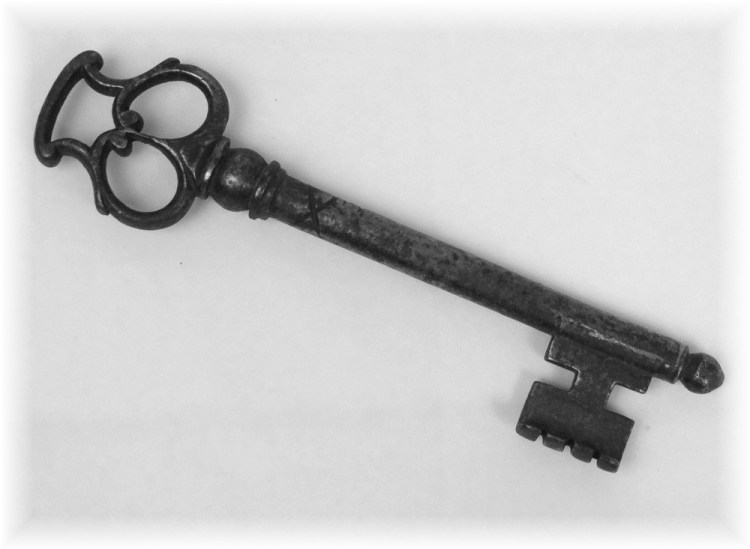
COME ON, admit it. The majority of us have a container, a bowl or tray, on a side table where we toss things. Car keys, door keys, hats, toys, cards, pens, books, name tag, USB, junk mail, countless small items like Lego, and possibly your dog’s lead. They all get thrown, tossed, dropped into this repository, usually near an entry door. Next time you watch a domestic drama series, check how many times the house keys are tossed aside while the actor says ‘I’m home.’
THIS CASUAL receptacle is handy for coming home tired, but hopeless when you are in a hurry in the morning. I have discovered that annoyed pitching never works and requires the effort of fishing the item up off the floor and trying again.
OF COURSE, we are cautioned by Neighbourhood Watch not to use this careless form of storage because thieves can take your car keys on their way out with your Edwardian silverware.
DIFFICULT to disguise a set of car keys—good on you if you have keyless entry—but I hang unmarked keys in separate locations. At least that way the burglar has to scurry around trying to find the right set of hooks holding the right key to your vault or whatever. Naturally a door key may not be necessary if the entry point is used to exit.
THANKFULLY on the night my domestic dwelling was genuinely plundered, I was out, so my car was not there to ‘borrow’. I went to live theatre for the first time in years; you can read my anguish on a past blog post Stolen Jewellery Anger and Sorrow.
THE AVERAGE household uses only one or two different keys and bowl storage works out pretty well until someone wants an unused key necessary to unlock a side window in the spare bedroom. The relevant key is finally located from a neglected bundle at the bottom of a woven tray on the kitchen sideboard. It has been transferred to another storage facility, i.e. drawer. We humans know how to waste time searching for small things.
KEYS offer something primitive and satisfying about locking a door. It is real, it makes a solid locking noise and creates a tangible barrier between you and the world. For me, a beep doesn’t cut it. Do you hear an electronic click when you issue a ‘lock door’ command? Do you hear a thunk like a garage door closing when you tap a screen? I guess the modern manufacturer is well versed in consumer psychology and pre-programs various locking noises. Kind of like phone ring tones but different.
“I hope I could get an electronic sound like a warden pushing an ancient castle door closed, one which grinds and crunches as it shuts tight against rampaging possums”
GBW 2021
A LOT can be said about smart key entry, finger print identity, voice commands, internet-based security, eye recognition, tomographic motion detection, etc, but since I don’t know how most of that technology works, I am sticking with my metal keys. Of course, the family has keys so I check to see they have ‘properly’ locked the door at night—blame scary movies.
DOMESTICsecurity is important… millions of people don’t have a door to lock… or a home…
St Vincent de Paul
Vinnies Winter Appeal 2021
Over two million people live below the poverty line in Australia, including over half a million children. This winter Vinnies Appeal will provide emergency relief to families at risk and experiencing homelessness.
When Alice finds that she can’t fit through the little door to get into the beautiful garden because she is too big, she notices a glass bottle with a paper label which reads Drink Me.
Alice’s Adventures in Wonderland (commonly shortened to Alice in Wonderland) is an 1865 novel by English author Lewis Carroll (the pseudonym of Charles Dodgson). It tells of a young girl named Alice, who falls through a rabbit hole into a subterranean fantasy world populated by anthropomorphic creatures.
A Drink Mepotion is a magical liquid in Wonderland – it has the effect of making the drinker shrink in size
This potion bottle has magically appeared on the table. Alice wonders if it is safe to drink, and she thinks to herself ‘If one drinks much from a bottle marked Poison it is certain to disagree with one, sooner or later’. However, the bottle did not have the word Poisonwritten on it, so Alice drinks every last drop of the bottle’s liquid and finds that it tastes delicious. It had a flavour of cherry tart, custard, pineapple, roast turkey, toffee and hot buttered toast, all mixed up. She then shrinks down to only ten inches tall (approx 25cm) after drinking from this bottle.
Personally I did not like this part of Alice in Wonderland as a child and it has haunted me ever since. What writer puts that into a children’s story? Believing labels, swigging from bottles, shrinking in size. The stuff of horrors akin to storing cleaning fluid in soft drink bottles. Okay, I realise it is a fantasy story which has stood the test of time and been reproduced in many formats, still… I guess for me, reading this tale in childhood, there was the thought of ‘No, Alice, don’t drink it!’ without knowing she has to propel the story forward in the most unlikely way. Yes, it is a unique and radical plotline but I still see it as experimental drug-taking.
Apologies to staunch fans with no hang-ups, and those who embrace Lewis Carroll’s Todd’s syndrome or Dysmetropsia, a neuropsychological condition which causes strange hallucinations and affects the size of visual objects. It can make the sufferer feel bigger or smaller than they are – a theme of the book – write what you know. Then, and now, I have never seen Alice’s adventures in Wonderland as entertaining. I view this book as akin to a fitful, nightmarish fever dream. The characters are irredeemably scary, even Johnny Depp couldn’t save it for me.
♥Gretchen Bernet-Ward
Lewis Carroll was an English novelist and poet. He is best known as the author of the children’s book Alice’s Adventures in Wonderland (1865) and its sequel Through the Looking-Glass (1871) two of the most popular works of fiction in the English language.
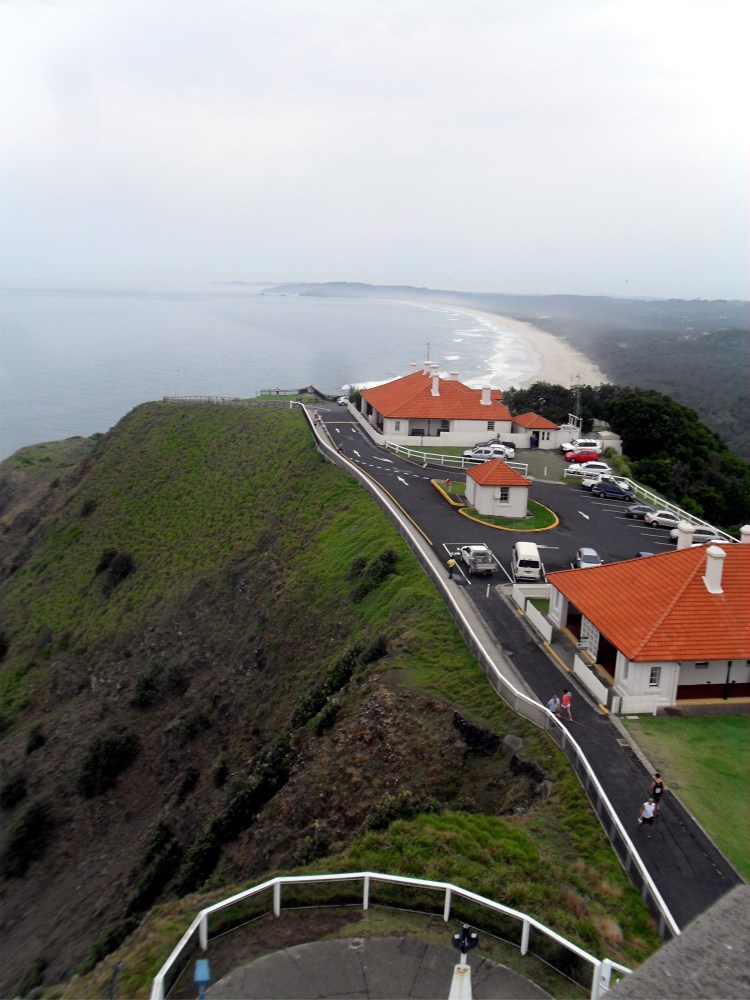
Before the sun gained intensity, it was a misty morning walk up to Cape Byron Lighthouse. Along the way, I enjoyed coastal views from the Cape Byron walking track which took me on a hike past beaches, through rainforest, grassland and along clifftops to the lighthouse.
The walk is shared by joggers and walkers and is rough in patches but passes through the shade of bangalow palms, ancient burrawangs, and across kangaroo grassland. I had tantalising glimpses of the white lighthouse ahead and views of picturesque beaches alongside before rising to the summit of Australia’s most easterly point.
From the historic town of Byron Bay, the 3.7km walk loops through rainforest and along clifftops with views of the foreshore, eastern coastline and vast hinterland behind the township.
Of course, you can drive to the lighthouse but walking is more interesting! And the town of Byron Bay may have changed but the lighthouse remains eternal.
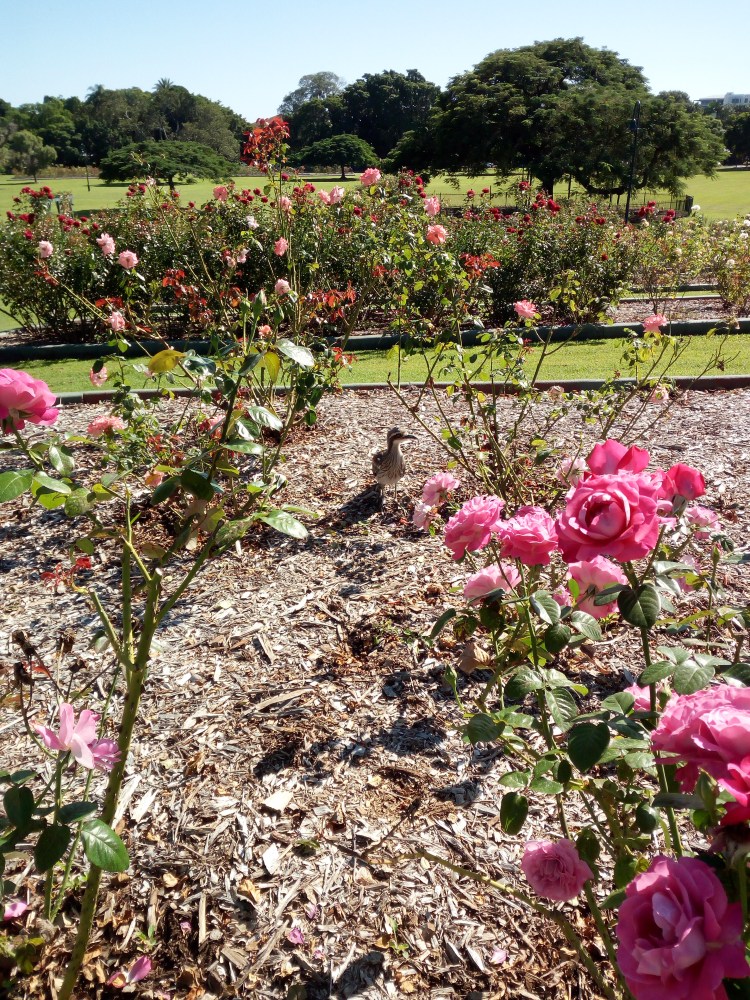
The Bush Stone-curlew or Bush Thick-knee (Burhinus grallarius) is a large ground-dwelling bird with a life span of up to 20 years. The bush curlew is endemic to Australia and found in Brisbane, usually in parkland. The curlew will adopt a rigid posture when it becomes aware of an observer, as this one did, poised amongst the roses in New Farm Park.
Curlews are terrestrial predators adapted to stalking slowly at night. Their preferred habitat is open landscapes which give them good visibility at ground level where they search for invertebrates such as insects. The grey-brown coloration is distinguished by dark streaks, its eyes are large and legs are long. Both male and female care for two eggs laid on the bare ground, usually sited in a shaded position near a bush, stone wall or fallen branch.
Queensland Bush Stone-curlews are capable of flight but rely on the camouflage of their plumage to evade detection during the day. Domestic animals are their biggest threat. At night their call is an evocative and unforgettable sound, a sort of wailing cry which echoes across open ground.
The curlew candid camera (below) is memorable!
♥Gretchen Bernet-Ward
Video by FAME 2019, Mt Rothwell in Victoria, Australia
The Rolling Stones performed ‘Get Off Of My Cloud’ live on Australian TV in 1966 on Brian Henderson’s Bandstand. The Stones are so young, so pretty. Check out the boys wearing ties and the girls sitting on seats tapping their toes, and the politely orchestrated screams. So much to love ♥Gretchen Bernet-Ward
The beautifully illustrated book ‘The Boy, The Mole, The Fox and The Horse’ by Charlie Mackesy is intended for children not cynical adults.
The content has been reproduced in countless book reviews on Goodreads to the extent that a large portion of the book has been copied.
We should all know our own country’s copyright laws. Where possible I acknowledge the source of material I use and only quote a sentence or two for emphasis in my book reviews. Copyright is adhered to in many areas including business, education, libraries, publicity, government, even blogs and hand-out leaflets.
So why do certain Goodreads reviewers think they can profusely post someone’s artwork?
Would they like their creative endeavours photographed and reproduced, and in this case vilified, and used for a different purpose other than originally intended?
I believe that by reviewing Mackesy’s work on Goodreads, a reviewer is not justified in reproducing the words and illustrations constituting a chunk of the author’s work.
“Copyright is a form of intellectual property that protects the original expression of ideas. It enables creators to manage how their content is used.”
There may be Goodreads rules and regulations in the fine print which I could not locate but I am waiting on a reply from the Librarians.
My WordPress followers know that I do not activate Comments but I suggest if you think the copying is unfair or unjustified, check the book ‘The Boy, The Mole, The Fox and The Horse’ on Goodreads and perhaps submit a message to the gatekeepers.
“I have noticed on Goodreads that generally there does not appear to be any control over spoilers or plot reveals so what hope does copyright offer Goodreads authors. Copyright is mentioned under https://www.goodreads.com/about/terms and it would appear action has to be taken by the author.” GBW.
POSTSCRIPT—Below is my contact post to Goodreads Librarians on Monday 29th March 2021—no reply has been received:
“What are the copyright limitations on posting author illustrations on Goodreads? The Boy, the Mole, the Fox and the Horse by Charlie Mackesy has had pages copied by reviewers to such an extent that they almost represent the complete book. The book contains original work by the author and has significant meaning to him while naturally being a source of income which could be impacted due to continued copying by book reviewers. I know it is hard to control copyright (particularly on social media) but I would expect a certain level of copyright control on a book-dedicated website. I have no vested interest in this book other than enjoying it, and wanting to see Goodreads and reviewers being more circumspect regarding the posting of images from inside this book, or indeed any illustrated book.” GBW.
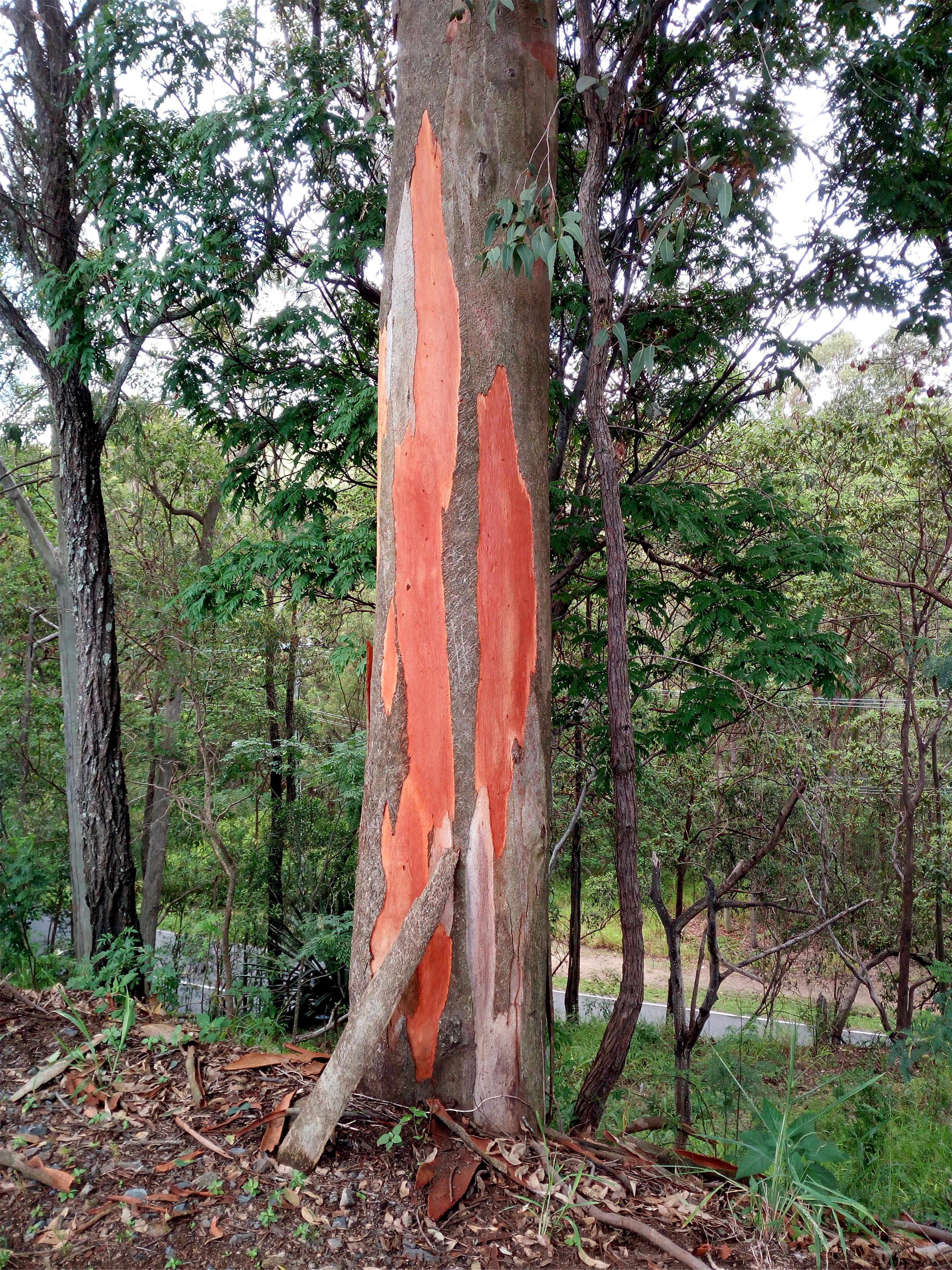
A bit of background on this stunning Grey Gum eucalypt I photographed during an afternoon walk.
Eucalyptus propinqua Grey Gum MYRTACEAE
Known as Grey Gum but there are many eucalypt trees given this name on the east coast of Australia, because there are rather a lot of grey gums. About half a dozen are members of the Grey Gum Group – rather obviously named for their grey bark. All members of the group are prized for the strength and durability of their timber, and in the early days of European settlement were heavily logged for use in construction.
The tree can appear to be a small mallee in tougher sites where the soil doesn’t quite suit, but on the Central Coast of New South Wales it is generally a beautiful tall, elegant tree, 35 metres or so high, with a tall, straight cylindrical trunk.
The name, Grey Gum, is a giveaway in what to look out for in the tree, but in February each year they can surprise. Most of the time the trunks are a rather uniform, granular surfaced, mottled grey, but once a year the bark is shed in slabs and displays new colours, ranging from pale cream to light orange.
Then, more occasionally, when the rainfall has been heavy over spring and summer, the same process is carried out – but this time displaying a most vivid orange trunk.
This gumtree seems to like being perched on the side of a hill in the suburbs of Brisbane.