Bushfire devastation across rural Australia, everything and everyone is at risk, rain is desperately needed, it will arrive too late for many, let’s pray many thousands will be spared the burning embers ♥Gretchen Bernet-Ward
[PLEASE NOTE: ChildFund Australia has posted a link to the ABCTV website with a list of charities for appeal donations. ABCTV list https://about.abc.net.au/appeals/ Get behind the genuine charities which are supporting our bushfire affected communities]
A bushfire prayer read by Dot Bernet of Uniting Church Australia (Brisbane) and blessings written by Rev Jennie Gordon Pastoral Resource Minister (Gippsland) January 2020.
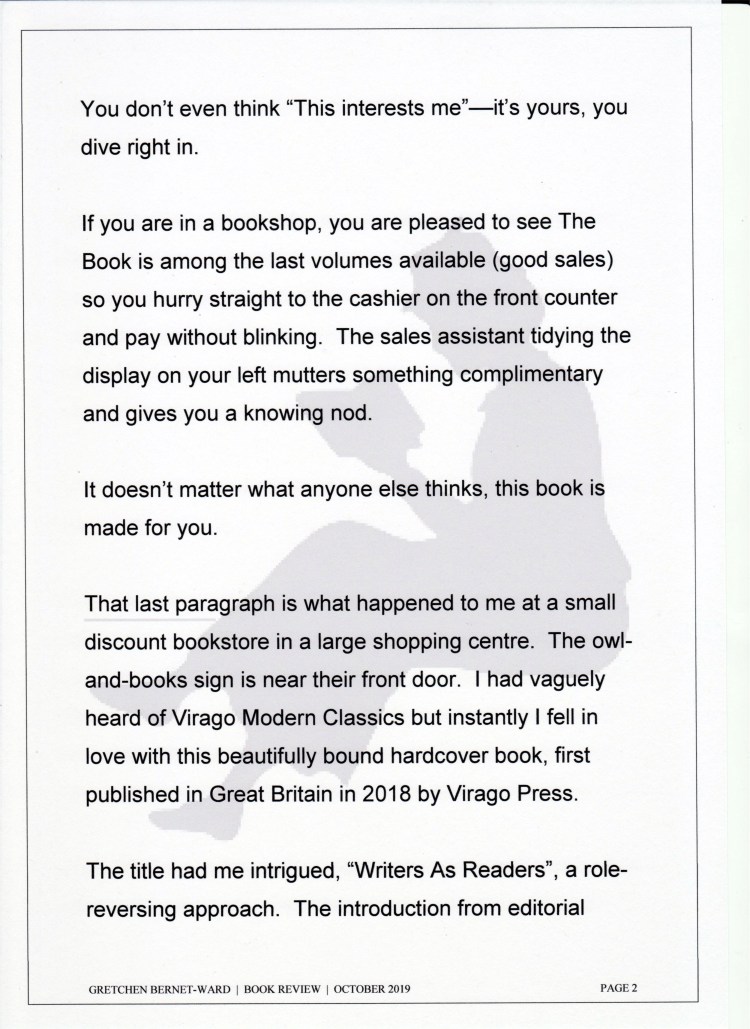
Virago is an international publisher of books by women for all readers, everywhere. Established in 1973, their mission has been to champion women’s voices and bring them to the widest possible readership around the world. They found me! From fiction and politics to history and classic children’s stories, their writers continue to win acclaim, break new ground and enrich the lives of readers. That’s me! Read on…
My Goodreads Book Review
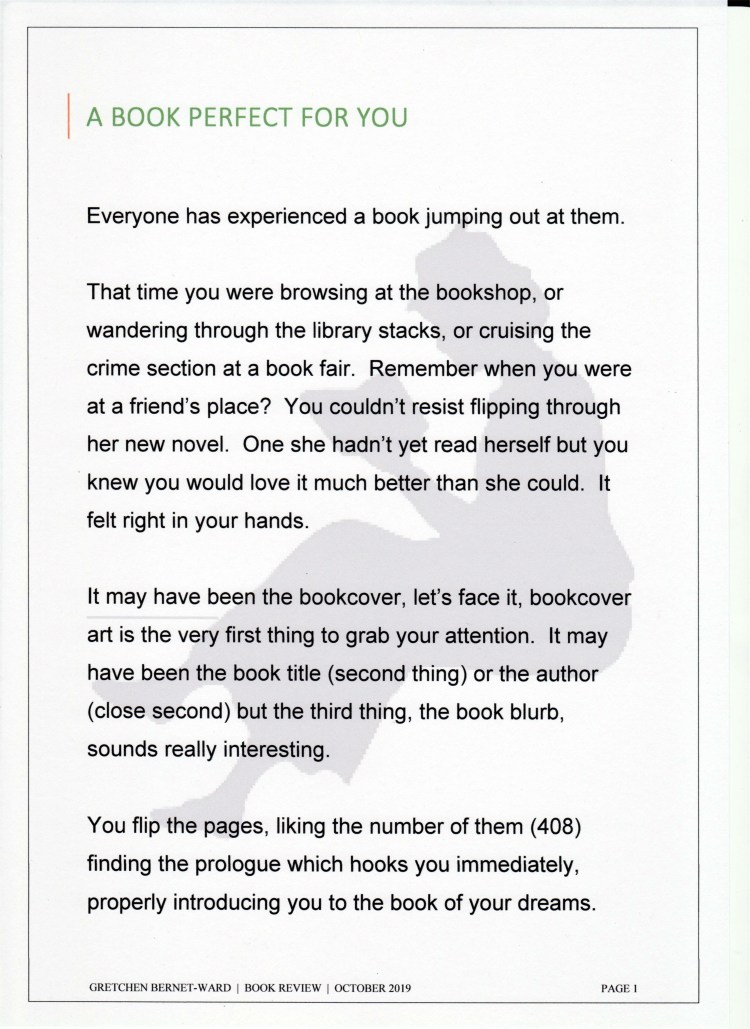
Superb anthology of the last forty years of Virago Modern Classics with a gorgeous bookcover illustration. Great for readers who appreciate women writers and also for students studying literature. Each contemporary author writes a sincere and thoughtful introduction from their own perspective as a reader. They cover the classics, from fiction and comedy to famous diaries and autobiographies. For example, Margaret Drabble discusses Jane Austen ‘Pride and Prejudice’ and further on Jilly Cooper talks about E. M. Delafield ‘The Diary of a Provincial Lady’. Although I’ve not read ‘Strangers on a Train’ by Patricia Highsmith, I think Claire Messud has convinced me to read it. At the end of Amanda Craig’s introduction on Rebecca West ‘The Fountain Overflows’ she says ‘The novel is one of those rare books that leaves the reader feeling happier and more hopeful than before.” And that’s exactly what this Virago Modern Classics makes me feel ♥ https://www.goodreads.com/gretchenbernetward
Virago celebrated their fortieth anniversary of Virago Modern Classics, Virago Press published the book I so eagerly purchased ‘Writers as Readers’, an anthology of forty introductions from the last four decades…books that deserve once again to be read and loved. Virago also reintroduced the iconic green spines across their whole booklist.
Virago has a huge booklist, I’m sure you’ve read several of their titles, and rather than me listing every book available, you can visit their beautiful website: https://www.virago.co.uk/
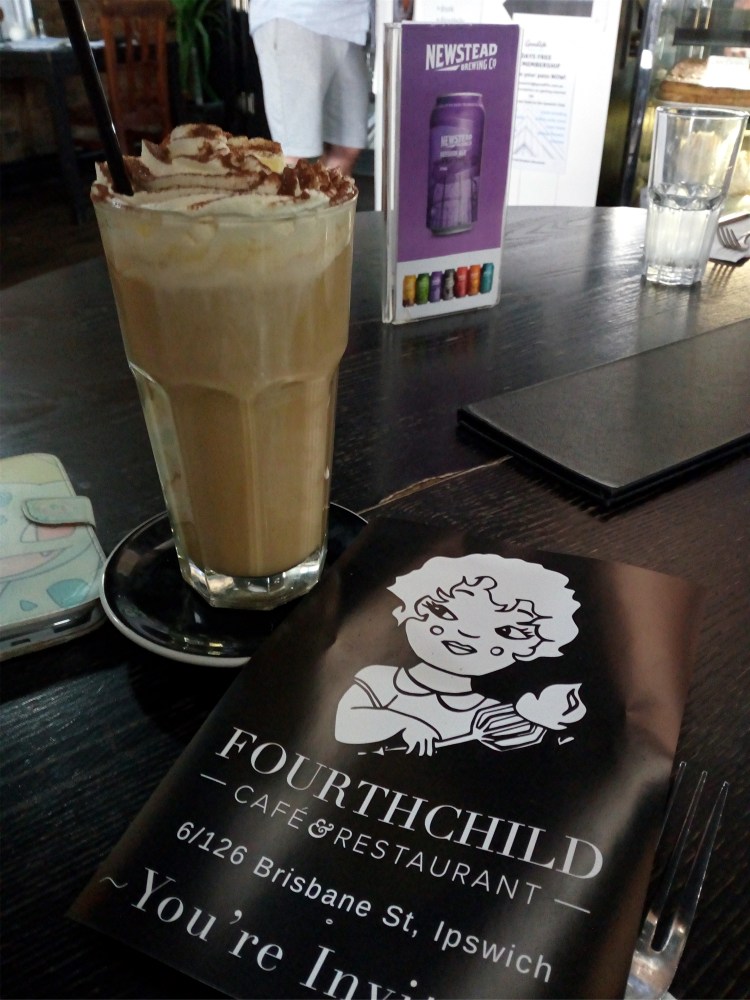
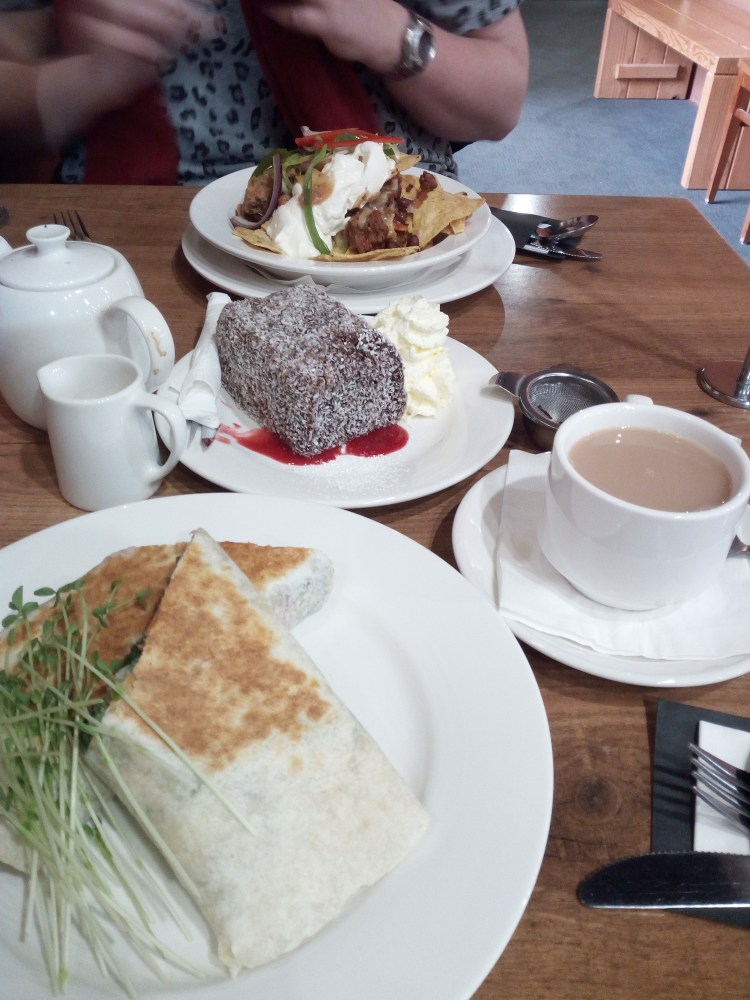
Alighted from the train in Ipswich City with friends and decided to have brunch. We chose Fourchild Cafe Restaurant, 126 Brisbane Street, because it’s handy to the railway station. The business is family owned and operated and they prepare everything by hand, in-house, with produce sourced from Lockyer Valley farms and local suppliers.
Rather than give you a rundown of our visit, I have posted photographs with a comment or two underneath. Bon appétit!
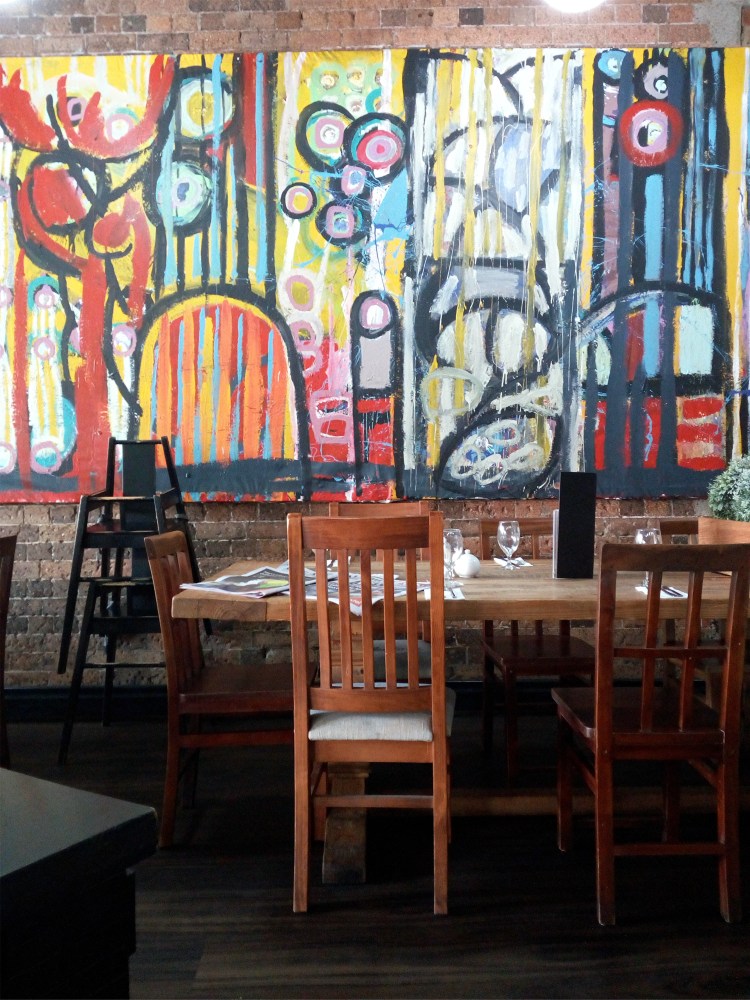
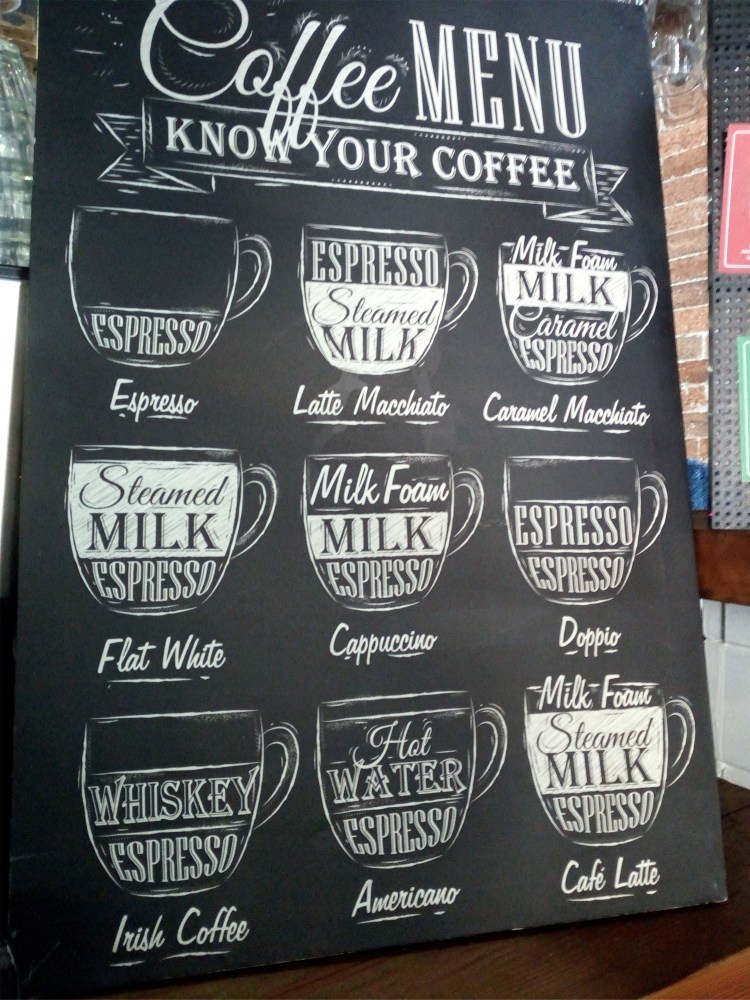
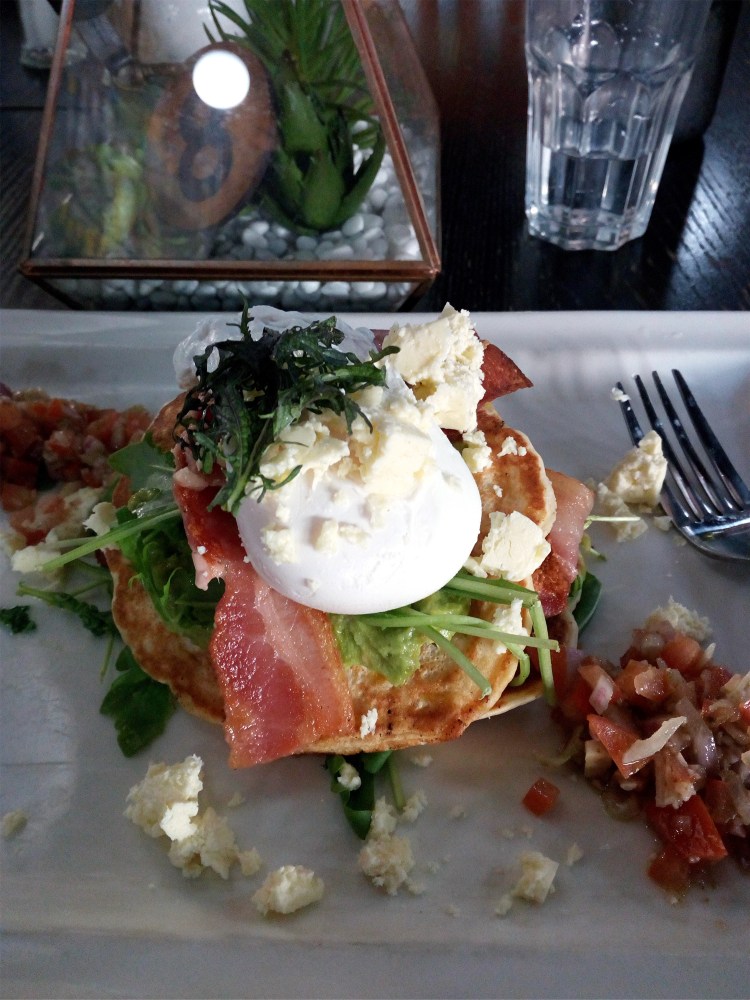
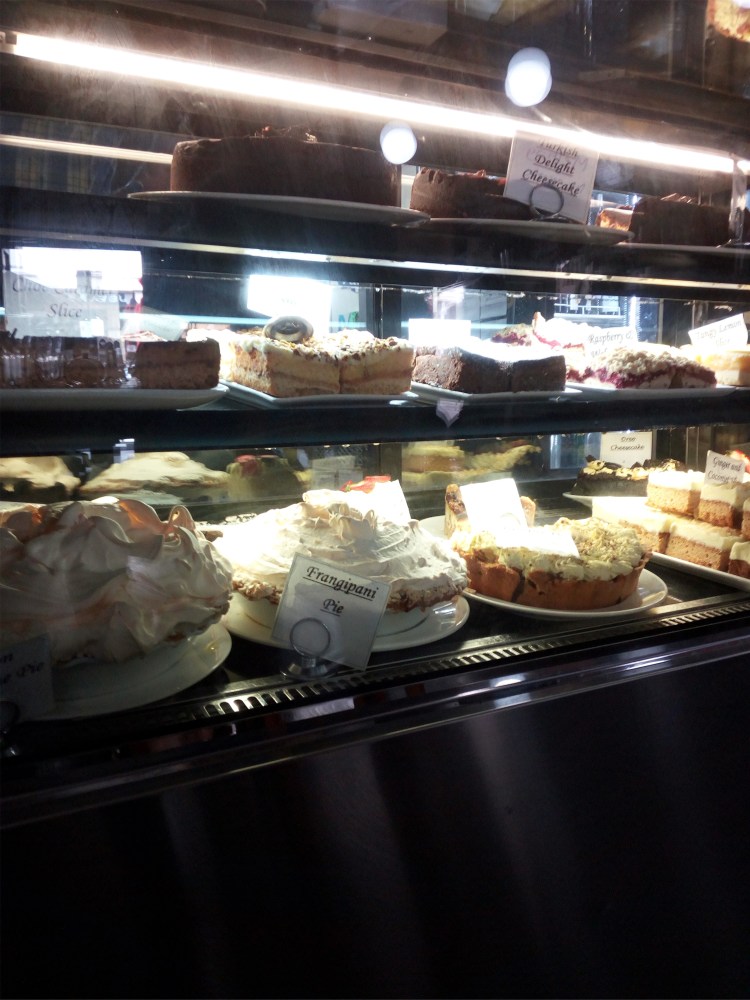
A food blogger would know the latest words for edgy decor but I’d say colourful.What it says – a cold drip coffee device with the look of a mad scientist invention.A comprehensive ‘Know Your Coffee’ espresso menu which I am going to carry with me always. Not the board, just the photo!It was a hot springtime day so settled for a tall iced coffee with whipped cream.Corn fritter pancake stack with bacon, poached egg, tomato salsa, scattered with feta. Actually it had two eggs but I gave one away!Dessert cabinet love at first sight! Look at the size of the Lemon Meringue Pie and Frangipani Pie (recipe link below)Fourthchild Cafe Restaurant is situated in an old building so they’ve gone with the natural antiqueness. This is a view of the roof where the shaft leads up to skylights (not visible on either side) for light and air in all weathers before air-conditioning was invented.
This is Boris the bison, overlooking the bar, keeping a watchful eye on proceedings.
We were in Ipswich to visit ‘The World Turns Modern’ an Art Deco exhibition atIpswich Art Galleryon loan from the National Gallery collection. But more on that another time.
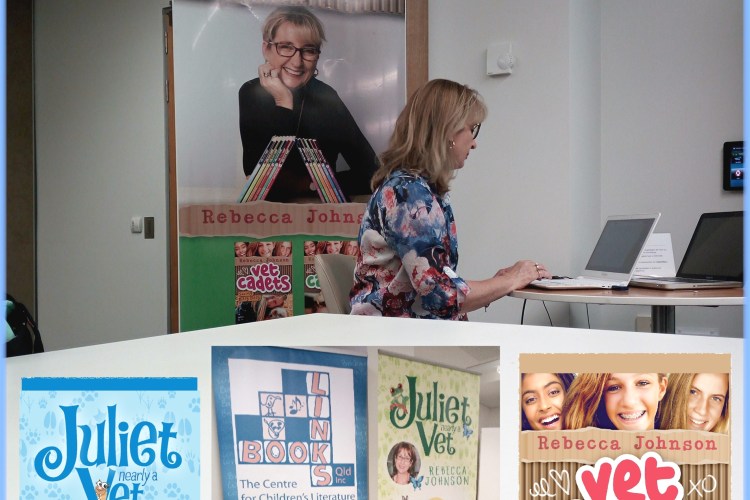
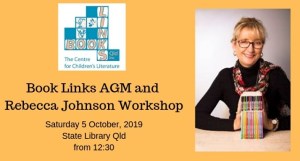
First, some info on Juliet Nearly A Vet children’s series before I launch into my one and a half hour experience hosted by Book Links and Write Linksat their centre for children’s literature.
JULIET NEARLY A VET series by REBECCA JOHNSON
Juliet wants to be a vet when she grows up, but when she decides she needs to start practicing, her wonderful misadventures begin. With gorgeous illustrations by local illustrator Kyla May.
“Hi! I’m Juliet. I’m ten years old. And I’m nearly a vet! We’re off on a school camp to the rainforest. Chelsea, Maisy and I are excited about all the different animals we might spot on our nature walks and torchlight treks. Chelsea is NOT excited about the creepy crawlies we might find! I’ve brought my vet-kit along just in case we find any animals in need of help . . .”
A wonderful series about three smart, funny, animal-loving girls solving mysteries and causing chaos at their country boarding school.
“Abbey, Hannah and Talika are new recruits at Willowvale boarding school’s Vet Cadets program. Mrs Parry, their science teacher, has given each of the girls a chick to raise and train, but not everyone is happy about it! When a game of horseback hide-and-seek turns into a matter of life and death, rules are broken and the friends’ courage sorely tested. This time, a solution might be out of the Vet Cadets’ hands . . .”
Rebecca Johnson is an award-winning Australian author and primary-school science teacher who has written more than 100 children’s books. Her works include the Steve Parish Story Book collection, Juliet Nearly A Vet series, Vet Cadet series, Insect series, and Steve Parish Reptiles & Amphibians Story Book range.
Rebecca Johnson spoke about how she became a published author and what inspired her stories. Her two current series are based on her own childhood experiences, both as a young vet ‘assistant’ and then as a horse-riding teenage animal detective.
Her writing style has allowed her to find the balance between working part-time and writing. She talked about the importance of verbal pitching in the early part of a writer’s career; know your story and speak passionately about it.
Rebecca was open and honest in all she discussed, particularly the challenges of marketing your first book once it has been published. On the subject of payment, royalties and earning a decent income, Rebecca felt a book series worked better.
I jotted down a number of points; from having an agent, to evolving your books as your reading audience grows. Interestingly, in this age of the internet, Rebecca hasn’t physically met Kyla May, her book illustrator.
A fascinating aspect from Rebecca’s talk is her use of a book tie-in and children’s conventions based on her Juliet Nearly A Vet books. She ordered 1,000 vet kits child-size with working stethoscopes and white lab coats—spectacular to say the least. And children obviously have a wonderful time learning about animals and caring for their toy pets!
CONCLUSION
My main takeaway from this workshop was “Write what you know, do the hard yards, continually promote your books” as well as attending events, libraries, Book Week. I applaud Rebecca Johnson for the detail and length of her workshop, and the fact that she happily answered every question.
POSTSCRIPT
A friend of mine, children’s writer Artelle Lenthall, challenged me to nominate 7 of my favourite bookcovers and post one every day for 7 days on Facebook. I have chosen 7 of my favourite bookcovers from Juliet Nearly A Vet series and will post them at 7.00pm each evening.
Yes, fear that I will become addicted. Fear that I will push myself to read a gazillion books a year so I can frantically, faithfully rate and review them. Fear that I will get hooked on groups, authors, discussions, surveys and polls—or even worse, a bestseller—and thus lose my individuality.
What if I was swamped by a wave of literary-ness which swept away my identity and I became a book character, never able to reach the shores of reality, adrift in a choppy sea of font and words, desperately swimming towards the final chapter so I could beach myself on that last blessed page?
It didn’t happen.
I know this because I have finally joined the ranks of Goodreads readers.
Why did I join? Because I was caught, hook, line and sinker by a single author and her book ‘The Rose and The Thorn’.
In August 2019, I posted my very first Goodreads review on Indrani Ganguly’s historical novel (also here on my blog) and the Hallelujah choir sang. That was it!
I think I shelved about twenty books in one hit. Then about thirty, then more, and before I knew it I was writing reviews; albeit after I sussed out their (ssshh, whisper here) rather archaic system.
Without fear, without favour! I am part of Goodreads for better or worse!
So far I have followed a couple of authors I enjoy, and a couple of groups which seem relevant to my reading tastes. I encompass miscellany, similar to my blog, so I am open to your book reading suggestions.
Take a peek, you may find the same book we both have read . . . but will our rating or review be the same?
There are health benefits to your human-animal interactions! Studies suggest that pets are good for your heart and stress levels in more ways than one. Caring for an animal has shown to lower blood pressure and cortisol (stress-related hormone) levels, reduce loneliness and boost your mood.
To find out more, we arrived at University of Queensland Healthy Living headquarters in Toowong at one o’clock for an informative talk from Dr Nancy A. Pachana, clinical geropsychologist and neuropsychologist—and cupcake maker—accompanied by the team from Happy Paws Happy Hearts.
As you would have guessed, the highlight was two adorable and bouncy puppies, Timon and Rafiki, who carried out their pats-and-cuddles duty in admirable fashion. The blurry photos attest to their eagerness.
Happy Paws Happy Hearts foundation offers an Animal Basics Program, Animal Care Program and Animal Handling Program for individuals and groups. Participants learn to interact with a variety of animals waiting to be adopted from RSPCA by using well-established animal interaction methods to increase confidence in both humans and critters.
Depending on the program and availability, interaction could be with puppies, kittens, dogs, cats, wildlife and farm animals. Volunteers support attendees to reach their goals while working with these rescue animals within the shelter.
Research supports dogs and other animals assisting with physical, mental and emotional symptoms as well as supplement therapy for PTSD, anxiety and depression plus a range of psychiatric disorders. They are particularly important for older people.
Over 60% of older community-dwelling adults cited pets as a key source of emotional support, while dog therapy reduced age care residents loneliness and depression as well as improved cognitive impairment in those with dementia. The presence of animals provided avenues for active behaviour, decision-making and increased socialisation in nursing home residents.
Dr Pachana spoke about greater acknowledgement of the positive impact of animals in other contexts, such as the workplace and courtrooms. I have seen encouraging signs in classrooms where children have difficulty with peer activities or reading aloud but respond with a calm dog beside them.
Can Do Canines train shelter dogs for therapy purposes and there are organisations like Guide Dogs, Assistance Dogs, Hearing Dogs, Story Dogs, and of course Happy Paws Happy Hearts doing a wonderful job.
We enjoyed our sociable and informative visit and send a special woof to Timon and Rafiki for being good boys.
It was a nice surprise to discover an older piece of writing I’d forgotten, particularly when it still holds up.
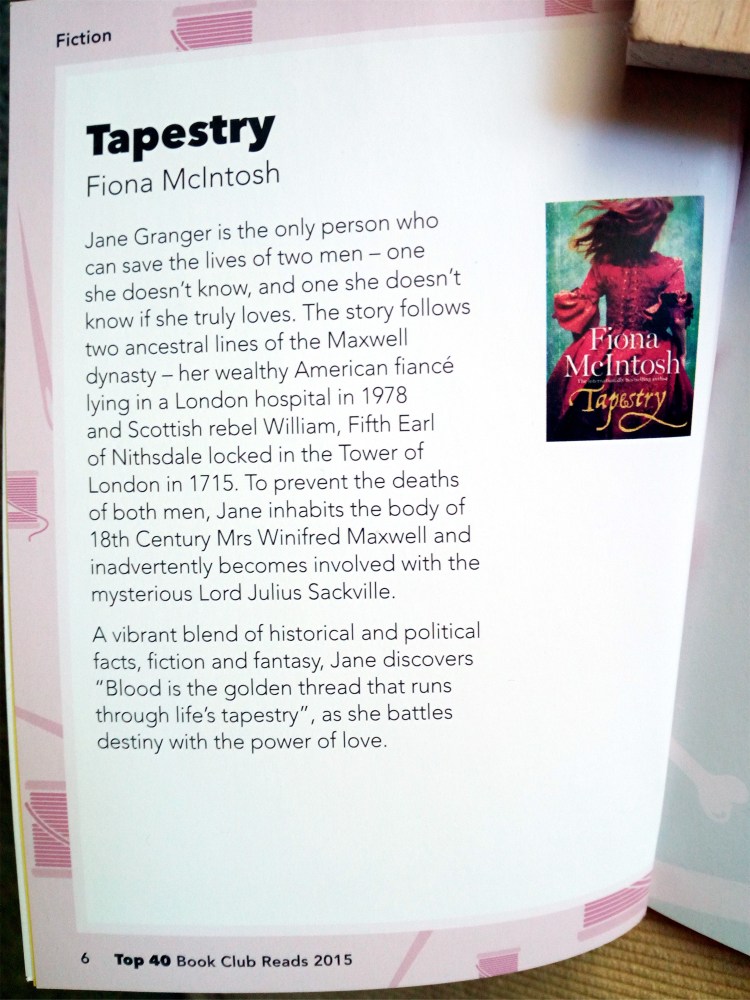
My overview of Fiona McIntosh’s historical fiction “Tapestry” was penned for Top 40 Book Club Reads 2015, a regular Brisbane City Council Library Service booklet written and compiled by unacknowledged library staff.
The book—billed as timeslip fiction—has a layered plot and it was hard to write a 100 word description without sounding too stilted. McIntosh chose settings in two countries, Australia and Britain, in two different eras of history. I particularly liked the second half in 1715 within the Tower of London.
Synopsis by Gretchen Bernet-Ward
After visiting the Tower of London to research her book, McIntosh had “An unforgettable day and I attribute much of the story’s atmosphere to that marvellous afternoon and evening in the Tower of London with the Dannatts when the tale of Lady Nithsdale and my own Tapestry came alive in my imagination.”
Author Fiona McIntosh has written quite a stack of books set in many parts of the world, and in different genres: Non-Fiction, Historical Romantic-Adventure, Timeslip, Fantasy – Adult, Fantasy – Children, and Crime.
Check your local library catalogue in person or online.
♥Gretchen Bernet-Ward
In order of appearance, the Brisbane Libraries Top 40 book club recommendations for 2015—I have not read Poe Ballantine’s chilling tale “Love and Terror on the Howling Plains of Nowhere” and I may never read it—See how many titles you’ve read!
The Visionist; Moriarty; Tapestry; The Bone Clocks; California; Z – Novel of Zelda Fitzgerald; The Mandarin Code; Merciless Gods; Upstairs at the Party; Friendship; Birdsong; Heat and Light; Time and Time Again; What Was Promised; The Austen Project; The Paying Guests; The Exile – An Outlander Graphic Novel; Lost and Found; Amnesia; Cop Town; Mr Mac and Me; Nora Webster; The Girl Who Saved the King of Sweden; Inspector McLean – Dead Men’s Bones; The Soul of Discretion; We Were Liars; Stone Mattress – Nine Tales; Family Secrets; South of Darkness; The Claimant; This House of Grief; She Left Me the Gun; Mona Lisa – A Life Discovered; The Silver Moon; Revolution; Love and Terror on the Howling Plains of Nowhere; What Days Are For; Mistress; Warning – The Story of Cyclone Tracy; The Birth of Korean Cool.
From Brisbane, we head inland to Gatton where we stop for lunch before crossing the fertile vegetable-growing plains of the Lockyer Valley. Our goal is the garden city of Toowoomba, situated in the Darling Downs region of southern Queensland on Australia’s Great Dividing Range.
The gradient is steep and it’s a slow climb up the mountain before we crest the plateau and turn left to Picnic Point lookout. It’s a traditional spot for travellers to stretch their legs and take in the magnificent views which seem to stretch forever into a blue-grey smudge.
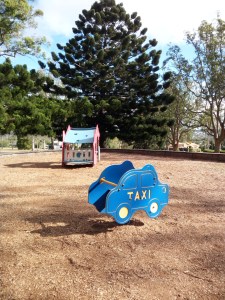
We stop for lunch at the Gatton campus of University of Queensland and admire this heritage-listed Foundation Building constructed in 1896 and used for events and conferences.Did you call a taxi? Children’s playground at Picnic Point, Toowoomba.
After checking into our boutique hotel, we take a short walk into town, passing old homes with steep corrugated iron roofs and interesting turrets and chimneys.
A charming old building in Margaret Street, once a grand home with circular driveway, is available for business lease.
In the city centre, shops and offices are still housed in quaint older-style buildings which seem to go on forever when you are inside.
The Book Tree bookshop is an Aladdin’s cave of books and accessories and a friendly salesperson. The haberdashery store Lincraft is on three levels, basement, middle and top (with creaky wooden floorboards) crammed full of craft-creating supplies and good customer service.
Friendly staff seem to be the theme throughout Toowoomba including the upmarket shopping precinct Grand Central which contains everything the modern shopper has come to expect—plus a book swap library.
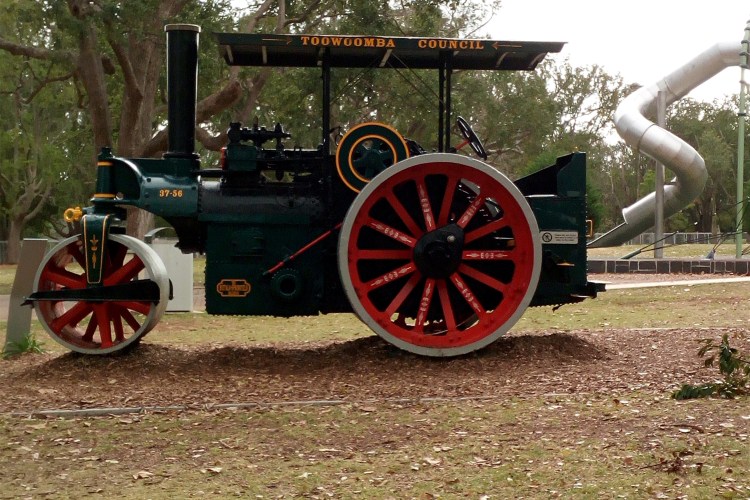
The seminar, the reason for our visit, isn’t until next day so we decide to walk through Queens Park Botanic Gardens, bypassing an old steamroller, to visit Cobb & Co Museum. Originally a coach museum in honour of Cobb & Co horse-drawn coaches which ran the length and breadth of Queensland in ye olde days, the museum has been rehoused and now contains a myriad of local and culturally significant items.
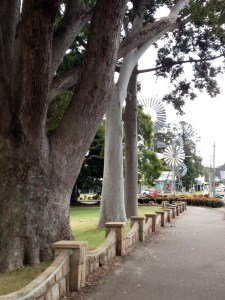
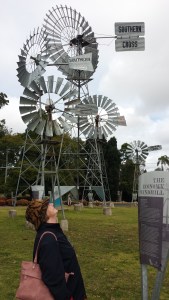
Walking towards Cobb and Co Historical Museum, Toowoomba Queensland, with Queens Park Botanic Gardens on the left.Outside the Cobb & Co Museum, Toowoomba, admiring the huge display of Southern Cross windmills.
We are lucky enough to get a personal guided tour—thank you, Sharon—and learn the ins and outs of the exhibits from coaches to goat carts, blacksmith forge to wooden clothing (photos below) and local Indigenous heritage.
The museum interior meanders like an old country trail with something different around every bend.
I discover that even though male passengers paid full fare, in the olden days they were expected to assist with river crossings, fallen logs, opening and closing stock gates, and to ‘lighten the load’ by walking up hills. What a hardy bunch! We need survivor TV shows to see that level of guts and determination today.
Images below show Chris Mills-Kelly’s delicately carved wooden bonnet, dress and shoes for the Artisans Challenge 2012. It is both fascinating and moving; these small articles represent the clothing Indigenous children were made to wear for photo opportunities, adoption interviews and to impress important visitors, in contrast to their natural birthright.
Hand crafted from wood by Chris Mills-Kelly and displayed in Cobb & Co Museum, Toowoomba, Queensland.
After a delicious museum lunch with a huge lamington for dessert (below) we wind our way back to the hotel through misty rain.
Made by the dozen, lamingtons are a traditional Australian dessert. Ingredients are a sponge square dipped in chocolate and rolled in coconut. The lamington pictured is larger than normal and usually not served with the bonus of cream or raspberry coulis.
My brochure reads “Although the famous coaches and tenacious horse teams and drivers are now long gone, Cobb & Co continues to live on in Australian history as the country’s greatest coaching company.”
The Cobb & Co Museum conducts workshops and various events and activities throughout the year. Our museum guide told us the workshops book out quickly. The specialist trades of yesteryear are back in fashion, wheelwright, silversmith, leadlighting, etc. One day I wouldn’t mind trying my hand at kangaroo leather plaiting. It’s a three-day course to make a belt or a whip, so watch this space. Yippee aye yay!
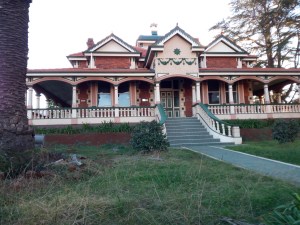
Originally called Cliffordene, now Harris House, this stately old home in central Toowoomba relied on crowd funding for restoration until it was handed over to National Trust two years ago. Sadly the garden is in need of work.
We walked by this gracious old residence, Harris House, every day. At leisure, I explored parks, galleries and cafes. Everybody was ready for a chat. Of course, I checked out the fashion clothing stores. Toowoomba is colder in winter than Brisbane so I ended up buying several long sleeved t-shirts which I wore in layers under my jacket.
So nice to have a change of scene and a change of season.
The world’s best loved insects – butterflies. As soon as I walked into the Bribie Island Butterfly House, a sense of calm enveloped me. Founder Ray Archer says “Butterflies are beautiful and very peaceful insects” and I can attest to that.
Blue Tiger
This tranquil not-for-profit organisation was founded by Ray and Delphine Archer who sold their business Olive Products Australia and moved to beautiful Bribie Island, off the south-east coast of Queensland, so Ray could devote time to his passion for breeding and raising butterflies.
I’d like to take you on a stroll through the butterflies domain. But first we will learn a few facts from the Nursery before entering their airy, sun-filled, flower-perfumed enclosure.
A LESSON OR TWO ON BUTTERFLIES . . .
A female butterfly may lay between 100 to 200 eggs, and within a week or so a caterpillar will hatch.
A caterpillar breathes through tiny holes in its sides and will eat its own weight in leaf material every day until the final skin is discarded and the chrysalis hardens.
Inside the chrysalis, metamorphosis continues as the butterfly is formed and this can take weeks, months or sometimes years.
When the final stages of the caterpillar are complete, the newly formed adult butterfly will emerge, needing a few hours to dry its wings before taking flight.
Butterflies don’t have a mouth, they use their proboscis like a straw to drink nectar from flowers.
Butterflies have two large compound eyes which offer a wide visual field and extreme colour vision.
The two antennae on a butterfly’s head help with navigation and detecting plant aromas and a prospective mate.
AND THE ONE YOU WILL BE TESTED ON . . .
Butterflies are insects in the macrolepidopteran clade Rhopalocera from the order Lepidoptera.
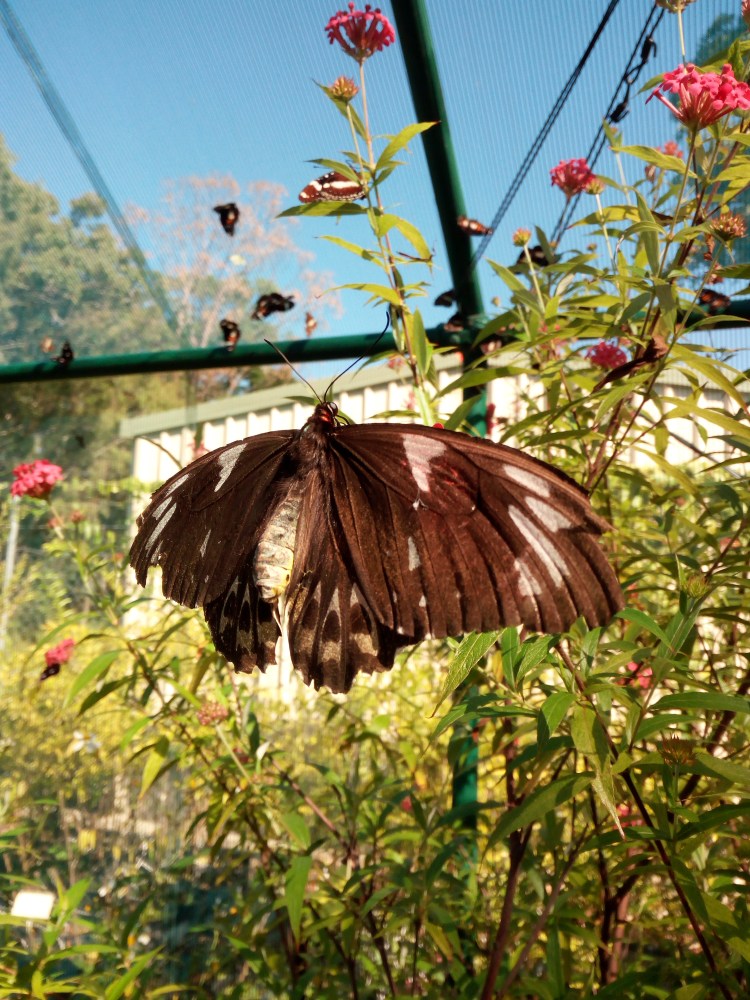
Ready to go inside? You have to go slow because butterflies don’t dive-bomb you like mosquitoes. Silent wings flutter by, difficult to photograph, I marvel at their fragility.
Photos left to right—Plant-filled entry; a vine chock-full of happy butterflies; misty air rises from a vaporizer; a Common Crow, why that name?; a Swamp Tiger against the blue sky; newly hatched Monarch; oops, there’s two Orchard Swallowtails mating, best move on . . .
Common Crow
Swamp Tiger
Monarch
Orchard Swallowtails
NEXT I NOTICED QUIRKY THINGS TUCKED AROUND THE BUTTERFLY HOUSE . . .
Hanging pot planters and gumboots stuffed with plants.
A rather clandestine bubbler and a secret butterfly door.
Inspirational quote and landing pad stocked with nutritious butterfly food.
This lady (below) had to make sure she was butterfly-free before leaving. The butterflies landed on hair and hats. Interestingly, they stayed well clear of the heavy black plastic doors, perhaps because their focus is on light, bright colours.
Before departing I visited the plant section where butterfly-friendly plants (see chart) were available for purchase. There is no cafe and no merchandising, and nobody telling visitors The Rules. The only suggestion is to leave your worries in a bin at the door. Quite a refreshing visit in more ways than one!
The Bribie Island Butterfly House exists to provide a sense of purpose and lasting friendships among their volunteers, to offer visitors an enjoyable and educational visit in a peaceful environment and to help the disadvantaged via donations to charities.
Grow a patch of dandelions! Check out Lyn’s wonderful UK Butterflies And Garden blog. Pledge to stop using manufactured pesticides! Around my area, the green tree frog and butterfly populations have severely decreased due to the rise in toxic garden herbicides and pesticides. Think natural, not noxious!
And, of course, my avatar is a hand-drawn butterfly.
THAT debate rages on. THAT is an overused, unnecessary word, a redundant filler which bulks out your manuscript and changes just about anything into THAT nothingness.
Increasingly, ambiguous THAT is being used instead of ‘who’ and ‘which’ or more descriptive words to introduce a defining clause. This is happening universally in writing today; THAT is slowing and neutralising sentences.
Seven examples where THAT is incorrect or useless, write your own, you get my drift:
She said that it was in her best interest – delete.
They walked down the stairs that are rather grand – use which.
He visits the koala that he sponsors – delete.
Judy thinks Angela is the sort of woman that enjoys tennis – use who.
He assumed that they all wanted to singalong with him – delete.
It takes a minute to realise that Sue is talking – delete.
Tom has to tell her that her dog has been stolen – OK-ish.
A pronoun is a word taking the place of a noun. THAT is a demonstrative pronoun and used in the right context it has a legitimate reason to exist, e.g. ‘That’s a good idea’.
It is perfectly valid when THAT appears in character dialogue, but when a writer indiscriminately uses THAT in other areas of their work, I find it needlessly clunky.
Of course, you can change a passive voice to an active voice, or use the rule ‘Who is a person, THAT is an object’. Remember ‘Who, what, when, where, why’ to help you decide.
On the other hand, there’s always exceptions. Use your own discretion as to where you like or don’t like THAT, and where THAT actually does fit in your sentence. Once you become aware of THAT, you will probably get rid of it unless you use American English.
CHALLENGE
Read through text or a draft you have written in the last month.
Check for how many time you use the word THAT.
Are you surprised at your usage?
Could you use a more expressive word than THAT?
Could you condense your word count by omitting THAT?
Read a novel or document and watch for THAT exploitation.
If there’s a ‘Ditch THAT’ campaign running, I will sign up!
Why? Because current literary exertion is being spent on THAT, an overworked and superfluous word. What more can I say about THAT? Or, what more can I say?