Donkey Trekking Tips ‘The Only Way Home’ Liz Byron

In her memoir ‘The Only Way Home’ and YouTube video (see below) Liz Byron explains what it meant leaving her roller-coaster marriage, career, family dinners, large library and a comfortable, charming home to trek 2,500 kilometres through rural Queensland on the rugged Bicentennial National Trail.

Liz, mother and semi-retired sociolegal researcher, writes from her New South Wales Northern Rivers home.  Her writing is confronting and visceral in its honesty.

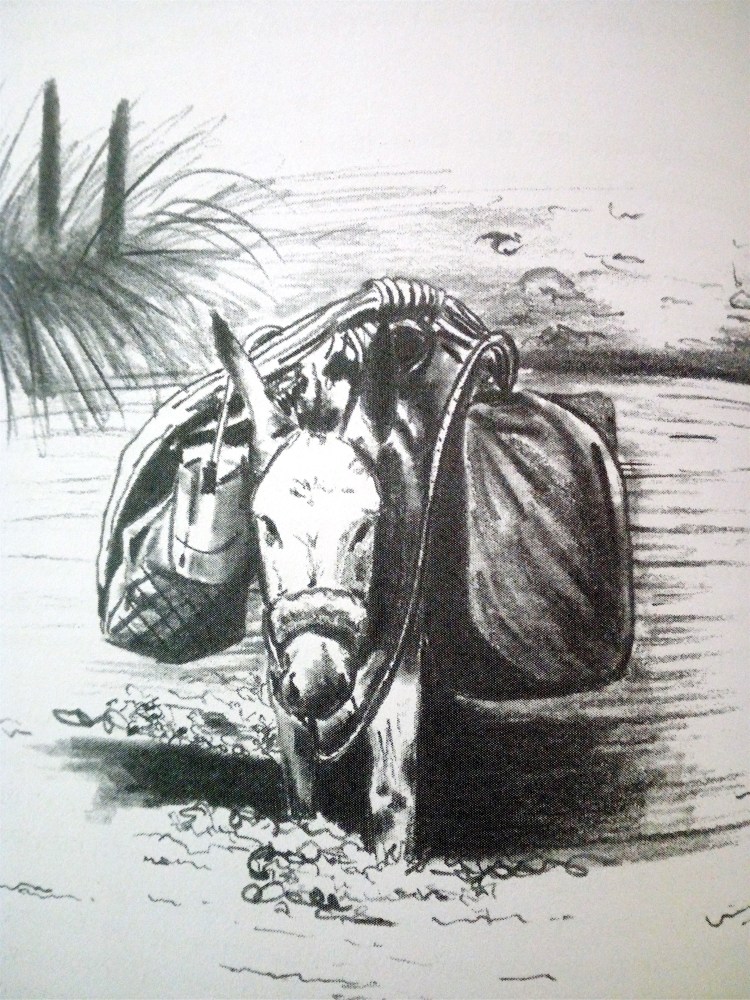
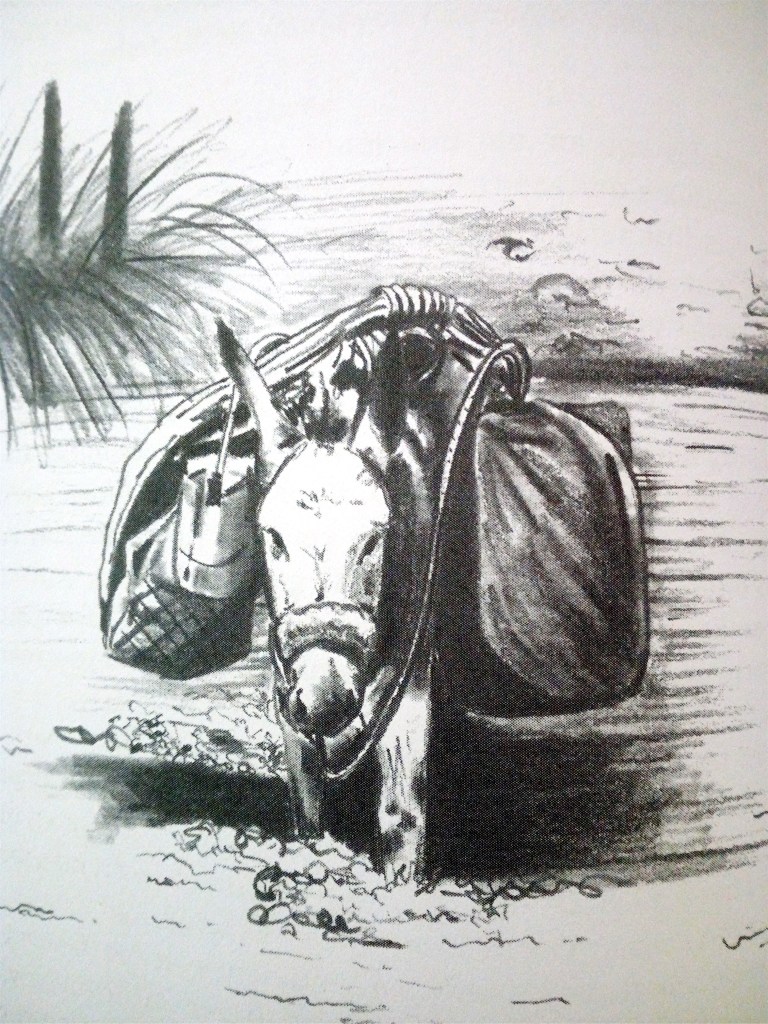
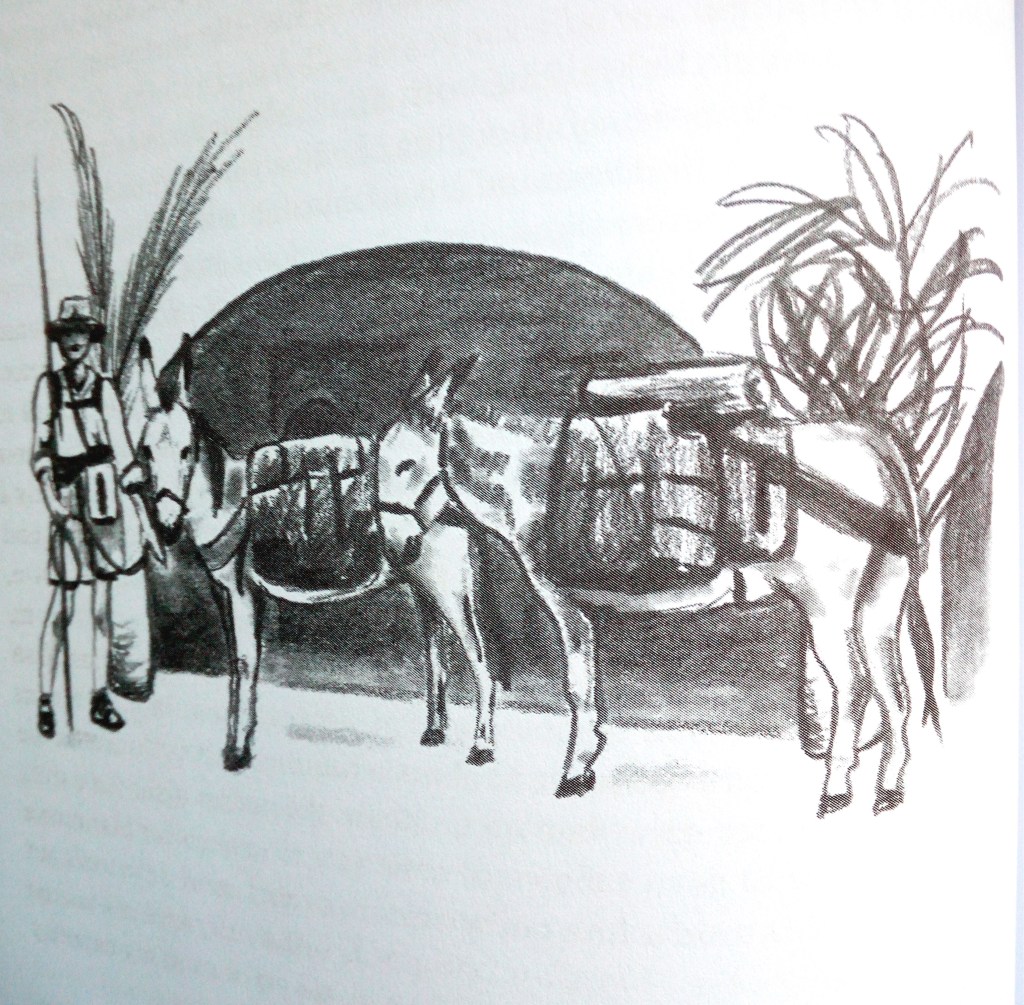
Each step on this radical journey of self-discovery helped Liz make sense of grief and trauma, including the tragic loss of one of her four children.  Liz’s fierce independence was confronted daily as she tackled details of equipment, food supply, lack of drinking water, thorny grass seeds and the hilarious will of her two devoted donkeys Grace and Charley.

PHOTOGRAPH COURTESY OF AUTHOR

EXCERPTS FROM LIZ BYRON INTERVIEW

What advice would you give to someone wanting to do a long distance trek?

LIZ : From the various facets involved in a long-distance trek, consider where you might lack experience and spend time acquiring the experience you need. From thirty years of overnight bushwalking, I was experienced at living outdoors, packing light, negotiating difficult terrain and camping, cooking in all weathers. However, I had no experience with large animals and allowed myself four years to get to know my donkeys, learn how to handle them on the road and have them face as many scary situations as I could predict might arise.

What was your most essential piece of equipment?

LIZ : My hoof pick. Everything about trekking depends upon the donkeys’ feet.

You talk about having to learn about adjusting your standards of what to expect, how did the BNT trek compare to what you expected?

LIZ : Adjusting my standards was more about adjusting my expectations of other people and myself. A strong theme in the book is that – because of all my outdoor experience – physical challenges were easily overcome. It was almost as if surviving physically demanding situations was no longer part of the lessons I needed to learn. The challenges were much more about relating to people from whom I needed help – because of the extremely dry conditions and NEVER part of my trek plan – so accepting my limitations, and theirs, changed my standards of what to expect in all sorts of social situations.

What was the most important thing that working with donkeys taught you about yourself?

LIZ : Accepting the way things are, like donkeys do, is far healthier, for both mind and body, than getting lost in thoughts about how things should be.

Several years have passed since you walked the Bicentennial National Trail, have the lessons you learned endured?

LIZ : Yes. Because lessons learned from experience, in other words, from our mistakes, naturally endure.

Thank you, Liz, I enjoyed reading ‘The Only Way Home’. Your unique memoir shows strength of purpose and insights into your remarkable journey.

Gretchen Bernet-Ward 2021

WOLLONGONG CITY LIBRARIES – YOUTUBE

MY BOOK REVIEW HERE
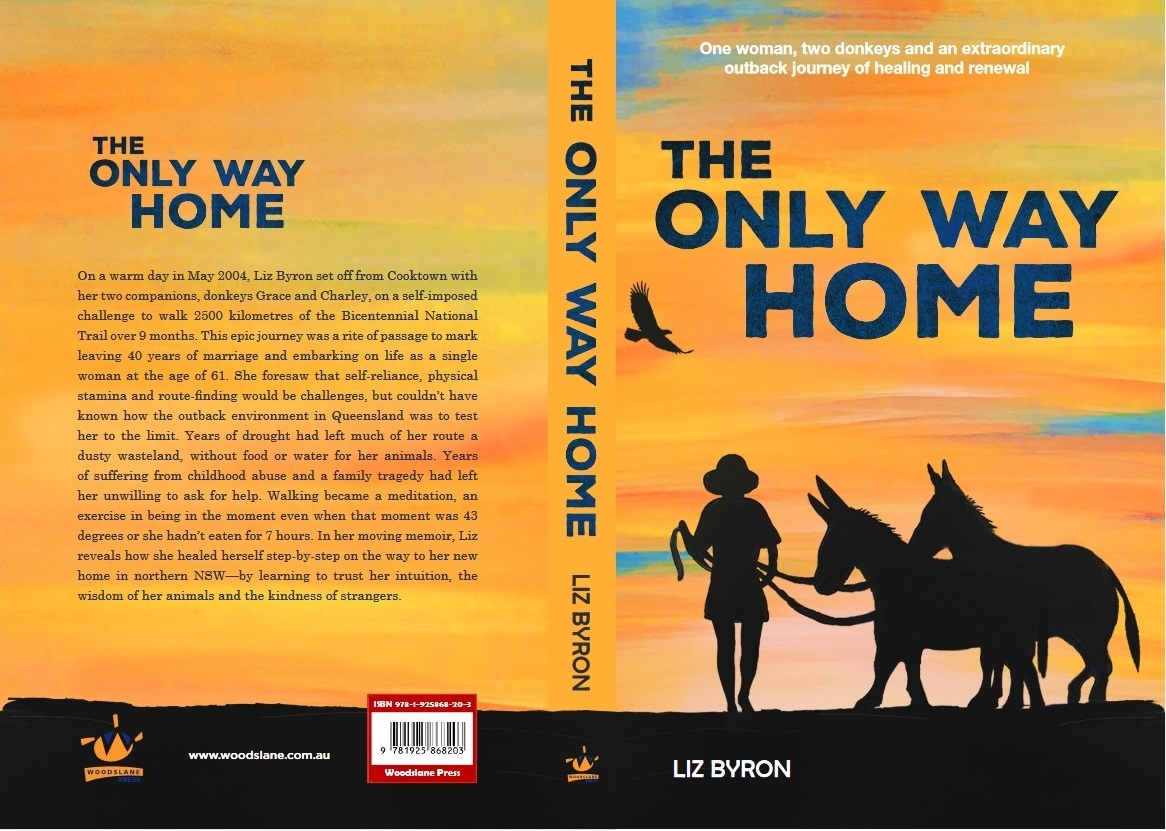
THE ONLY WAY HOME


PURCHASE BOOK HERE
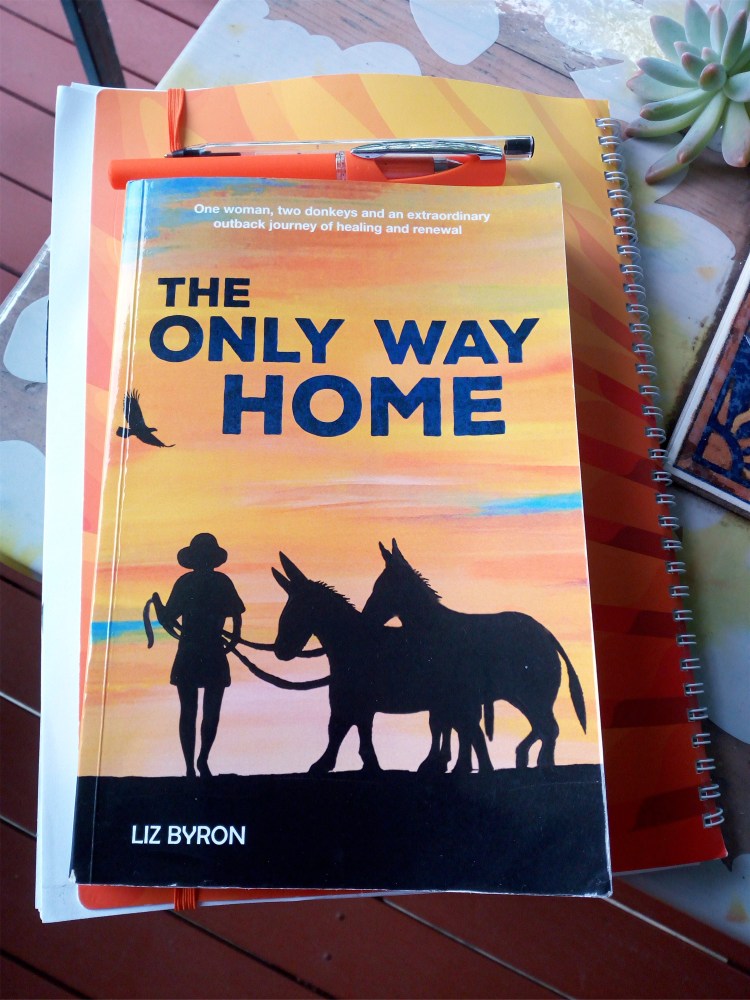
Liz Byron ‘The Only Way Home’ Book Review

A memoir of singularity of purpose and a deep determination to overcome all obstacles.  Liz Byron challenges herself in every way, mentally, physically and spiritually to start afresh by walking the rugged Bicentennial National Trail towards a new, independent life.  The BNT on the Great Dividing Range on the east coast of Australia has some of the most unforgiving landscapes in the world.  Her companions on this journey are two donkeys with the wisdom of ages and Liz’s symbol, the wild watchful wedge-tail eagles.

‘The Only Way Home’ is an intimate memoir with a heartbreaking look into family life, the pain Liz suffers and the repercussions for those involved.  It also captures the freedom of walking through wide-ranging bushland, fording rivers, and making camp with two charming character-filled donkeys Grace and Charley.

Liz had previously done a lot of bushwalking but without encountering such a harsh and challenging environment. Taking the extremes of drought country in their stride, her donkeys are clever and observant, and prove they can be stubborn for good reason.  Humans just have to work out what those reasons are! Liz shows love and respect for her companions, their hardiness and their intuition. Grace and Charley each carried a load, packed and balanced, and it was amusing how they behaved when released to graze.

Interspersed with walking the Queensland section of the BNT, a trail originally intended for horses, Liz writes candidly about her fractured marriage, the love of her children and losing a child, the trauma of her own childhood and soothing meditation. A mixture of grief, courage and sheer willpower drives her forward as she launches herself into a second life in one of the most demanding ways imaginable. 

Admittedly I am not an adept hiker but some of the trials and tribulations Liz encountered would have had me stumbling to the nearest township, flagging down a four-wheel drive and heading back to Brisbane.  At one stage the soles of Liz’s hiking boots came adrift, not to mention needle-thin grass seeds digging into her skin.  Sometimes the track was marked and sometimes it was not; they traversed barren sections, steep topography, waist high grass, slippery rocks and rested at the occasional restorative oasis.

Along the way, Liz kept a journal rather than taking photographs and if she stopped for the night in solid accommodation in lieu of pitching a tent, all she needed was a table and chair to update her journal.  Liz often met farmers, cattlemen, country people, who were informative and willing to help with advice on the terrain ahead, plus an overnight paddock for her two stalwart pals.

Memorable lines from Liz ‘Folks in rural, remote, drought-stricken Queensland understood only too well the interdependent nature of being human.  I, on the other hand, was trying to resolve an inherent dichotomy: seeking my independence as a woman at the same time as being a homeless wanderer heavily reliant on cattle station people’ – Liz is a vegetarian and food was a source of uneasiness, both getting and eating, and fresh produce was always a joy – ‘My commitment to receive help graciously was Step One.’   

Charlie, the archetypal Australian bushman said ‘Don’t be tempted to leave the roadway. The country is the same in every direction. Getting lost around here is a lot easier than getting found.’

‘The Only Way Home’

I liked the way the chapters and timeline were introduced.  Backstory arrives at pertinent intervals with sections of Liz’s life before, during and after she walks the Bicentennial National Trail.  Through Liz’s retelling more shocking revelations emerge, putting her quest in sharper focus.

Just reading, without travelling alone for 2,500 kilometres with two Equus asinus companions, this memoir invoked many emotions in me. From an embattled marriage to conquering those kilometres, Liz shares the insights gained on her path to independence and healing.

Gretchen Bernet-Ward


ISBN: 9781925868203
Format: Paperback
Number of Pages: 257
Published: 24 Feb 2020
Publisher: Woodslane Pty Limited NSW

In her introduction, Liz Byron says ‘It was 2006, when I had been writing academic material for 20 years, before I decided to try writing my story. I had five lecture pads full of journal notes about the 2,500 kilometre trek I’d recently completed with my two donkeys. This seemed like a good place to start.  And so I did. I wrote on and off for nearly fifteen years before feeling as if I understood myself and my life well enough to explain why I had done the trek.’ My thanks to Liz Byron for a review copy, the book is available on her website here.

LIZ BYRON Q&A INTERVIEW HERE

The Bicentennial National Trail - Australia
The Bicentennial National Trail (BNT) originally known as the National Horse Trail, is one of the longest multi-use, non-motorised, self-reliant trails in the world, stretching 5,330 kilometres from Cooktown, Queensland, through New South Wales and the Australian Capital Territory to Healesville, 60 km north-east of Melbourne, Victoria. This trail runs the length of the rugged Great Dividing Range through national parks, private property and alongside wilderness areas. The BNT follows old coach roads, stock routes, brumby tracks, rivers, fire trails and was originally intended for horses.  The Trail would take most of one year to walk.

Save and Restore Lamb House

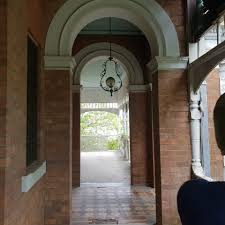
Lamb House is one very interesting residence!  And it is uncommon to find such architecture in Brisbane still intact.

StateLibQld_1_110380_Home,_also_known_as_Lamb_House,_Kangaroo_Point,_Brisbane,_ca._1904, B&W image held by John Oxley Library, State Library of Queensland, Public Domain, https://commons.wikimedia.org/w/index.php?curid=12662188

Lamb House needs restoration.

A heritage-listed villa, Lamb House is situated at 9 Leopard Street, Kangaroo Point, Brisbane, Queensland, Australia. It was designed by Alexander Brown Wilson and built from c.1902 to c.1908.  It was added to the Queensland Heritage Register on 21 October 1992 and has been languishing unattended ever since.

Brisbane City Council is proposing amendments to some of its citywide provisions in Brisbane City Plan 2014 (City Plan) and submissions are now open for Major amendment package K – Lamb House. Council has opened consultation for Lamb House character protection.

Queensland Heritage Register states that “Lamb House, erected c.1902, is a rare surviving example of a grand, intact Federation period residence in the Brisbane district” and this Wikipedia entry practically screams Period Drama

“Lamb House is a large, two-storeyed, red brick residence with a multi-gabled roof clad in terracotta tiles. Conspicuously situated above the Kangaroo Point Cliffs at the southern end of the suburb, overlooking the South Brisbane and Town reaches of the Brisbane River…”

“Queen Anne influences are evident in the timber and roughcast gable infill designs, the ornate cement mouldings to the entrance portico-cum-observation tower, and the elaborate chimney stacks and tall terracotta chimney pots.”

“The original plans indicate vestibule and stairwell, dining, drawing and morning rooms, kitchen and service areas on the ground floor, and six bedrooms and a bathroom on the first floor.”  Plus “The residence has substantial grounds with mature trees and gardens.”

Lamb House Kangaroo Point Brisbane Queensland 01
Lamb House, Kangaroo Point, colour image by Unknown author – State of Queensland: Queensland Heritage Register: Home, CC BY 3.0, https://commons.wikimedia.org/w/index.php?curid=53132101

The proposed changes to Lamb House (situated on Leopard and Wild Streets, Kangaroo Point with a stunning view of the Brisbane River, city botanical gardens and CBD) support Council’s commitment to protect the unique character of Brisbane, considering the property’s local landmark identity, and the character and streetscape values of the area.

These proposed changes include:

    • Zoning changes to lots held by Lamb House to become Character residential (Character zone precinct)
    • Updates to overlay maps to apply the Traditional building character overlay.
    • Adding the Significant Landscape tree overlay to the weeping figs on the lots on Leopard Street, Kangaroo Point.

Please consider making a submission because community input is vital for informing major amendments to City Plan; and Brisbane City Council is now seeking feedback on the proposed changes.  You can HAVE YOUR SAY and submissions must be received by 11.59pm on Sunday 13 December 2020.

Residents can talk to a Council planner to ask questions or seek clarification on the proposed changes.  Register for a free Talk to a Planner session from 23 to 25 November 2020 at these locations:

For more information visit the Brisbane City Council website, email the project team, telephone Council on 07 3403 8888 or write to Strategic Planning.

Blog Webpage Banner 31

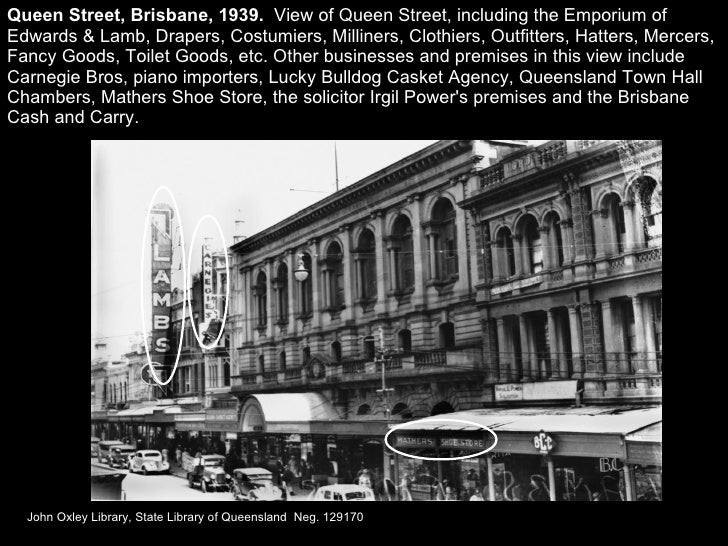
Lamb House, built in 1902 for Queen Street draper John Lamb (one half of Edwards & Lamb Emporium specialising in Drapery, Millinery, etc) is still owned by the Lamb family, Joy Lamb.  Heritage-listed Lamb House and surrounding gardens are well worth preserving in my opinion.  It might make up for the destructive Joh Bjelke-Petersen era and the wrought iron lace which disappeared during the midnight demolition of the landmark Bellevue Hotel in 1979, and give Brisbane a proper past for the future to appreciate.

Journalist Tony Moore wrote an interesting Opinion Piece with some eye-opening photographs:
https://www.brisbanetimes.com.au/national/queensland/lamb-house-is-a-mess-but-it-could-be-a-brisbane-tourism-highlight-20200605-p5500x.html

Addendum:

Outstanding info with house and grounds images ‘Save Lamb House’ Jon Ruwolt, August 2020
https://www.federation-house.com/post/save-lamb-house

More colour images from © 2009 the foto fanatic
http://www.yourbrisbanepastandpresent.com/2009/04/lamb-house.html

If you are interested in Queensland history, visit Thom Blake Historian website
https://thomblake.com.au/index.php

Rose O’Brien takes a personal look at Queensland’s past and present
Queensland Stories https://roseobrienwriter.blog/


Lamb House Kangaroo Point Brisbane Queensland 02
Lamb House, Kangaroo Point, image from Facebook page, https://www.facebook.com/LambHouseHistory/

DEAR READER,
IF HISTORICALLY INCLINED, PLEASE CONTACT BRISBANE CITY COUNCIL.
I ADORE OLD HERITAGE LISTED BUILDINGS – THEY MUST BE PRESERVED.
BUT I HAVE NO CONNECTION WITH DECISIONS REGARDING LAMB HOUSE.
I WATCH FUTURE EVENTS WITH INTEREST,
AND SINCERELY HOPE THIS UNIQUE OLD HOME CAN BE REVIVED.
GBW 2020.

A BIG WIN for the local suburb Kangaroo Point and City of Brisbane residents.

Lamb House new owners Steve and Jane Wilson unveil $15m renovation plans for heritage-listed riverside mansion. Reported by Jessica Rendall and posted Thu 8 Jul 2021. https://www.abc.net.au/news/2021-07-08/qld-lamb-house-owners-outline-renovation-plans-brisbane-landmark/100275422

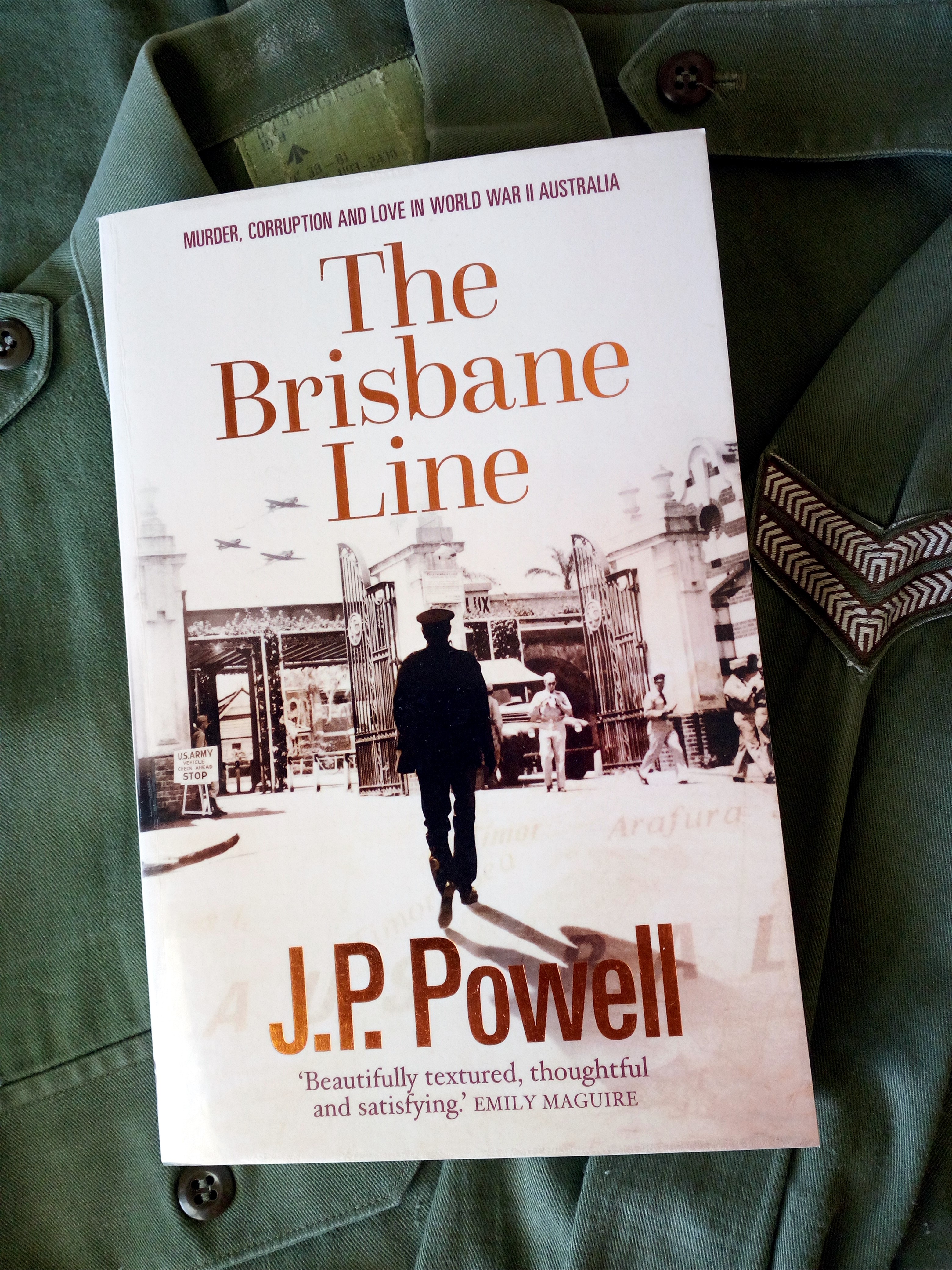
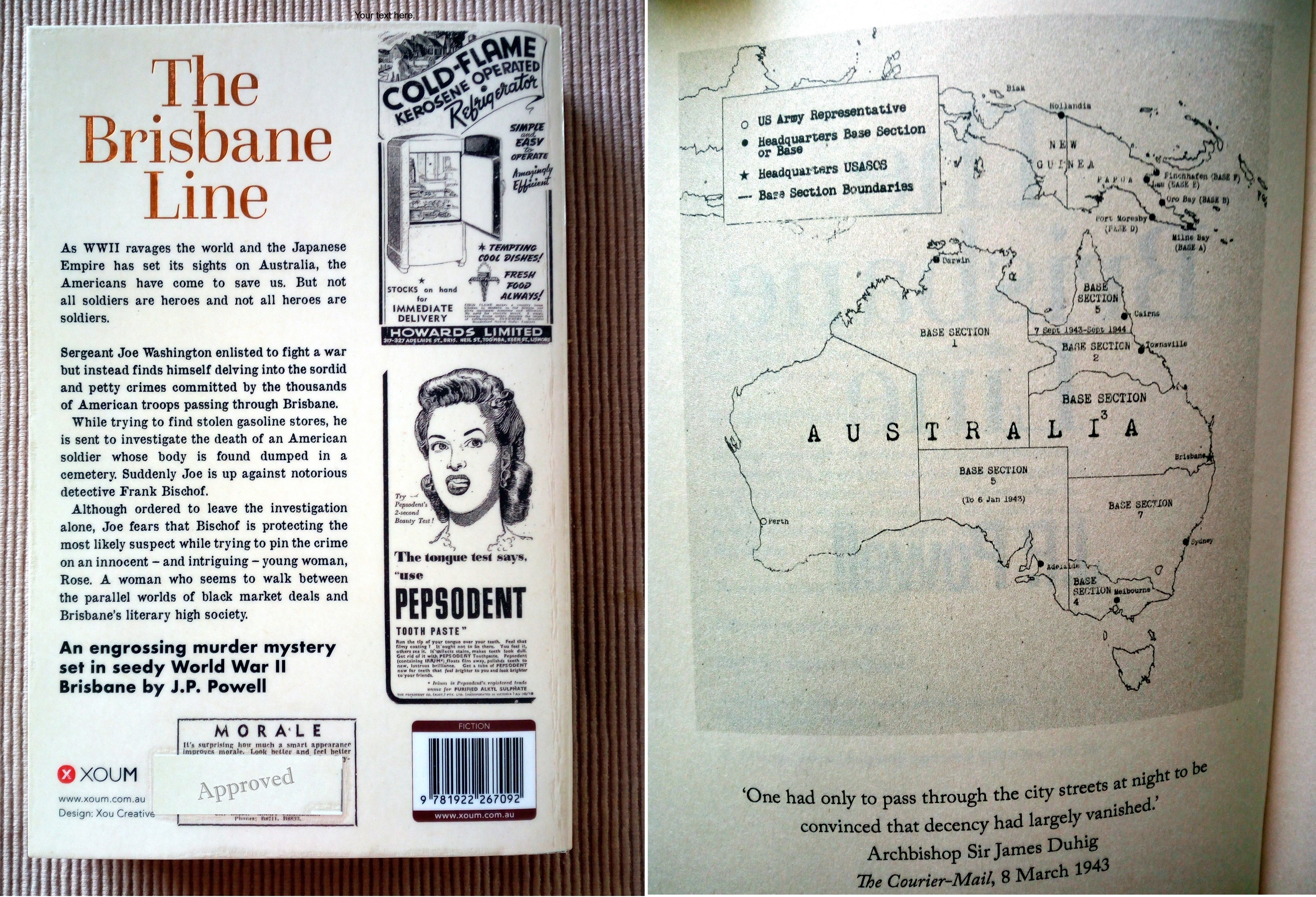
Review ‘The Brisbane Line’ by J P Powell

IMG_20200811_124224

This is a book I had to read.  The name is derived from “an alleged 1942 WWII government plan to abandon Northern Australia in the event of a Japanese invasion”—there is nothing alleged about it.  My father was a young soldier in WWII based in Melbourne when his division received the command to form The Brisbane Line.  It made such an impression on him that later, when he was married, he relocated the family to Brisbane where I currently live.

I dearly wish I could discuss this novel with my late father but I do remember him reminiscing about the off-duty times and leave in tropical Far North Queensland where hi-jinks often lead to a soldier’s death.   I am sure there was tension, corruption and murder among the thousands of American troops stationed in Brisbane, but on the other hand I know families of young women who married GI Joe’s and went to live in US never to return.

Enigmatic protagonist, Rose, has a boyfriend who is a prisoner-of-war and she says “It’s men who cause the trouble in the first place.  It’s just another hypocrisy.”

IMG_20200820_122715

Suitable for crime readers and historians, this well-researched yet fictionalised novel is based on a real person and his original paperwork.  It is more interesting than a text book and follows Sergeant Joe Washington, a US Military Police officer and amateur photographer who joins local police in battling crime and black market corruption.  Joe also has grave suspicions of a murder cover-up.

The humid atmosphere is laced with grunge and irritability offset by guys and gals dancing the night away at the Trocadero Dance Hall.  Well-known landmarks and people make an appearance, for example notorious cop Frank Bischof, author Thea Astley and General Douglas MacArthur, an American who in WWII commanded the Southwest Pacific region. 

The book is gritty and at times the inequality upset my 21st century sensibilities but it is based on true events.  Powell has recreated a vibrant town which embraced a huge influx of cashed-up strangers in uniform and the repercussions this had on Brisbane society, some of which still lingers today.

In “The Art of War” Chinese military strategist Sun Tzu wrote “All warfare is based on deception” and “The greatest victory is that which requires no battle” so I think Judy Powell’s book shows there was no battle—but plenty of deception closer to home.  

Gretchen Bernet-Ward


Author Profile

Briobooks
http://briobooks.com.au/authors/jppowell
YouTube Avid Reader Books interview
https://www.youtube.com/watch?v=SbE0v3Yhkx0

Brisbane Line JP Powell Author Photo 2020 (5)Judy Powell is an archaeologist and historian with a passion for bringing the past to life.  She has worked as a high school teacher, an academic, a National Parks officer, a museum administrator and has excavated in Jordan, Cyprus and Greece as well as leading historical archaeology projects in Australia.  Powell, who lives outside Brisbane, was awarded a QANZAC Fellowship by the State Library of Queensland to pursue research into, and writing of, a series of crime novels set in Brisbane during World War II.

Winter Pumpkin Scone Recipe

IMG_20200606_160101
Home-grown Kent Jap Pumpkin ready for cooking – June 2020

Pumpkin scones are a traditional morning tea favourite in Queensland.  Unsophisticated yet delicious, these golden scones were much-loved by the late Lady Flo Bjelke-Petersen, politician and wife of former Premier Sir Joh Bjelke-Petersen, and she often baked them for public occasions.

Seen as tea-time treats, they are available by the half dozen in bakeries and displayed in the cookery section of annual shows and exhibitions.  For home cooking, pumpkin scones have stood the test of time due to their quick preparation and adaptability.  They can be eaten sweet with strawberry jam and whipped cream, or savoury with cheddar cheese and chutney.

For full flavour, pumpkin scones are best eaten warm from the oven, but they store well and a quick turn in the microwave gives them a boost on a chilly morning.

IMG_20200611_130000
Packed and ready for visiting family – June 2020

Grandma’s Pumpkin Scones

3 cups self raising flour

pinch salt

½ cup sugar

1 tablespoon butter

1 cup mashed pumpkin – cooled

1 egg

milk

Cream butter and sugar.  Add egg, add mashed pumpkin.  Sift in flour alternately with enough milk to make soft, light dough.  Pat out or roll on floured board to desired thickness.  Cut with round cutter.  Place on tray and brush with milk or lightly dust with flour.  Bake in a hot oven.  Serve warm; plain or with topping.

Above recipe is adapted from Jenny Purvis, “Kilmarnock” Clermont, Queensland.
Courtesy of “Country Hospitality: A Comprehensive Cookery Book” compiled by the Clermont Branch of Isolated Children’s Parents’ Association 1984 edition.

IMG_20200606_181544
Plain, buttered, chutney or jam topping?

A prayer follows the foreword by former Executive Officer, Queensland Council ICPA, Mr E C Powne MBE, and reprinted below:

My Kitchen Prayer

Bless my little kitchen, Lord,
I love its every nook,
And bless me as I do my work,
Wash pots and pans and cook.

May the meals that I prepare,
Be seasoned from above,
With thy blessing and thy grace,
But most of – thy Love.

As we partake of earthly food,
T
hy table Thou has spread,
We’ll not forget to thank thee, Lord,
For all our daily bread.

So bless my little kitchen, Lord,
And those who enter in,
May they find nought but joy and peace,
And happiness therein.          Amen.


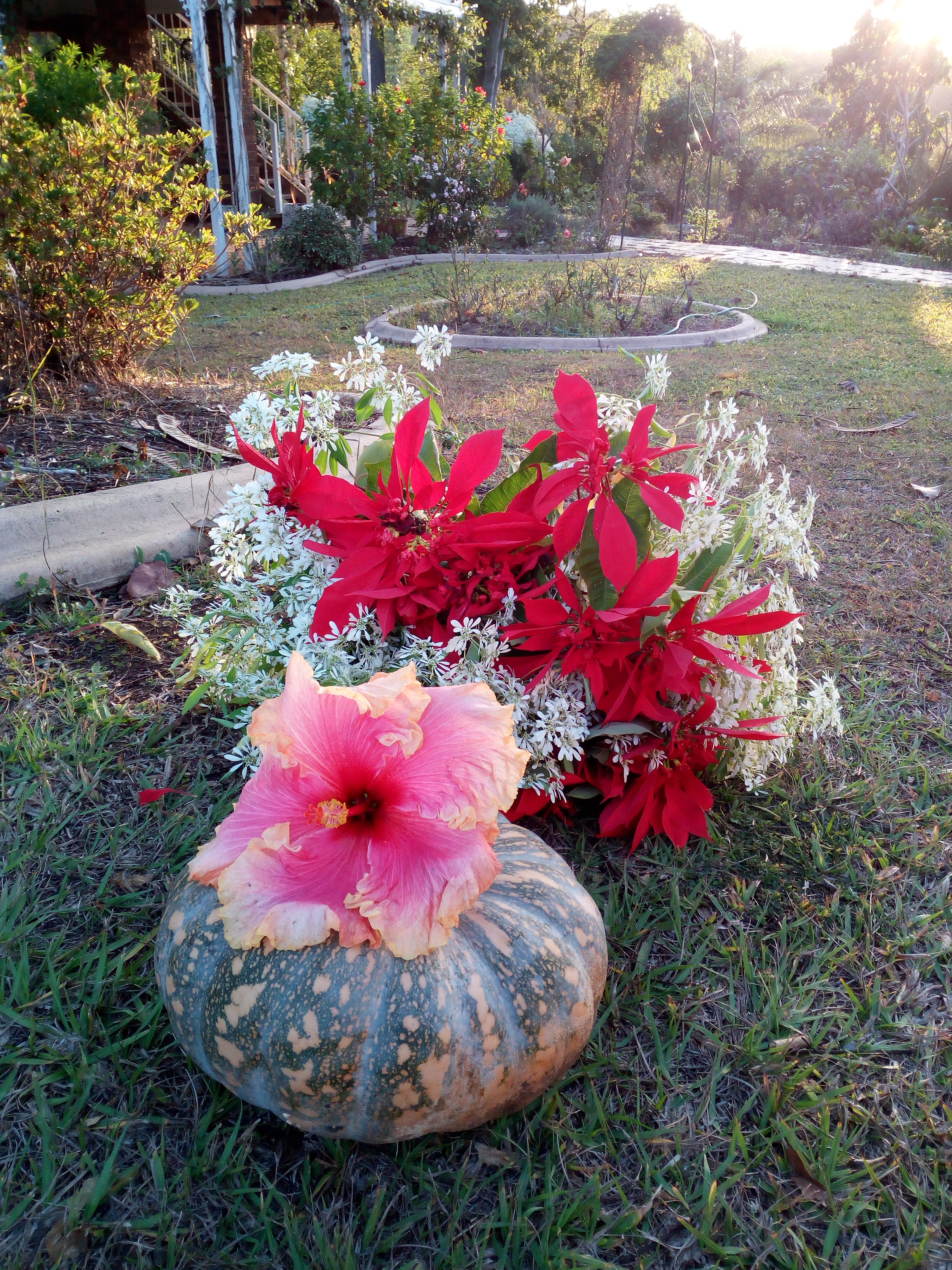
IMG_20200611_163708
Nature’s winter bounty brightens our day – June 2020

Gretchen Bernet-Ward


ADDENDUMKent pumpkin (also known as Jap pumpkin) has ribbed, grey-green mottled skin and golden yellow flesh.  This pumpkin is of the sweeter variety, perfect for pumpkin scones, salads and baked dishes.  Great mashed, roasted or steamed and mixed with a variety of sweet or savoury foods.  Pumpkin is an excellent source of beta carotene and contains dietary fibre, potassium, and vitamins C and E for good health.

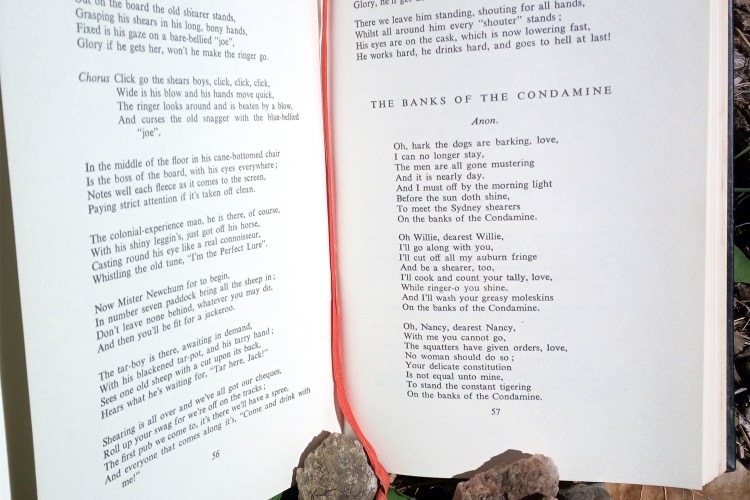
Bush Ballad ‘The Banks of the Condamine’

The Banks of the Condamine


Oh, hark the dogs are barking, love,

I can no longer stay,

The men are all gone mustering

And it is nearly day.

And I must be off by the morning light,

Before the sun doth shine,

To meet the Roma shearers,

On the banks of the Condamine.


Oh Willie, dearest Willie,

I’ll go along with you,

I’ll cut off all my auburn fringe

And be a shearer, too.

I’ll cook, and count your tally, love,

While ringer-o you shine,

And I’ll wash your greasy moleskins

On the banks of the Condamine.


Oh, Nancy, dearest Nancy,

With me you cannot go,

The squatters gave us orders, love,

No woman should do so;

Your delicate constitution

Is not equal unto mine,

To withstand the constant tigering

On the banks of the Condamine.


Oh Willy, dearest Willy,

Then stay back home with me,

We’ll take up a selection,

And a farmer’s wife I’ll be.

I’ll help you husk the corn, love,

And cook your meals so fine.

You’ll forget the ram-stag mutton

On the banks of the Condamine.


Oh, Nancy, dearest Nancy,

Please do not hold me back,

Down there the boys are waiting,

And I must be on the track.

So here’s a goodbye kiss, love,

Back home here I’ll incline

When we’ve shorn the last of the jumbucks

On the banks of the Condamine.


Anonymous.


From ‘Bush Songs, Ballads and Other Verse’ selected by Douglas Stewart and Nancy Keesing and published 1967 by Angus & Robertson Ltd, printed by Discovery Press.

The following information from—
https://music.stevetowson.com/track/the-banks-of-the-condamine-2

Poetry Clipart 08

Australian traditional music has a dearth of love songs, but here is one from our home state of Queensland.  The English folk singer and collector A.L. Lloyd wrote about this song—

“Throughout the fifty years from 1820 to 1870, broadside printers in London, Newcastle, Dublin and elsewhere did a good trade with the stall-ballad called ‘Banks of the Nile’, a song from the Napoleonic Wars.  The song spread to America and Australia, and in Queensland it became parodied as ‘The Banks of the Condamine’, with the hero no longer a soldier but a horse-breaker or a shearer.  It has turned up in sundry shapes, to various tunes, many times over, mostly in Queensland.”

FOOTNOTE:

  1. This bush ballad was first published under another name in The Queenslander, the literary edition of the Brisbane Courier in 1894.
  2. The Condamine River in southeast Queensland is 657 kilometres long and starts below Cons Plain and ends at the Balonne River.
  3. It was named in honour of Lieut. Thomas De La Condamine (1797-1873) the A.D.C. to Governor Ralph Darling who also has a river named after him.  But the Darling River has been known as the Baaka by the Barkindji people for thousands of years.  https://en.wikipedia.org/wiki/Condamine_River

Gretchen Bernet-Ward

Condamine River Sheep Shearer Demo

Review ‘The Man in the Water’ by David Burton

David Burton has written an outstanding story about a tenacious young man determined to solve a mystery.  In a tightly woven and highly readable plot he keeps the pressure up, and keeps it real.  Shaun sees a man’s body floating in the local lake and when he returns with Constable Charlie Thompson the body has gone.  The story kicks off from there and Shaun begins to investigate the mysterious death.  He uncovers far more than he ever imagined.  And he has a good imagination!

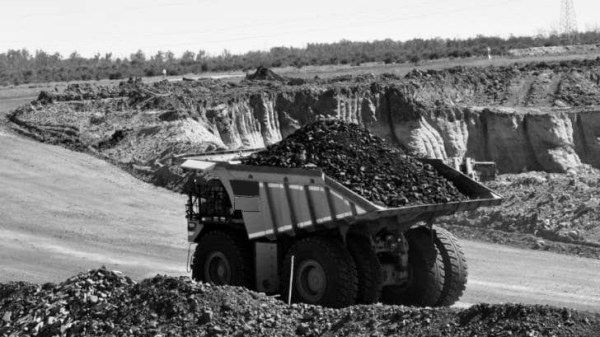
Set in a gritty, rundown Queensland coal mining town, the atmosphere is hot, dry and pulsating with undercurrents from personal relationships through to shonky mining regulations.  My assumptions were overturned, clues were flipped and hopes were dashed.  From angry picket lines headed by volatile Peter Grant, head of the mine workers union, to various forms of small town mindset, Shaun’s investigations pull him deeper and deeper into a world of unanswered questions.

Coal Mining Coal TruckThe subtext throughout the story is “Who believes Shaun actually saw the man in the water?”.  Not many people, it seems.  Even his mother Linda struggles to accept the situation, although a family death may be clouding her reasoning.  Shaun does appear to have a kind of obsessional limerence.
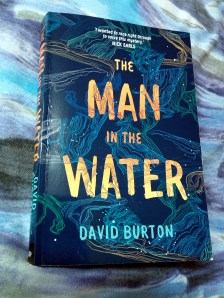

Fortunately Shaun has a keen ally in his long-time friend Will, a larrikin with a charming manner.  They both believe the drowned man was murdered and someone has masterminded a cover-up.  They negotiate their way through a minefield of possibilities, taking risks, and discovering the mental and physical challenges faced by coal workers and their families.  Only once did I suspend disbelief when Shaun infiltrates a building, but it’s a pivotal moment.

In between covert operations, annoying teachers and school classes, Shaun and Will are on the school debating team with Megan Grant.  Shaun adores Megan from afar and he imagines a future of “happy ever afters” together.  Investigations continue in Brisbane with their debating team when a challenge is held in a Harry Potteresque private school perched on a hillside (I recognised it) and they stay overnight in enemy territory.  A gripping spy-like chapter for you to discover.

IMG_20191112_192248

I loved the personalities David Burton has created, the characters often did the opposite to what I expected, making them fallible yet understandable.  In certain cases, there’s a fine line between liking and loathing.  There is power in subtlety, and from the frustration of workers about to lose their jobs, to the death of a loved one, nothing is overstated.

David Burton has given Shaun a proactive role with plenty of intrigue.  I have no hesitation in saying “The Man in the Water” is an excellent mystery for young adults and older readers.  I became fully absorbed in the story and was right beside young Shaun trying to unravel the riddle.  The end result is definitely worth it!

Quote from Chapter 32 “From the sky, Shaun’s home town looked like it was surrounded by yawning black holes.  It was epic.  The mines were colossal dark wounds in the earth, the town a sort of defiance among the rubble.  It was a god’s sandpit.  He pressed his face against the window and watched as the earth turned with the plane.  They were coming in to land.”

Gretchen Bernet-Ward


AUTHOR PROFILE

David Burton Writer and Playwright
David Burton, Author and Playwright

David Burton is an award-winning director, playwright and author.  By the age of 30, he’d written over two dozen professionally produced plays, published a book, and been a core part of some of the most innovative theatrical projects in Australia.

He’s now 32, a Dad, and has written a new YA fiction book “The Man in the Water” which I reviewed.

Visit http://www.daveburton.com.au/

Booktopia https://www.booktopia.com.au/the-man-in-the-water-david-burton/book/9780702262524.html

Toowoomba Mountain Air and Heritage Preserved

From Brisbane, we head inland to Gatton where we stop for lunch before crossing the fertile vegetable-growing plains of the Lockyer Valley.  Our goal is the garden city of Toowoomba, situated in the Darling Downs region of southern Queensland on Australia’s Great Dividing Range.

The gradient is steep and it’s a slow climb up the mountain before we crest the plateau and turn left to Picnic Point lookout.  It’s a traditional spot for travellers to stretch their legs and take in the magnificent views which seem to stretch forever into a blue-grey smudge.

IMG_20190624_122403
We stop for lunch at the Gatton campus of University of Queensland and admire this heritage-listed Foundation Building constructed in 1896 and used for events and conferences.

IMG_20190624_140411
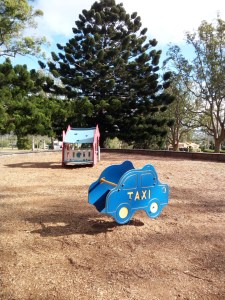
Did you call a taxi? Children’s playground at Picnic Point, Toowoomba.

After checking into our boutique hotel, we take a short walk into town, passing old homes with steep corrugated iron roofs and interesting turrets and chimneys.

A charming old building in Margaret Street, once a grand home with circular driveway, is available for business lease.

In the city centre, shops and offices are still housed in quaint older-style buildings which seem to go on forever when you are inside.

The Book Tree bookshop is an Aladdin’s cave of books and accessories and a friendly salesperson.  The haberdashery store Lincraft is on three levels, basement, middle and top (with creaky wooden floorboards) crammed full of craft-creating supplies and good customer service.

Friendly staff seem to be the theme throughout Toowoomba including the upmarket shopping precinct Grand Central which contains everything the modern shopper has come to expect—plus a book swap library.

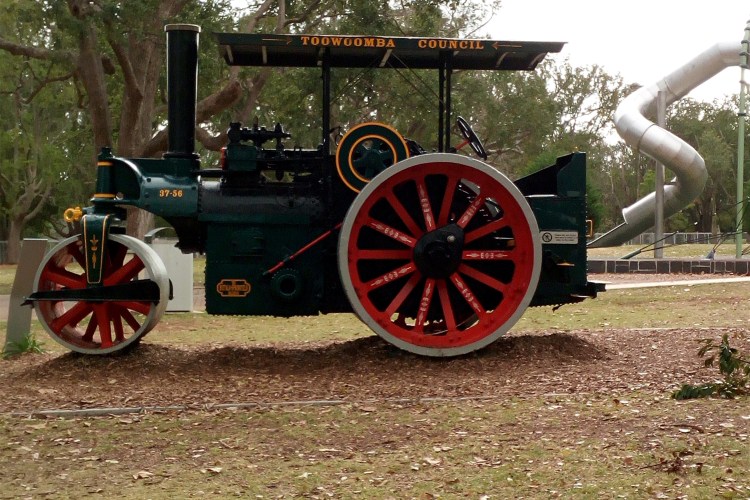
The seminar, the reason for our visit, isn’t until next day so we decide to walk through Queens Park Botanic Gardens, bypassing an old steamroller, to visit Cobb & Co Museum.  Originally a coach museum in honour of Cobb & Co horse-drawn coaches which ran the length and breadth of Queensland in ye olde days, the museum has been rehoused and now contains a myriad of local and culturally significant items.

IMG_20190625_102506
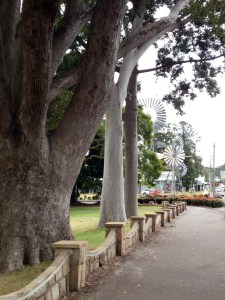
Walking towards Cobb and Co Historical Museum, Toowoomba Queensland, with Queens Park Botanic Gardens on the left.

20190625_102952
Outside the Cobb & Co Museum, Toowoomba, admiring the huge display of Southern Cross windmills.

We are lucky enough to get a personal guided tour—thank you, Sharon—and learn the ins and outs of the exhibits from coaches to goat carts, blacksmith forge to wooden clothing (photos below) and local Indigenous heritage.

The museum interior meanders like an old country trail with something different around every bend.

I discover that even though male passengers paid full fare, in the olden days they were expected to assist with river crossings, fallen logs, opening and closing stock gates, and to ‘lighten the load’ by walking up hills.  What a hardy bunch!  We need survivor TV shows to see that level of guts and determination today.

Images below show Chris Mills-Kelly’s delicately carved wooden bonnet, dress and shoes for the Artisans Challenge 2012.  It is both fascinating and moving; these small articles represent the clothing Indigenous children were made to wear for photo opportunities, adoption interviews and to impress important visitors, in contrast to their natural birthright.

After a delicious museum lunch with a huge lamington for dessert (below) we wind our way back to the hotel through misty rain.

IMG_20190625_120448
Made by the dozen, lamingtons are a traditional Australian dessert. Ingredients are a sponge square dipped in chocolate and rolled in coconut. The lamington pictured is larger than normal and usually not served with the bonus of cream or raspberry coulis.

My brochure reads “Although the famous coaches and tenacious horse teams and drivers are now long gone, Cobb & Co continues to live on in Australian history as the country’s greatest coaching company.”

The Cobb & Co Museum conducts workshops and various events and activities throughout the year.  Our museum guide told us the workshops book out quickly.  The specialist trades of yesteryear are back in fashion, wheelwright, silversmith, leadlighting, etc.  One day I wouldn’t mind trying my hand at kangaroo leather plaiting.  It’s a three-day course to make a belt or a whip, so watch this space.  Yippee aye yay!

IMG_20190624_162045
Originally called Cliffordene, now Harris House, this stately old home in central Toowoomba relied on crowd funding for restoration until it was handed over to National Trust two years ago. Sadly the garden is in need of work.

We walked by this gracious old residence, Harris House, every day.  At leisure, I explored parks, galleries and cafes.  Everybody was ready for a chat.  Of course, I checked out the fashion clothing stores.  Toowoomba is colder in winter than Brisbane so I ended up buying several long sleeved t-shirts which I wore in layers under my jacket.

So nice to have a change of scene and a change of season.

Gretchen Bernet-Ward

Bribie Island Butterfly House Visit

The world’s best loved insects – butterflies.  As soon as I walked into the Bribie Island Butterfly House, a sense of calm enveloped me.  Founder Ray Archer says “Butterflies are beautiful and very peaceful insects” and I can attest to that.

IMG_20190522_111432
Blue Tiger

This tranquil not-for-profit organisation was founded by Ray and Delphine Archer who sold their business Olive Products Australia and moved to beautiful Bribie Island, off the south-east coast of Queensland, so Ray could devote time to his passion for breeding and raising butterflies.

I’d like to take you on a stroll through the butterflies domain.  But first we will learn a few facts from the Nursery before entering their airy, sun-filled, flower-perfumed enclosure.

A LESSON OR TWO ON BUTTERFLIES . . .

  • A female butterfly may lay between 100 to 200 eggs, and within a week or so a caterpillar will hatch.
  • A caterpillar breathes through tiny holes in its sides and will eat its own weight in leaf material every day until the final skin is discarded and the chrysalis hardens.
  • Inside the chrysalis, metamorphosis continues as the butterfly is formed and this can take weeks, months or sometimes years.
  • When the final stages of the caterpillar are complete, the newly formed adult butterfly will emerge, needing a few hours to dry its wings before taking flight.
  • Butterflies don’t have a mouth, they use their proboscis like a straw to drink nectar from flowers.
  • Butterflies have two large compound eyes which offer a wide visual field and extreme colour vision. 
  • The two antennae on a butterfly’s head help with navigation and detecting plant aromas and a prospective mate.

AND THE ONE YOU WILL BE TESTED ON . . .

  • Butterflies are insects in the macrolepidopteran clade Rhopalocera from the order Lepidoptera.

Ready to go inside?  You have to go slow because butterflies don’t dive-bomb you like mosquitoes.  Silent wings flutter by, difficult to photograph, I marvel at their fragility.

Photos left to right—Plant-filled entry; a vine chock-full of happy butterflies; misty air rises from a vaporizer; a Common Crow, why that name?; a Swamp Tiger against the blue sky; newly hatched Monarch; oops, there’s two Orchard Swallowtails mating, best move on  . . .

NEXT I NOTICED QUIRKY THINGS TUCKED AROUND THE BUTTERFLY HOUSE . . .

Hanging pot planters and gumboots stuffed with plants.
A rather clandestine bubbler and a secret butterfly door.
Inspirational quote and landing pad stocked with nutritious butterfly food.

This lady (below) had to make sure she was butterfly-free before leaving.  The butterflies landed on hair and hats.  Interestingly, they stayed well clear of the heavy black plastic doors, perhaps because their focus is on light, bright colours.

Before departing I visited the plant section where butterfly-friendly plants (see chart) were available for purchase.  There is no cafe and no merchandising, and nobody telling visitors The Rules.  The only suggestion is to leave your worries in a bin at the door.  Quite a refreshing visit in more ways than one!

The Bribie Island Butterfly House exists to provide a sense of purpose and lasting friendships among their volunteers, to offer visitors an enjoyable and educational visit in a peaceful environment and to help the disadvantaged via donations to charities.

Grow a patch of dandelions!  Check out Lyn’s wonderful UK Butterflies And Garden blog.  Pledge to stop using manufactured pesticides!  Around my area, the green tree frog and butterfly populations have severely decreased due to the rise in toxic garden herbicides and pesticides.  Think natural, not noxious!

cropped-butterfly-06.jpg

 And, of course, my avatar is a hand-drawn butterfly.

Gretchen Bernet-Ward

Rare Book Auction and Alumni Book Fair PART THREE

On your marks, get set…

The University of Queensland Alumni Book Fair 2019 at St Lucia, Brisbane, had been in full swing for a couple of days before I arrived on the third day.  One more day to go with no sign of running out of keen customers or brilliant book bargains.

The Exhibition Hall is huge!

The whole area was filled with tables covered in books of every shape, size, colour and genre.  I couldn’t name every section without going cross-eyed but there were technical books, reference books, fiction, non-fiction, and fun stuff like mixed media (including old vinyl records) and cool kids books.

I could say romance novels jostled for position with items such as travel guides and political biographies but everything was grouped in an orderly manner, well marked and easy to access.  I was surprised to see numerous large old dictionaries for sale, however, the eclectic poetry section caught my eye.  Ooh, Bruce Dawe.

Total absorption

The whole area was spacious, clean and civilised.  I expected a few gasps or cries of joy when The One, that perfect addition to a series or a special edition was found and held aloft.  But no, basically the customers had their own agendas and moved calmly from book table to book table with carry bags, totally absorbed.  By my estimation, I think you could expect to spend about two hours scanning and sifting through the books, more if you wanted to read pages here and there.

Stacks of boxes

In the first photo (above) in the distance you can see a stack of book boxes, then in the second photo you see the book boxes up close.  That opened box was about head-height and a volunteer told me those boxes had stretched along the walls, and every day they were emptied.  Volunteers in purple t-shirts worked tirelessly the whole time I was there, unpacking, shelving, answering queries, and working at the payment points.

Afternoon tea

In the adjacent cafeteria (delicious homemade strawberry cake) I displayed some of the haul.  You will spy a small red book in the left-hand photo which I have opened in the right-hand photo.  The dust-jacket is missing and the previous owner had not liked naughty boy Pierre and scribbled on him in pencil but I love it.  After a bit of searching, I found out this little Maurice Sendak volume is one of four, a Nutshell Library boxed set published in 1962 by HarperCollins.

Time to go

On display in the foyer of the Exhibition Hall were enlarged travel images and I couldn’t resist taking a photo of the duck and ducklings.  Overall, the synchronicity of UQ Alumni Friends, Members and volunteers created an exceptional event.

Walking back to the bus stop, weighed down with my treasure, the water bubbling through the pipes of this fountain made a relaxing sound so I stopped to admire it.

As I stood there, I thought about the massive amount of books on every subject imaginable which showed how far we have come, and how much of value we have left behind.

Gretchen Bernet-Ward


IMG_20190330_123537

My previous posts:

Part One
https://thoughtsbecomewords.com/2019/04/28/rare-book-auction-and-alumni-book-fair/
Part Two
https://thoughtsbecomewords.com/2019/05/05/rare-book-auction-and-uq-alumni-book-fair-part-two/