Why Writers Write

Is acknowledgement a cherished goal?
Is reimbursement the final accolade?
Or will a writer write regardless?

On a writer’s wishlist, there would have to be the thrill of seeing their name in print.  My name under a bold heading on a hardback cover would show that I’ve made it.  Throw in a display stand, a book launch with signing table, coffee and cupcakes, and I would be in literary heaven.  No doubt hell would follow with the necessary writing of a sequel…

Recently a member of my writers group asked the question “Why do you write?” which seemed innocuous enough but there were vastly different answers—-see below.

My earnest reply went something like “Because I think in words hence the title of my blog.  Most things I experience can become a potential story.”  I am always mapping out first lines, or an introductory paragraph, or setting the scene.  This, however, does not mean I will be traditionally published.  I just keep doing it.

I believe a writer’s inner core is made of words and emotions which must be written down.

If I’m undertaking a complex household chore like chopping carrots, I may not jot down a sudden literary gem, but, no matter, I will find myself composing another while out grocery shopping.

For example “See that bloke over there, he’s uncomfortable and he’s trying to get up the nerve to...”

(1) ask the sales assistant out (2) steal that expensive car polish (3) abandon his trolley at the checkout (4) inquire about a job (5) hide behind the refrigerated cabinet to avoid his mother/parole officer/ex-boss or chatty neighbour.

See, I can’t help it!

Gretchen Bernet-Ward


I Only Need This To Write 01
“All I Need To Write” by Grant Snider – A room with a view, No other work to do, A child-proof lock, A ticking clock, Natural light, A chair that fits just right, New paper and pens, Some animal friends, The right phase of the moon, Ambient tunes, A world of my creation, Or internal motivation – http://www.incidentalcomics.com/


GENUINE RESPONSES FROM 31 WRITERS WHEN ASKED THE QUESTION

“WHY DO YOU WRITE?”

A form of self-expression, the joy of crafting something meaningful.

I write because I can’t imagine my life without writing in it.

I started writing because I wanted to explore my creative side.

Because I can’t dance.

Mostly it’s because I have loads of inspiration and story ideas and I need to write them to get them out of my head!

It sets my soul free and my heart on fire….storytelling is an inextricable part of who I am.

I write because I want to.

I write because ideas, images and words come to me and they seem important to share.

I can’t help it, stories bubble and whirl around in my head all the time.

So I can draw the pictures, to be honest I find writing really tedious – I just want to illustrate.

I do not know why. It just is. And sometimes or often, it isn’t.

Because I like making people laugh and feel other feelings.

I’ve always imagined myself writing one day, but now that I’m finally trying to make it actually happen I’m finding it a lot harder than I expected.

If it’s any help, writing for me is mostly agony.

Starting is great fun…I love cracking the problems.

Because I know how it feels to not create.

Writing is, for me, a personal freedom.

Because I like making things.

Because I think in words, the title of my blog is Thoughts Become Words.

For me it is almost a subconscious act that I’m completely driven to do.

Because I have to, it’s not a want or a need, it’s an in-the-bones thing.

Writing is always there with me, sometimes we’re best of friends, often we’re not.

Cos I have to! I do my best to avoid it, I really do.

Can’t help it.

To put something wonderful out into the world.

It does get easier especially when you get a download in your head.

I think it’s a wonderful form of escapism.

It’s part of me.

At the moment I’d say that writing is a kind of masochism for me.

I love writing and hate it in equal measure.

Because it’s fun and because I find it impossible not to.


Pen Paper Clipart Boy Holding Pencil

EAGER FOR MORE LITERARY INSIGHTS?
Frank McKinley, author and writing coach, also raised the question—-
https://www.frankmckinleyauthor.com/54-writers-love-writing/

Blogging Pleasure and Pain

I’m reading blog posts which say ‘Posting has become a chore’ or ‘It’s hard to post regularly’ or ‘Feeling the pressure to post’—-stop right there!

Take a break, the earth, the sky and the stars will still be there, the world will still turn.

Conversely there are serious blog posts coercing, er, cajoling the writer into a formula.  Or worse, a winning formula to be the best blogger in the blogosphere.

There’s even a blog ideas generator, how unoriginal can you get!

YOUR WORDS, YOUR WORLD, CREATE YOUR WAY!

Does a technique overcome bloggers block?  Better blogging supposedly comes with strategies, structure, schedules, regularity, planning…bah, humbug I say!  There’s probably enough pressure in your world without adding more via your blog.  If anything, blogging should be

a freedom,

a release from the daily grind,

your little patch of calmness,

a zone of personal creativity,

a focus on what you want,

how you want to say it,

and most of all, don’t worry,

let your originality take over.

The old hippie saying ‘go with the flow’ is appropriate when doing morning pages and you may like writing in the morning or writing in the evening.  Don’t push yourself to write to someone else’s rule, someone else’s timetable.  Free-writing is better than no writing.  You can actually write anywhere, anytime, and I don’t mean social media.

IMG_20180611_104547

Self-control up to a point.
Yeah, I know people who have to have a hammer hanging over their heads on a piece of string.  If they stand up, the hammer hits them on the head, they sit back down and do another 500 words of pain.  One famous writer actually tied his body to the chair to write.
Then there’s that annual trial by acronym.
Which does not spell  g-o-o-d  w-o-r-k  to me.

Do you really want a target audience?  Do you personally know anyone who is making a decent living from blogging?  They’re the ones in the pressure cooker.  If you are not commercially selling, I say ‘Do your own thing!’ and that’s exciting.

I speak from experience.  You will find your own rhythm if you truly want to write.  And nobody, least of all me, will help you or hinder you.  You’re on your own, kid.

YOUR WORDS, YOUR WORLD, CREATE YOUR WAY!

‘Work hard to create great content’ if it’s too hard it won’t work.

‘Blog often while controlling quality’we all know quality varies.

‘Find your competition and observe them’nothing worse than a lurker.

‘Write to please your readers’first ask yourself ‘Am I pleased with it?’

‘Improve your blog writing formula’your creativity is not a prescription.

‘What is your target market searching for?’don’t pander to the people.

‘What type of content do readers prefer?’write your content and let them Follow.

‘Start internal link building’in other words Liking but not liking.

‘You need to know the right audience for you’ other bloggers will work that out.

‘Make your blog post titles catchy’why get hung up on headings.

‘Don’t have time to write then reblog or hire a ghost-writer’ha ha ha ha ha.

‘Images are important to highlight your post’keep them relevant, naturally.

Good eye-appeal in formats and layouts’beauty is in the eye of the blogger.

‘Learn basic SEO’because it’s basic but not life threatening.

‘Reply to Comments daily’meaning a proper reply or else deactivate Comments.

‘Bill Gates once said Content Is King’well, hey, that’s a given.

‘Keep wordcount down’there are people who can still read lots of words.

Gretchen Bernet-Ward

YOUR WORDS, YOUR WORLD, CREATE YOUR WAY!

Typewriter 15
A refreshing nap or agony for hours…

Pre-Christmas Reading Done

IMG_20181209_134705

Was going to wait for the holiday season but…four authors, perennial and well-seasoned storytellers who can spin a yarn which kept me absorbed to the final chapter.  Highly recommended!

Gretchen Bernet-Ward

Writers and Their Imaginations

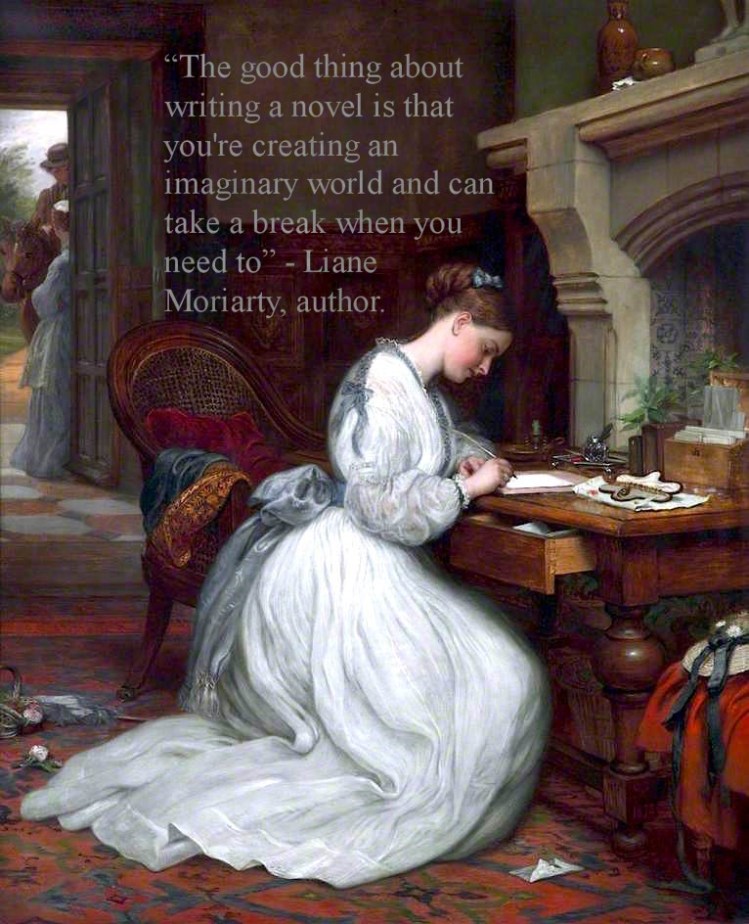
(c) Walker Art Gallery; Supplied by The Public Catalogue Foundation
Walker Art Gallery; The Public Catalogue Foundation

“For a consciousness to be capable of imagining…it needs to be free.”
Jean-Paul Sartre, ‘The Imaginary’.


“In a work of fiction, everything is invented, even the things that are not, because once a true event is brought into the realm of the imaginary, it becomes imaginary.”
Paul Auster, American writer.


“Things need not have happened to be true.  Tales and adventures are the shadow truths that will endure when mere facts are dust and ashes and forgotten.”
― Neil Gaiman, ‘The Sandman #19’.


“Creativity is the brain’s invisible muscle that, when used and exercised routinely, becomes better and stronger.”
Ashley Ormon, writer and poet.


“Living alone, with no one to consult or talk to, one might easily become melodramatic, and imagine things which had no foundation on fact.”
Agatha Christie, ‘Murder Is Easy’.


“It is only through fiction and the dimension of the imaginary that we can learn something real about individual experience.  Any other approach is bound to be general and abstract.”
Nicola Chiaromonte, Italian author.


Gretchen Bernet-Ward

Writing Passion Quotation

Top 10 Cool Quirky Authors with a Difference

When I discover an author with a quirky style, a neo-noir writing streak, I rejoice in their words.  It’s a delight to get away from mundane formats, tired classics and generic phrases so overworked in today’s writing scene.

I can remember when ‘dust motes’ were all the rage, not mere dust, it had to be motes floating in the sunlight.  Goodness knows why, padding perhaps.  I think it’s beneficial for both writer and reader to veer off in another direction occasionally.  Leave those tropes behind!

For bookish readers, I will list some of the absurdist fiction writers who have given me a literary lift and added a bit of sparkle to my jaded memory banks.  These 10 books impressed me with their originality and unique take on adult life, some with remarkable page layouts.

Numbered but NOT rated in order of preference:


Kelly Link Bookcover 04

1    Get In Trouble by Kelly Link

Quote “Richly imagined, intellectually teasing: these are not so much small fictions as windows on to entire worlds. A brilliant, giddying read” said Sarah Waters and I definitely agree.


Zane Lovitt The Midnight Promise

2    The Midnight Promise by Zane Lovitt

John Dorn is a private investigator solving human puzzles.  Complex and beautifully observed characters lead John towards his moment of truth as he strives to keep his promise.


An Uncertain Grace by Krissy Kneen

3    An Uncertain Grace by Krissy Kneen

Speculative erotica showing the best and worst of human nature through Liv as she ages alongside high technology innovation.  The transition to a state beyond age, to transcend the corporeal…


Jasper Fforde The Ayre Affair

4    The Eyre Affair Series by Jasper Fforde

Thursday Next, a fearless woman who traverses a parallel universe inside books.  Created with breathtaking ingenuity, her literary world is more believable than most peregrinations.


A Visit From The Goon Squad

5    A Visit from the Goon Squad by Jennifer Egan

Self-destruction with music in the background.  Intimate lives of several characters who reconnect again and again trying to escape the past, delay the future and defy their fate.


Don't Tell Mum I Work On Oil Rigs

6    Don’t Tell Mum I Work on the Rigs…She Thinks I’m a Piano Player in a Whorehouse by Paul Carter

Gritty, masculine and rather shocking true story of working on oil rigs in the ocean.  Horrible, humorous happenings written down in easily digestible form so that you can’t stop reading.


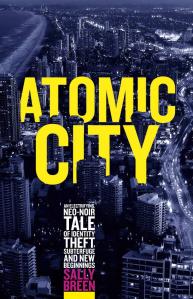
Atomic City by Sally Breen

7    Atomic City by Sally Breen

A stylised contemporary story set on the glittering Gold Coast, Queensland.  Chameleon Jade gets a new identity and with her grifting partner she dares to swindle the Casino swindlers. 


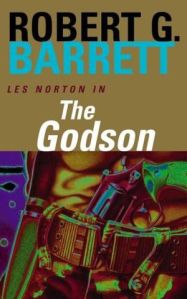
The Godson by Robert G Barrett

8    Les Norton Series by Robert G. Barrett

Les Norton, a red-headed country lad, works in the big city, fights men, wows women, loves the beach, is either an Aussie icon or a yobbo but each adventure guarantees a twist.


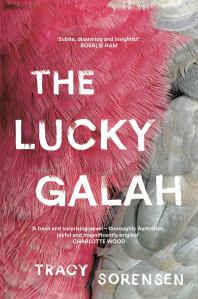
The Lucky Galah Bookcover

9    The Lucky Galah by Tracy Sorensen

Lucky, a galah in a remote coastal town, receives transmissions from a satellite dish beaming messages between Apollo 11 and Houston, Texas, which co-mingle with the community psyche.


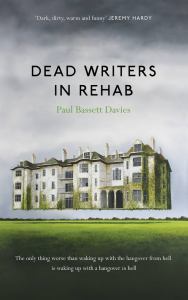
Dead Writers in Rehab by Paul B Davies

10    Dead Writers in Rehab by Paul Bassett Davies

Foster James is supposedly in rehab but he’s probably dead.  A dystopian must-read, loaded with satire, dark humour, sexual tension and famous writers like Coleridge and Hemingway.


I think my Top 10 list will suffice . . . oops, I just have to add ‘A Dirty Job’ by Christopher Moore and ‘Insomniac City: New York, Oliver Sachs and Me’ by Bill Hayes and ‘Lincoln in the Bardo’ by George Saunders and ‘Human Croquet’ by Kate Atkinson and ‘Himself’ by Jess Kidd.  I love any book by Terry Pratchett and DBC Pierre and there are further ingenious authors I could name (and so could you!) but I will stop here.

Gretchen Bernet-Ward

The Year of Living Duckishly

Did you know that?  In the spirit of The Duck Pond, here’s a heads up from author Jen Storer of Girl & Duck.

Exciting times!  Jen’s SCRIBBLES CREATIVE GROUP (writing and illustration) is having a FLASH SALE on 30th September 2018.  Join now!

Yay! That’s 30% off their signature online course – 30% off on the 30th.  Ink it in, okay?

 Then the SCRIBBLES CREATIVE WRITING AWARDS open on 1st October 2018.

Have you got an awesome picture book manuscript or a junior fiction story you think might fly in the competition?  Middle grade?  An exciting storyboard?  There are FOUR categories and I bet you’ve got something creative worth entering!

To read all about the inaugural SCRIBBLES CREATIVE AWARDS plus prizes and how you can win a manuscript assessment and one-hour Skype coaching call with published author Jen Storer of Girl & Duck CLICK HERE.

Clarrie's Pig Day OutJen, creator of Truly Tan series and other children’s books, says “I hope this post flips your lid.  But only in a good way!”

#keepscribbling  #stayinspired
To keep up with all the news (and all the pretty pictures) follow Jen on Instagram.

Visit the website Girl & Duck and ask to join Jen, Zoe, Dulcie, Geek Duck (and me, and the other Duckies from around the world, talking children’s literature and stuff) in The Duck Pond, the most unique and supportive online kidlit group around – then join SCRIBBLES for even more fun!  I will definitely be entering the Awards competition!

All the links you’ll ever need to write and illustrate brilliant kids books:

https://girlandduck.com/
https://girlandduck.com/online-courses/scribbles/
https://girlandduck.com/scribbles-creative-writing-awards/
https://girlandduck.com/online-courses/the-girl-duck-institute/

Gretchen Bernet-Ward

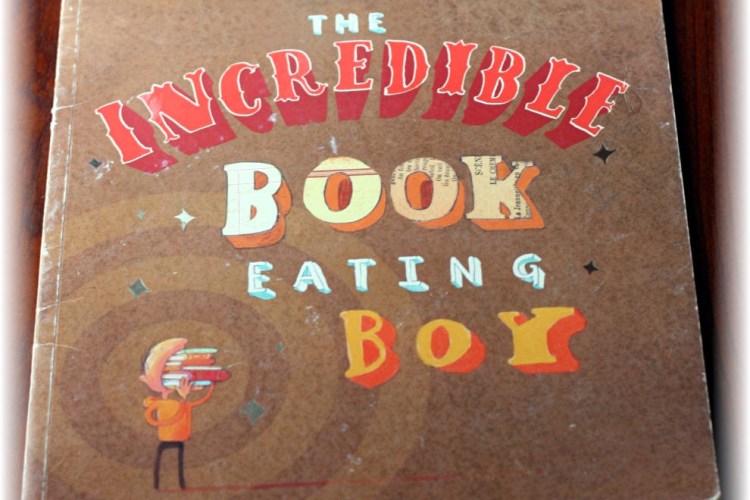
‘The Incredible Book Eating Boy’ by Oliver Jeffers

My picture book review
My bonus picture book lesson
My link to Just Awesome Picture Books


THE REVIEW:

Book Sliced Up on Plate with KnifeHenry is a boy who likes eating books.  He absorbs knowledge as he happily munches his way to becoming the smartest boy on earth.  Everything goes well until there’s an internal rebellion.  Share Henry’s journey as he discovers something better than eating books.

Award-winning Oliver Jeffers’ concept is clever and I found his plot madly appealing.  The illustrations are unique and show creative grunge like an old diary or well-used notebook.  For me, although the story has the potential to be scary, it is handled in an adventurous way with Henry supported by believable characters which adds intertextuality to an otherwise imprudent tale.

I think The Incredible Book Eating Boy is best suited for small group readings or child-and-parent because there’s a lot happening and the visual literacy may need some explanation for younger children.

All in all, a praiseworthy picture book with a good message for 4 – 8 years range to which I give a 5-Star rating.  GBW.


The Incredible Book Eating Boy 01
I discovered this book on Just Awesome Picture Books! Check the website https://justawesomepicturebooks.com/

THE LESSON:

In my opinion, less is more!  Wordy picture books tire the reader and the listener.  The illustrations should highlight the uncluttered wording.  The words push the narrative forward and the child uses their imagination from the visual cues.

It’s a common fallacy that picture books are easy to write.  This is far from the truth because the very minimalist nature of picture books means that every single word has to be perfectly rendered.  Learn more about writing for children from author Jen Storer of Girl & Duck.

As a general guide, here are some basics:

A children’s picture book is 32-pages but 8 pages are used for endpapers and book information.  The story is over 24 pages or 12 spreads of text and illustrations which span two opened pages at a time.  These pages can be half-page spreads, single-page spreads, double-page spreads or vignettes.  A number of vignettes are used in The Incredible Book Eating Boy.

There is symmetrical, complementary and contradictory illustration approaches and I think The Incredible Book Eating Boy is approached in a complementary manner.  Oliver Jeffers plays around with the location of text to good effect.

Board books, pop-ups and novelty may have no words, just illustrations.
Young picture books are aimed at 2 to 5-year-olds with 200 to 400 wordcount.
Trade (general readership) picture books are suitable for 3 to 8-year-old children with 500 to 600 wordcount.
Picture story books for older children 6 to 10-year-olds with 1000 to 3000 words are often non-fiction.
Chapter book fiction over 3500 words are suitable for competent readers, with a sliding age range due to small sketches and quirky touches often added between the pages to enhance the reading experience.
YA (young adult) are the more tailored books suitable for older teenagers.

Something different.  A theatre performance video of the book at The Joan, Penrith’s premier performing arts centre The Incredible Book Eating Boy production.  The cast use song, movement and puppetry to bring Oliver Jeffers’ much loved story to life on stage.

Enjoy eating, er, reading this picture book with that special little someone.

Gretchen Bernet-Ward

An Unreliable Narrator

Reading Bookstack 08

No x-ray goggles needed because Wayne C. Booth discovered “An unreliable narrator is a narrator whose credibility has been seriously compromised” which exposes the motives and integrity of such a person.  Character issues like faulty memory, deception, deliberate omission or a cheating self-deluded spouse are revealed over time.

A variety of genres use the unreliable narrator device but it’s usually attached to drama and crime situations where the protagonist cannot be trusted.  The trick is when the writer withholds information which only certain characters can know, and vice-versa.  The reader is lead along the wrong path, not exactly kept in the dark but not being told the full (or accurate) story by the narrator.

Unreliable Narrator 02

It’s easy to get into the whole first-person debate, and I wonder if the unreliable narrator is over-done.  Sure, you don’t jump in and out of characters heads but the trend is more towards different characters with different chapters so they could all be potentially unreliable narrators.  Like Agatha Christie’s penultimate “Murder on the Orient Express” or a game of Chinese Whispers, would the outcome of the story be entirely different to reader expectation?  Would that be satisfactory?  In my experience, I would have to say “no” it’s rather a cheap way out.

Two examples spring to mind, they are Gillian Flynn’s “Gone Girl” and “The Girl on the Train” by Paula Hawkins which I didn’t enjoy.  My reason for discontent was because Rachel Watson is an unreliable narrator due to heavy drinking (a literary crutch second only to mental illness) and the other characters overlap with half-truths and lies which muddy the waters to the extent of annoyance.  And lo, I thought the resolution lacked power.

Search “unreliable narrator” and you will see many definitions e.g. Study Academy.com and examples like J D Salinger’s “Catcher in the Rye” and titles like “The Wasp Factory” by Iain Banks, “The Life of Pi” by Yann Martel, “The Three” by Sarah Lotz and “Fight Club” by Chuck Palahniuk.  My thoughts are echoed by Sarah Pinborough of The Guardian Top 10 Unreliable Narrators.

Unreliable Narrator 03

It’s similar to reading a book which is raw and experimental and you find out it is the debut novel of an Honours student who wrote it for a Master’s thesis and was lucky enough to have it published.  Kinda good, kinda not.

“The Last Time I Lied” a thriller by Riley Sager is narrated by the main character, Emma Davis, who is an unreliable narrator but readers like her even though they don’t trust her.  The tale is told in the present with flashbacks.  So, is this story hinging the plot on a memory flaw, selective truth or something else?  Naturally enough the answer can only be in the final reveal; that pause for reflection, that moment when the main character ties up loose ends.

In real life we are mostly unreliable narrators, just ask a policeman jotting down eyewitness statements, however that doesn’t always translate to an enthralling novel.

Gretchen Bernet-Ward

Read Books 02