ANZAC Day 2019

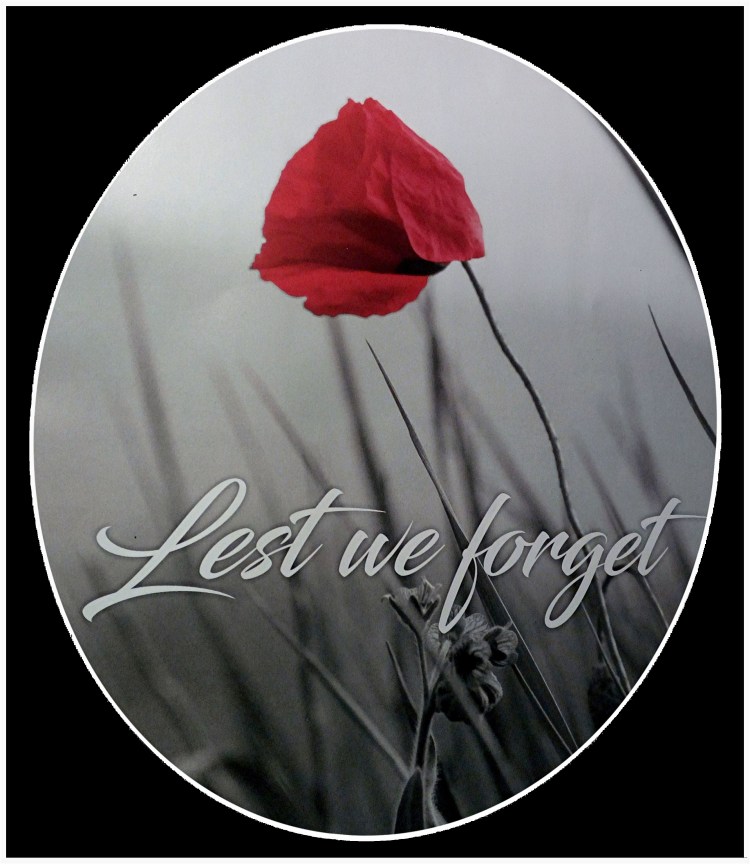
ANZAC Day is commemorated this year on Thursday 25th April 2019.

For ANZAC Day traditions and rituals, click on official Parliament Of Australia.
♥ Gretchen Bernet-Ward
Miscellaneous Collection by Gretchen Bernet-Ward

ANZAC Day is commemorated this year on Thursday 25th April 2019.

For ANZAC Day traditions and rituals, click on official Parliament Of Australia.
♥ Gretchen Bernet-Ward


♥ Gretchen Bernet-Ward
The agony of writing a synopsis! For writers who find it hard to chop their synopsis down to size, this video from Nicola, senior editor of HarperCollins Publishers, steps us through a seamless 500 word synopsis. It will grab that attention your manuscript deserves. And, yes, a synopsis does include plot spoilers.

Read why the first page of a manuscript is so important. Anna Valdinger, HarperCollins commercial fiction publisher knows – she reads a tonne of submissions every year.
Click Importance of Manuscript First Page
HarperCollins is Australia’s oldest publisher and The Banjo Prize is named after Banjo Paterson, Australia’s first bestselling author and poet. His first collection of poems The Man from Snowy River and Other Verses was published in 1895. Who’s up for 2019?
The Banjo Prize is annual and open to all Australian writers of fiction, offering the chance to win a publishing contract with HarperCollins and an advance of AU$15,000. Submit entries via HarperCollins website. Entries opened 25 March 2019 and close 5pm AEST on Friday 24 May 2019. Good luck!
♥ Gretchen Bernet-Ward
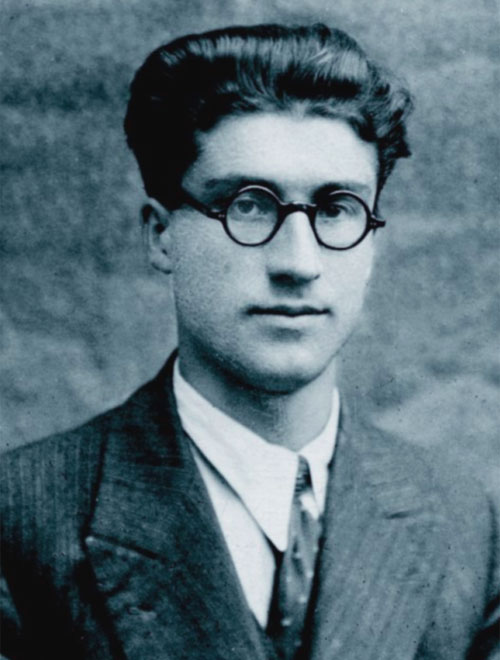
Cesare Pavese was an Italian novelist, poet and translator, and an outspoken literary and political critic.
Not well-known outside Italy, Pavese is numbered highly among the important 20th century authors in his home country.
Born in rural Santo Stefano Belbo, he often returned to the area, enjoying the solitude away from his turbulent career and heartbroken love life. Pavese was not destined to live long, he died just before his 42 birthday.

https://www.poetryfoundation.org/poets/cesare-pavese
https://1streading.wordpress.com/2018/06/24/the-beautiful-summer/
♥ Gretchen Bernet-Ward

Do you occasionally go Goth and take a walk in the cemetery?
It has long been a source of comfort to me when I’m in a depressed mood.
Whether it’s the tranquillity, the otherworldliness or the bees buzzing in the freshly laid flowers, I couldn’t say. The grass, not quite a lawn, is comfortable to walk on.
I can think melancholy thoughts because I am walking able-bodied through the cemetery, reasonably intact for my age, wearing casual clothes and a sunhat, clutching my water bottle and car keys.
In front of me, the carved headstones, sinking marble slabs and rusty iron railings hold a certain olde worlde charm but tell of sadness and loss and neglect.
It has been several months since my last visit and I notice new gravestones. It is a hard heart that is not moved by the chisel-etched lettering. The rows of columbarium niches. Or newly turned earth.
My gloominess shifts, alternating between being surrounded by absolute endings and ongoing beginnings. Generations moving forward, carrying the same blood in their veins––until it too drains away.
I chide myself for forgetting to bring flowers when I see a child’s name on a temporary cross. My memories race to another place, my heart-broken mother lying across the back seat of the car, weeping tears which splash onto the vinyl seating. Inconsolable grief beyond my young understanding but I knew my brother had gone.
We know death hovers over us for many different reasons. We ignore, we forestall, but when the time comes we construct memorials to the deceased and monuments to the power of death.
Like my favourite mausoleum.
It had rained in the night, the scent of pungent eucalyptus leaves all around, and I can see the sides of the stone mausoleum are still damp.
Small patches of brown and green mould creep around the edges of a large, tightly sealed wooden door with solid metal hinges and no handle. Not even a lock. A firm statement of eternity for those entombed within. Unless it’s a cenotaph. Either way, I don’t think anyone will answer my knock.
I see this edifice as an art form of some complexity. Not knowing anything about it, no name or plaque to give an inkling of tenure, I feel neither fear nor intimidation, and am certainly not in awe of its size and prominence on the hillside.
The roof is domed. An off-white marble angel stands in prayer on the top, miraculously intact given the damage to smaller, equally virtuous angel statues set around the outer walls. Lower down, straggly weeds mingle with intricately carved flowers which appear to sprout from the earthworks.
A mosaic frieze, rendered in ceramic tile and glass fragments, encircles all four walls. Some parts twinkle and glisten, most are dull. I can never work out if it depicts a religious theme or the life of a prosperous family. Ah, entwined I think.
The worn stone step beneath the sturdy door looks unsafe and ready to crumble at the slightest shoe pressure. Clearly not the original bluestone foundation slab. The breeze picks up and two withered plants on either side of the gravel pathway shiver and shake like baby rattles.
I glance skyward as the afternoon sun is covered by streaks of sombre cloud. It doesn’t take much imagination to realise this resting place would look forbidding by night. I am unsettled. Those dark hours would be a step too far.
After completing my circuit, I gather myself, my mind, my accoutrements and I am ready to acknowledge the towering obelisk stationed at the gate. Did it sway? I politely thank its ebony magnificence and amble out to the carpark.
So, why is this cemetery connected to me? Will I end up here? Can I conceive of the idea of me ending up here?
I cannot conceive of me ending up here, the thought is unmanageable, bizarre even.
Which is why I like a quiet walk in the cemetery. I breathe the fresh air and rejoice in the fact that today I can.
♥ Gretchen Bernet-Ward

Come back from the mirror it distracts your thoughts
Take off your dark glasses leave them on the floor
Turn off the television and put down the phone and
Burn the magazines you read when you’re alone
Let’s go down to the cemetery
Let’s go down
In the dead out of the city there’s a place I know that
Everyone ignores and people never go
All streets lead there so we’ll find our way
And when we get there you do not have to be afraid
They’re diggin’ our graves but while they work
Let’s laugh at them cause all of it is so absurd
Let’s go dancin’ there above the dead
Oh let’s celebrate that we’re not yet
Let’s go down to the cemetery
Let’s go…
Hold my breath feel that it is warm
But it is temporary baby it will soon be gone
Take a handful of dust and throw it in the air what
You once were you will be again
So when we’re gone let’s two graves together
By the tree that rises tall and brave
And those who are still livin’ out their birth we’ll go
Dancin’ over our small patch of earth
Let’s go down to the cemetery
Let’s go down.
https://www.letssingit.com/kid-sam-lyrics-down-to-the-cemetery-k1f7vtz
Eternal rest grant unto them, O Lord, and let perpetual light shine upon them.
May the souls of the faithful departed, through the mercy of God, rest in peace.
Amen.


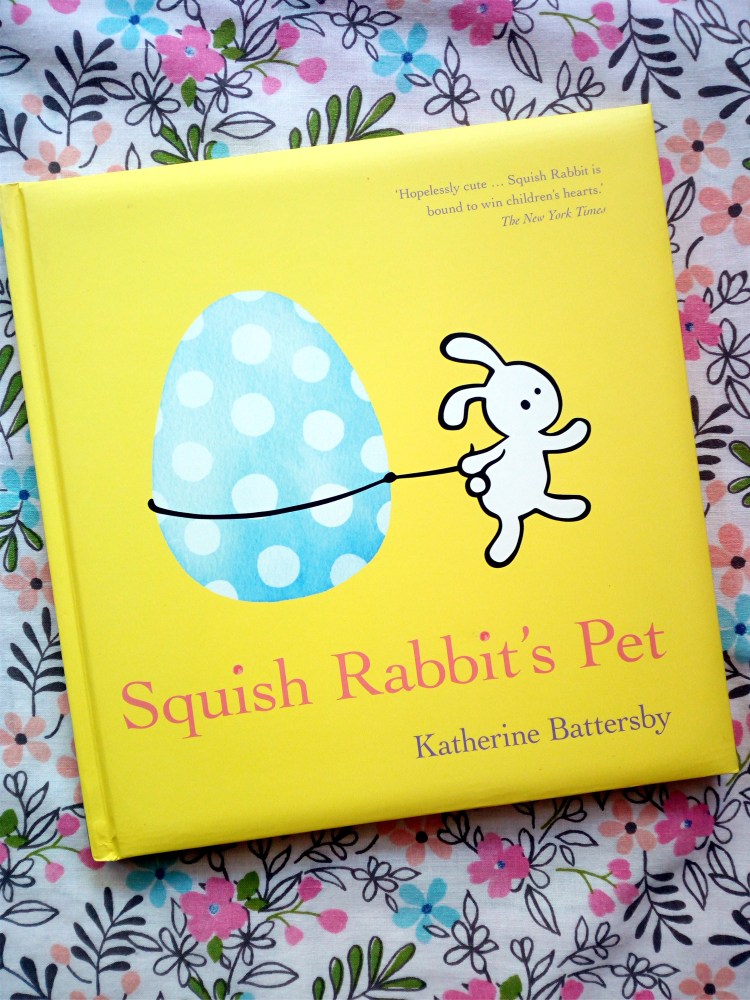
REVIEW: There is an art to creating good children’s books and with her clear illustrations and succinct text, Katherine Battersby has shaped a beautiful story. ‘Squish Rabbit’s Pet’ is a picture book which combines thoughtfulness, fun and friendship with an eggciting ending.
COMMENT: I saw this third Squish Rabbit book at a UQP publishing event prior to its release and had to buy it. I am familiar with Katherine Battersby’s work and have met her professionally when she journeyed from Canada to Queensland. Happy reading! 🐨 🍁
♥ Gretchen Bernet-Ward
Category: Children’s Picture Book, Children’s + Young Adult
Release Date: 3 April 2019
Pages: 32
Publisher: The University Of Queensland Press
ISBN: 978 0 7022 6046 9
Teacher Notes: http://www.uqp.uq.edu.au/store/images/Hi-RES/teachersnotes/1501/4157.pdf
Online: https://www.readings.com.au/products/26387171/squish-rabbits-pet


One post with three acts READING LOOKING THINKING based on the format started by innovative blogger Paula Bardell-Hedley of Book Jotter.
Her invitation to participate offers a change from THINKING to DOING if that suits your purpose but my TBR is backing up and I need to list seven of the books I desperately WANT TO READ—which, er, goes over the Three Things limit. I just want to blab about these great books 😃 GBW.
These two books are side-by-side because they involve food and drink.
has written a humorous memoir of his escape to the country. I did hear him at an author talk but he didn’t divulge the full story. ‘Thirty Thousand Bottles of Wine and a Pig Called Helga’ is sometimes sad, sometimes gruesome but I’m hoping it’s an uplifting story of the joys of living on the land.
http://www.toddalexander.com.au/
set her novel ‘The Chicken Soup Murder’ against the backdrop of real events in 2012, a time in Michael’s life when everything is turned upside down. Cricket, football and the seaside are woven through the story as he strives to make sense of the changes involving death, suspicious neighbours and a school bully.
https://mariadonovan.com/
This is a mixed bag of goodies sharing the same photographic background.
has golden wattle on her bookcover (I’m allergic to pollen) but the inside of ‘The Geography of Friendship’ greatly appeals to me. The blurb reads ‘We can’t ever go back, but some journeys require walking the same path again’. I won this novel at UQP behind-the-scenes publishing event.
http://www.sallypiper.com/
is an Australian icon. I couldn’t begin to details his many and varied works here but his poetry is brilliant. The ‘An Open Book’ flyleaf reads ‘Malouf reminds us of the ways poetry, music and creativity enrich our lives . . . about the dynamics of what escapes and what remains’.
https://en.wikipedia.org/wiki/David_Malouf
lives in my city of Brisbane. He has written two novels about war and its devastation. ‘The War Artist’ . . . ‘tackles the legacy of the Afghanistan war and the crippling psychological damage of PTSD’ and follows the shattered life of Brigadier James Phelan when he returns to Australia.
http://www.simoncleary.com/
writes the most adorable children’s picture books. I have been a fan of Squish Rabbit since his first appearance and assisted Katherine at one of her library book launches. Forty children were expected and 140 turned up! ‘Squish Rabbit’s Pet’ is my favourite so far; profound and endearing.
https://katherinebattersby.com/
I love bold bookcovers which alone tell a tiny bit of the story.
was recommended to me by a librarian with hair dyed pink, orange and green. A reader of quirky books like me (although my hairstyle is more conservative) she advised that this book is a bit different. And, yes, he’s the brother of John.
I have to say I have no idea what is in store for me with ‘An Absolutely Remarkable Thing’ so I will just leave you with the quote ‘In Hank Green’s sweeping, cinematic debut novel, a young woman becomes an overnight celebrity when her YouTube video goes viral . . . but there’s something bigger and stranger going on’.
https://www.hankgreen.com/
Right, that’s it, the seven books I’m going to read—not counting those on my ereader—now comes the wait until I post my book reviews.
Ciao for now!
♥ Gretchen Bernet-Ward
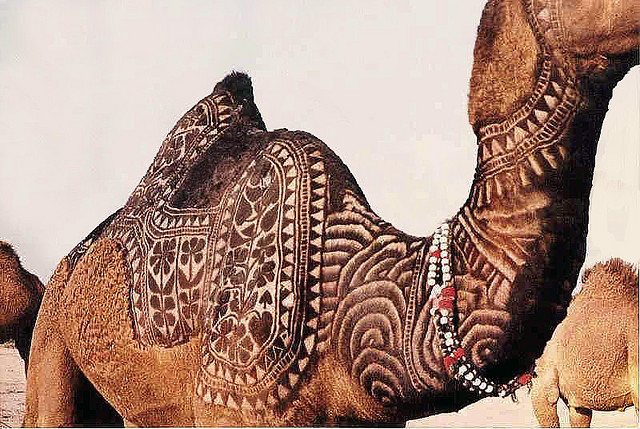
Check out these camel hairstyles! Proud cameleers display their abilities in various competitions from camel racing to designer shearing. Love those patterns! Camels are versatile, thriving in harsh desert conditions similar to the Australian outback. Since visiting a local camel dairy farm, I read the blog of Dr Raziq of Communities Animal Genetic Resources and Food Security to discover more about the biodiversity of original camel country. And beautiful camel hair designs.
♥ Gretchen Bernet-Ward

I found myself drawn to ‘Under Milk Wood’ by Dylan Thomas after accepting an open invitation from Book Jotter to participate in Wales Readathon by reading a book or two from any Welsh writer during March.
Because I wanted to read a physical book, my search had its ups and down until I visited my local library. Ah, libraries, magical places!

I now have in my possession (for a limited time) an updated paperback edition of ‘Under Milk Wood’ published 2000 and based on the definitive 1995 edition. The original was first published in Great Britain in 1954. The cover art above is taken from ‘Abstract With Woman’s Head’ an oil painting by Evan Walters. The paperback has been well-read, with yellowing pages, and the print is small. Initially glancing through it, I thought it had longer introductions and more explanatory notes than the play length!
Synopsis is taken directly from the back of the book, written when people read longer paragraphs:
“In 1951, two years before his death at the age of thirty-nine, Dylan Thomas wrote of his plan to complete a radio play, ‘an impression for voices, an entertainment out of the darkness, of the town I live in, and to write it simply and warmly and comically with lots of movement and varieties of moods, so that, at many levels . . . you come to know the town as an inhabitant of it’.
The work was Under Milk Wood – an orchestration of voices, sights and sounds that conjure up the dreams and waking hours of an imagined Welsh seaside village within the cycle of one day. Thomas’s flawed villagers reveal a world of delight, gossip and regret, of varied and vivid humanity; a world that his classic ‘play for voices’ celebrates as ‘this place of love’.”
And, I might add, a snapshot of history, a way of life changed forever. The VOICE OF A GUIDE-BOOK on page 19 hints at Llareggub being a backwater. In Dylan Thomas’ time the part where Mog Edwards boasts that he will take Myfanwy Price away to his Emporium on the hill ‘where the change hums on wires’ was already a dying era. But Thomas shows us that basic personalities never really change.

Dylan Thomas (1914 – 1953) is a poetry icon, he even has his own day on 14th May. No doubt ‘Under Milk Wood’ has been analysed within an inch of its life, so it will be difficult to choose a path not already well-trodden. For starters, I am not going to tell you Dylan Thomas’ life story – his granddaughter Hannah handles that beautifully.
I will say that Dylan Thomas finished polishing his play for voices ‘Under Milk Wood’ in 1953 and performed it in New York. It went on to become a BBC radio drama, stage plays, films and produced in several other formats in Wales and around the world. Australian pianist and composer Tony Gould‘s 1997 ‘Under Milk Wood’ adaptation (written for narrator and chamber orchestra) was performed by actor John Stanton and the Queensland Philharmonic Orchestra.
Several Australian versions followed, including a one-woman production of the text performed at the Sidetrack Theatre in Sydney, New South Wales. Actress Zoe Norton Lodge performed all 64 characters in the play – and I like to think at least one was based on her father, a proud Welshman.
Got a coffee handy? I may have bitten off more than I can chew with this classic.
Spoken by an omniscient narrator, the opening paragraph of ‘Under Milk Wood’ gave me chills. If you’ve got the time, I’d like you to read it.
[Silence]
FIRST VOICE [Very softly]
‘To begin at the beginning:
It is spring, moonless night in the small town, starless and bible-black, the cobblestreets silent and the hunched, courters-and-rabbits wood limping invisible down to the sloeblack, slow, black crowblack, fishingboat bobbing sea. The houses are blind as moles (though moles see fine tonight in the snouting, velvet dingles) or blind as Captain Cat there in the muffled middle by the pump and the town clock, the shops in mourning, the Welfare Hall in widows’ weeds. And all the people of the lulled and dumbfound town are sleeping now.’
He goes on to describe the people and the animals, the town and household items until we arrive at ‘ . . . the big seas of their dreams. From where you are, you can hear their dreams.’ Then we learn about Captain Cat, the retired blind sea captain.
FIRST DROWNED
Remember me, Captain?
CAPTAIN CAT
You’re Dancing Williams!
FIRST DROWNED
I lost my step in Nantucket.
And just like that, you know you’re in for a rollicking time!
Make no mistake, it contains dark adult concepts. Fear, foibles and funny thoughts are exposed, things which the villagers would prefer hidden from view. At the same time, it doesn’t matter because whatever country or town you live in, I think Dylan Thomas’ characters are universal and show us that love, lust, greed, spite and skullduggery can lurk inside every home. The odd behaviour of Lord Cut-Glass and his clocks, Mr Pugh’s poisonous ideas, Mrs Dai Bread One and Two; the good, bad and temperamental folk are laid bare in the most lyrical of terms but at the same time asking us to accept and forgive.
As for individual characteristics, I consider Nogood Boyo has the right idea. He goes out in a dinghy, ships the oars and drifts in the bay, lying in the hull among the tangled fishing lines. NOGOOD BOYO [Softly, lazily] ‘I don’t know who’s up there (on Llareggub Hill) and I don’t care.’ Page 29. But inquisitive readers do. On page 55 Reverend Eli Jenkins muses about his deceased father Esau who fell sleep in a corn field and had his leg scythed off. Reverend Eli thinks ‘Poor Dad, to die of drink and agriculture.’
Rhymes are chanted and there are various words unknown to me so I appreciated the Textual Notes at the back of the book. The editors, Messrs Walford Davies and Ralph Maud, took exception to BBC copywriters dropping commas, changing spelling or capitalising/italicising words which were not in Thomas’ original manuscript. So ‘take that BBC!’ from pages 81 to 104 they have been painstakingly corrected.
But, I say (holding up my pointer finger like a school teacher), while Mr Thomas was said to be an excellent speller, I think I spy with my little eye, a possible hiccup on page 37 and I quote ‘ . . . the drugged, bedraggled hens at the back door whimper and snivel for the lickerish bog-black tea.’ Could that word be ‘licorice’? No, this man rocks poetic license and knows exactly what he’s doing.
Just for the record, I’m not entering the ‘Under Milk Wood’ book title debate. The name of the fictional fishing village of Llareggub, where the entire dawn-to-dusk scene takes place, appears to be Welsh but if you read it backwards, it says something quite different.
There are several evocative paragraphs I could elaborate on with great relish, however, since I did not study Dylan Thomas at school, this blog post could be in danger of turning into a starstruck student essay. I will close with one of the milder pieces:
‘From Beynon Butchers in Coronation Street, the smell of fried liver sidles out with onions on its breath. And listen! In the dark breakfast-room behind the shop, Mr and Mrs Beynon, waited upon by their treasure, enjoy, between bites, their every-morning hullabaloo, and Mrs Beynon slips the gristly bits under the tasselled tablecloth to her fat cat.’ Page 27.
An excerpt from the final paragraph reads: ‘The thin night darkens. A breeze from the creased water sighs the streets close under Milk waking Wood. The Wood, whose every tree-foot’s cloven in the black glad sight of the hunters of lovers . . . the suddenly wind-shaken wood springs awake for the second dark time this one Spring Day.’ That makes my mind reel – in a good way.


Diolch yn fawr, mwynhewch ddarllen! ♥ Gretchen Bernet-Ward
Twitter #dewithon19
Wales Readathon https://bookjotter.com/category/wales-readathon/
DHQ: Dewithon 2019 https://bookjotter.com/2018/03/26/dhq-dewithon19/
Suggested http://readingwales.org.uk/en/