The Power of Doodling

In between writing and not being published, I attempt to draw, which defaults to my basic doodle setting.  My mind slips out of gear when doodling.  I drew a curlicue doodle which ended up with a small snail at the end of it.  Significant?

Is there a better chance of being published if you illustrate your own bookcover?  Nope.  Even with children’s picture books, there’s no guarantee it will be snatched off the slush pile because of the synchronicity of your fresh-faced pictures and curlicued words.  In fact, in Australia the editors prefer to nominate an artist so forget that plan.  Still, I can’t stop myself doodling.  What use is it?  (A) tension release, (B) learning aid, (C) mind clearer, (D) mind-wanderer, or who knows what.  Ah ha, light bulb moment!  I will research the experts and see what they have to say on the subject of Doodling 101.

Prepare to be bored, please doodle among yourselves – preferably with a real pen or pencil.

First up are the good news listicles and powerful headings:
  • 4 Benefits of Doodling | Examined Existence
  • 5 Big Benefits Of Being A Doodler | HuffPost – Huffington Post
  • 7 Ways Doodling & Colouring Benefit Your Brain | Care2 Healthy Living
  • 7 Benefits of Doodling and How to Get Started – Daring to Live Fully
  • Doodling Your Way to a More Mindful Life | Psychology Today
  • How Doodling Benefits Your Brain – Kendal at Home
  • How Doodling Makes You Smarter | Reader’s Digest
  • Study: Doodling Helps You Pay Attention – TIME
  • Science: Doodling Has Real Benefits For The Brain – Fast Co. Design
  • The Power of the Doodle: Improve Your Focus and Memory – WSJ
  • The Cognitive Benefits of Doodling – The Atlantic
  • The “Thinking” Benefits of Doodling – Harvard Health Blog …..

….. had enough?

You can’t get out of it that easily!

Here’s what JournalWeek had to say in a non-scientific wayDoodling comes from the word doodle – a habit of unfocused or unconscious drawing a person makes while his attention is actually occupied by something else.  Doodles are generally simple and sometimes nonsense drawing that may have definite representational meaning.

Today, doodling is fondly considered a ‘national’ pastime mainly because it is done by a lot of people in different settings, but mostly in classrooms and offices.  <Using a pen, or more recently using laptop, tablet or smart phone apps>  Some examples of doodling are found in school notebooks, mostly in the margins, caused by a student who is either lacking interest in the class or day dreaming. Another example is when someone is having a long telephone conversation while a pen and paper are within range.

What’s interesting about it?  For many people, it’s just a typical way of occupying themselves. Not a lot of them realise that doing it does actually provide some benefits.  Let’s find out how…

Memory Link:  Admit it – you doodle perhaps in most instances where there is a chance to. Most of us could not deny it because we have developed the habit as students.  What you remember and what sticks in your mind are usually the things you doodle. For instance, it can be trees you always see outside your bedroom window, logo of your favourite team, or the name of your favourite band, singer or celebrity.

The products of doodling are the images and words coming out of your subconscious mind. Although they seem to be of no significance, they can actually be helping you in learning and grasping knowledge.

One health benefit of the habit:  According to the Applied Cognitive Psychology study, doodling allows us to be able to effectively recall information hidden within our subconscious. The same research found out that the people subjected to the experiment that filled in shapes while listening to the phone had a better memory retention or recall percentage. The different is about thirty percent compared to those people who did not doodle.

Being Productive:  Although not yet proven, the hypothesis is that the habit itself is effective in minimising and combating daydreaming and absentmindedness.  But the power of doodling is not limited within the bounds of memory and recall alone. There is a widespread belief that it, in fact, corresponds to empowering one’s intellectual prowess. As it appears, someone who’s doodling seems to be distracted or plainly unfocused.

However, this is an activity that gives the brain an awkward but beneficial exercise of engagement and processing of complicated thoughts and ideas. Likewise, those who rely on their talents of creativity also use doodling to unlock that artistry and creativity in them.

Not convinced?  Read about some of the most notable people in history who themselves admit that the habit has in fact helped them focus, recall, and literally make use of their brains. The list includes the likes of Leonardo DaVinci, Sylvia Plath, Presidents Bill Clinton, Ronald Reagan and Thomas Jefferson, as well as poet John Keats, mathematician Stanislaw Ulaw, Franz Kafka and Mark Twain.

Therefore, if you have issues about paying attention and focus, doodling will help you deal with those issues. There’s really nothing wrong or you won’t lose anything if you start to developing the habit.  <And maybe gain a small work of art>

Most of this blog post was brought to you by JournalWeek!
“Our aim and mission is to provide our readers articles on interesting facts”
http://journalweek.com/interesting-facts-about-the-power-of-doodling/

I think the saddest doodle belongs to Jorge Luis Borges, writer, essayist and poet, who drew a self-portrait after he had gone blind.

Jorge Luis Borges Self Portrait When Blind
Jorge Luis Borges self portrait when blind

“I have always imagined that Paradise will be a kind of library”
– Jorge Luis Borges (1899-1986)

Gretchen Bernet-Ward

IMG_20180331_162029

XXI Commonwealth Games – Gold Coast

Find out interesting things like events, history, medal tally, for the Commonwealth Games . . .

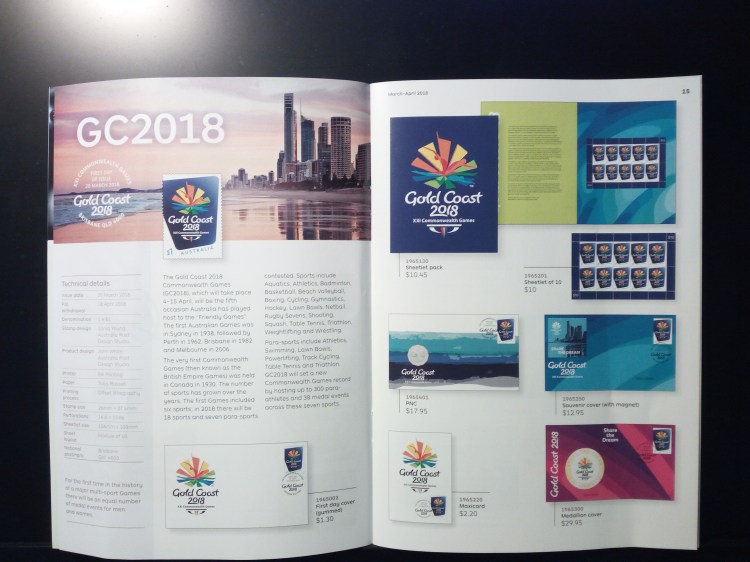
First, browsing through my Australian Stamp Bulletin, I saw that commemorative issue postage stamps will coincide with the start of XXI Commonwealth Games on the Gold Coast, Queensland, Australia.  The Games sporting competitions commence 4 April 2018 and continue over 12 days until closing ceremony 15 April 2018.

I am more into literature than sporting pursuits but it’s going to be quite an event!  It appears that the blue surfing koala mascot Borobi (which means ‘koala’ in the indigenous language) is on postcards but not included on the stamps so I’ve added him further down the page.

Commonwealth Games Stamp Issue 2018 01 (1)

Game on!  This is the second time Queensland has hosted The Games.  The 1982 Commonwealth Games were held in Brisbane City from 30 September to 9 October 1982 and I actually attended.  Below, I have written a little bit of Games history to bore you with facts and figures.

A brief history of the Commonwealth Games

In 1891, John Astley Cooper first wrote about a sporting competition that would bring together members of the British Empire, but it wasn’t until 1911, at the coronation of King George V, that an ‘Inter-Empire Championships’ was held.  This event included teams from Australasia, Canada, South Africa and the United Kingdom.

Commonwealth Games Gold Coast 2018 Logo

The first official Commonwealth Games (called the British Empire Games) were held in 1930 in Hamilton, Canada.  Four hundred athletes from 11 countries competed in 59 events across 6 Core sports.  The Core sports have increased: athletics, boxing, lawn bowls, rowing, hockey, badminton, squash, weightlifting, rugby, aquatics (swimming and diving) and wrestling.  In the past women only competed in swimming events.  That’s all changed and now there’s something for everyone.  Gold Coast 21st Commonwealth Games will include 18 events.

In addition to the 10 Core sports there will be:

  • Basketball
  • Beach volleyball
  • Cycling (road, mountain bike and track)
  • Gymnastics (rhythmic and artistic)
  • Para power lifting
  • Shooting
  • Table tennis
  • Triathlon

Commonwealth Games Stats Graphics Medals

Since 1930, the Games have taken place every four years, except in 1942 and 1946 (due to World War II), and had a few name changes.  Although there are 53 members of the Commonwealth of Nations, 71 teams participate in the Commonwealth Games, as a number of dependent territories compete under their own flags.  The four Home Nations of the United Kingdom—England, Scotland, Wales, and Northern Ireland—also send separate teams.

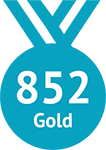
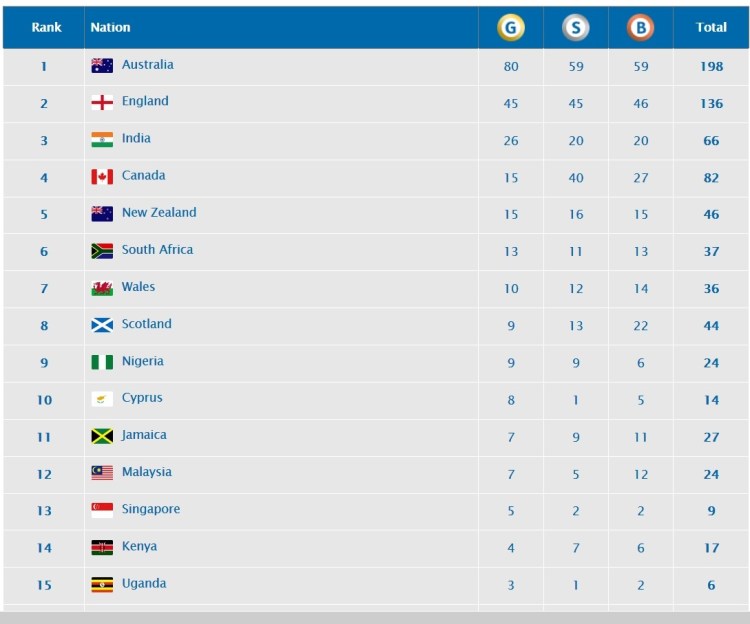
Australia is the overall champion of the Commonwealth, having won 2218 medals in total, 852 in Gold.  England is second with 2008 and Canada is third with 1473.
(See below for new figures 2018)

Commonwealth Games Australia Map

The 2018 host city – Gold Coast

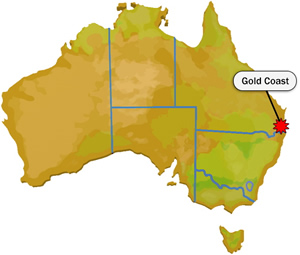
The host city for the 2018 Commonwealth Games is Gold Coast, Queensland, located just north of the Queensland/New South Wales border, and about 66 kilometres south of Brisbane.  The Gold Coast is a coastal city on the Pacific Ocean with a population of around 640,000 people.  It is the sixth-largest city in Australia (the largest non-capital city) and the second largest in Queensland (after Brisbane).

The Gold Coast is one of Australia’s major tourist destinations with its sunny sub-tropical climate, beautiful surfing beaches, theme parks and rainforest hinterland.  More than 10 million people visit the Gold Coast every year, including around one million international visitors.  It is also a film production hub with movies such as Pirates of the Caribbean: Dead Men Tell No Tales and Thor: Ragnarok being filmed there.

The official XXI Commonwealth Games stamps have yet to be issued but, in the meantime, collectors may be interested in visiting superb WordPress stamp blogger The Snail Mail:
https://thesnailmail.wordpress.com/2018/03/02/my-favorite-is-the-fruity-stamp-from-malaysia-received-from-china-england-india-indonesia-malaysia-taiwan-the-u-s/

Here’s Borobi and souvenir merchandise https://shop.gc2018.com/collections/mascot-1

IMG_20180409_165348
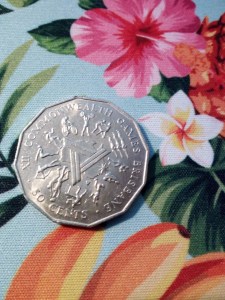
Original 50cent coin from XII Commonwealth Games 1982 Brisbane Australia.
Commonwealth Games Stats 2018
XXI Commonwealth Games Medal Tally 2018

Gretchen Bernet-Ward

Childhood Status Symbol

Umbrella The SeeThrough Raincoat and Brolly (2)

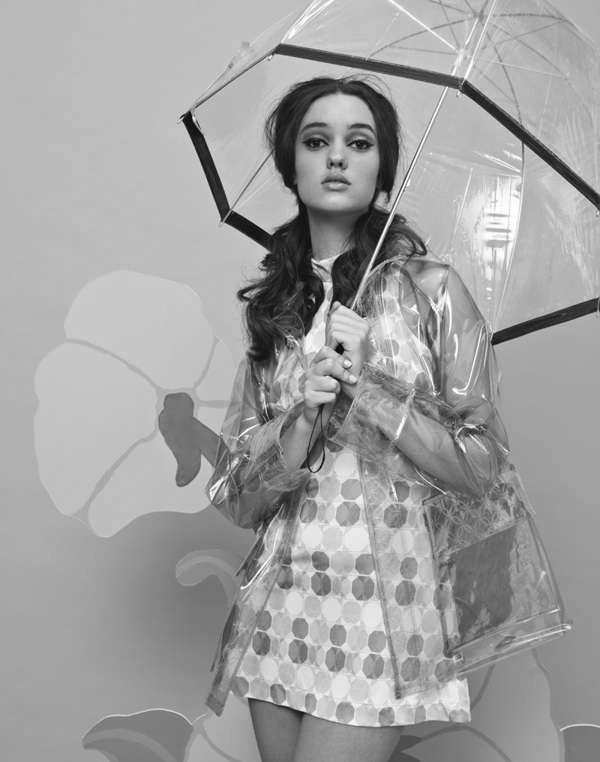
When we grow up we don’t really shed childhood.  It is tucked away inside us, nice and quiet, suppressed by what we perceive as Adult Behaviour.  Until something triggers that child-proof gate.  Our sillies jump out!  Irrepressible, childlike joy will spring into our hearts, gleam in our eyes and beam from our faces.  Oldies will smile benignly at us but a child will shriek with delight because they understand.  Anything can trigger your past.  A puppy, red shoes, a TV show, theatre tickets, sweets, that winning point, a favourite song, splashing in a puddle with a clear plastic umbrella, er, wait, what was that?  “A clear plastic umbrella?” said Adult Voice.  Yes, when I was young, the most coveted accessory for primary school students was a clear plastic umbrella.  The plastic was plain, you could see the metal spokes through it and the handle was white.It was enthralling to watch raindrops falling on a see-through umbrella held over your friend’s head, water trickling off and dripping onto the ground while she stayed dry.  If you were really fancy (or your father had enough money for kids fripperies) you could buy them with ladybirds or slices of fruit and suchlike imprinted on them.  If you were really rich (and more of a teenager) you teamed it with a short skirt, beehive hairdo and white vinyl go-go boots with lipstick to match.  Trés chic.I haven’t researched this but I’m pretty sure one or two models would have slinked down the catwalk twisting a clear plastic umbrella shaped like a mushroom.  Or, shock horror, wearing a clear plastic raincoat!  “Personally I think you would sweat horribly inside one of those,” said Adult Voice. Anyhow, here comes the sad part.  I was not one of the groovy girls, I never owned a clear plastic umbrella.Somehow I managed to survive the ignominy of having a pale blue nylon umbrella.  Its saving grace was a real bamboo handle and it lasted for years.  Once I left it on the bus and my parents tracked it down in the city council’s lost property office.  Hard to believe now, but there it was in all its pale blue opaque glory.  I have since owned a stylish British brolly, frilly French parapluie, Winnie-the-Pooh bear parasol and various brands in various colours mainly used as sunshades. Until last week, drum roll please, when I came across a clear plastic umbrella hanging on a sale rack.  It was the standard shape, with the usual opening and closing action and it was only a couple of dollars.  Sold!  I actually whooped with excitement.  Finally, a dream come true.  “Pity it’s a clear sunny day,” said Adult Voice.  I brushed this aside.  Once I was out of crowd eye-range, I shook it out.  So clear, so transparent, so useless in the glare of a hot day.  “Be quiet,” I snapped at Adult Voice.  I pushed the umbrella open and twirled it wildly above my head.  I’d made it.  I had joined the Groovy Girls.  My childish delight brimmed over!  And delight brings recollections.My very own CPU has flourished several times in light rain, occasionally the plastic will stick together, but that doesn’t stop me opening it just to marvel at the concept.  Truly, an umbrella worth waiting for.  Now I’m thinking about those white vinyl go-go boots...

 Gretchen Bernet-Ward

More umbrellas https://thoughtsbecomewords.com/2018/04/21/hrh-queen-elizabeth-ii-birthday/

Australian Editors and Publishers Set Bar Too High

I have come to the conclusion that the Australian publishing industry and its associated editors and reviewers have set the bar way too high for Australian writers.  Emerging authors have a pretty slim chance of being published with huge odds against hitting the big time.

Strong-willed literature-controlling gurus rule our domestic market like school teachers from the 1950s.  They seek perfection, the best book of the year, often cerebral stuff ignored by half the population, and they disregard perfectly serviceable down-to-earth Aussie authors.  Also, when did parochialism creep in, e.g. Melbourne is the hub of all things literary?  Let’s focus on inclusive Australian content.  Oh, and stop changing words to suit international readers, they’re cool, they can work it out.

Publishing houses receive thousands of unsolicited manuscripts each year and the selection process is fierce.  Only a handful of authors are chosen, gather a following, write more books and hopefully make money.  The untried crime writer, for example, may not appeal to the literati judges, but, hey, there’s always that coterie of readers who will love them.  The way it is now, their work may never see the light of day.  Dive deep into that slush pile!

Book Publishing 04
Sure, there’s always the internet, WordPress, e-books, self-publishing, writing competitions (see below) and a gazillion non-traditional ways to be seen but nirvana is a publishing deal with a real-deal publishing house.


“Relax,” I say to publishers from my seat of ignorance.  “The shock of ebooks has faded, so forget micro-niche and churn out those books, get those names in print.”  What?  Too much of a risk, not financially viable?  Yeah, I guess that’s right.  Nobody wants risk in business.  I say “Lighten up, people, offer a broader spectrum of books to the general public”.  Stop book snobbery because, meanwhile, mediocre books with typos are flooding in from overseas and I’m getting a bit sick of it.

Did I hear our aspiring authors cannot compete with the overseas calibre?  Our readers are not savvy, interested or sincere enough to try a reasonably good newbie?  Come off it!  Peel back those layers.  An Australian author or reader is as good as the next person but needs the exposure, the push, the shove, the necessary connections and circumstances to make it work.

Chips on shoulders, the need to prove we Australians are well-read, has past. Forget the Cultural Cringe, dismiss ‘benchmark’ literary awards and too perfect prose and embrace the mass production of typically Australian-written and illustrated books and be proud of them.

Gretchen Bernet-Ward

FURTHER READING:  https://journals.uic.edu/ojs/index.php/fm/article/view/3353/3030  with quote taken from “Non-Traditional Book Publishing” by Jana Bradley, Bruce Fulton,  Marlene Helm, Katherine A Pittner in “First Monday” Journal and, although somewhat passé, it shows foresight.  EVEN FURTHER READING:  https://www.theliftedbrow.com/liftedbrow/2017/11/22/keep-your-eyes-on-the-prize-unpublished-manuscript-competitions-and-you  The Lifted Brow is a not-for-profit literary publishing organisation based in Melbourne, Australia, and Martin Shaw’s article explains an awful lot about the hidden terms and conditions of competition entry.

{NB. Gretchen has reviewed books, worked in the library industry and reads extensively.  As an aspiring writer, she may have shot herself in the foot}

Silent Reading and Socio-Cultural Development

Reading Readers 04

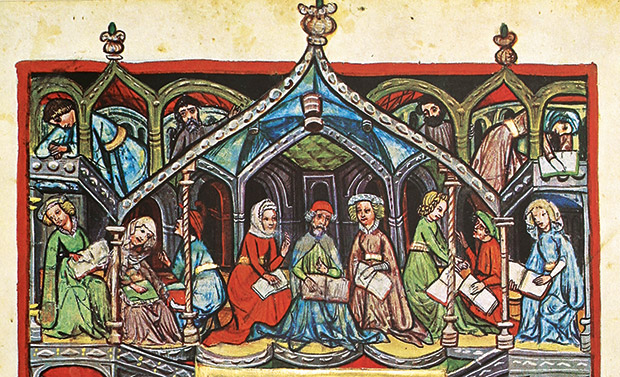
Among scholars, says Thu-Huong Ha, there is a surprisingly fierce debate around when European society transitioned from mostly reading aloud to mostly reading silently.  Thu’s latest article for Quartzy shines a light on the evolution of reading silently––

Finding Space
“The beginning of silent reading changed Westerners’ interior life”
By Thu-Huong Ha
Tuesday 19 November 2017

People think of reading as the introvert’s hobby: A quiet activity for a person who likes quiet, save for the voices in their head.  But in the 5,000 or so years humans have been writing, reading as we conceive it, an asocial solo activity with a book, is a relatively new form of leisure.

For centuries, Europeans who could read did so aloud.  The ancient Greeks read their texts aloud.  So did the monks of Europe’s dark ages.  But by the 17th century, reading society in Europe had changed drastically.  Text technologies, like moveable type, and the rise of vernacular writing helped usher in the practice we cherish today: taking in words without saying them aloud, letting them build a world in our heads.

Among scholars, there is a surprisingly fierce debate around when European society transitioned from mostly reading aloud to mostly reading silently—some even say the ancients read silently just as much as they read aloud—but there is one scene in literature they agree is crucial.  In St. Augustine’s Confessions, the titular professor describes the reading habits of Ambrose, the bishop of Milan:

“But when Ambrose used to read, his eyes were drawn through the pages, while his heart searched for its meaning; however, his voice and tongue were quiet. Often when we were present—for anyone could approach him and it was not his habit that visitors be announced to him—we saw him reading in this fashion, silently and never otherwise.”

The fact that this was so remarkable to Augustine, some scholars argue, is because in the 400s, silent reading wasn’t really a thing.

Other researchers say that this passage is meant more to point out Ambrose’s rudeness.  “It’s really that Ambrose would go on reading silently while he was there, like someone going on texting while you’re trying to talk to them,” says D. Vance Smith, a medievalist in the Princeton English department.  “[Augustine is] surprised by his rudeness at not reading out loud to share with him.”

Reading Readers 05

“The default assumption in the classic period, if you were reading around other people, you’d read aloud and share it,” says Smith. “For us, the default is we’ll read silently and keep it to ourselves.”

If silent reading was in fact rare or rude in ancient times, then at some point the expectation of readers in society shifted.  As late as the 1700s, historian Robert Darnton writes, “For the common people in early modern Europe, reading was a social activity.  It took place in workshops, barns, and taverns.  It was almost always oral but not necessarily edifying.”

But by the time Marcel Proust was writing in the late 1800s, his narrator hoping for time to read and think alone in his bed, reading privately had become more of a norm for wealthy, educated people who could afford books and idle bedroom rumination.

This came with the spreading of literacy and diverse kinds of reading material.  Writes Darnton, records from until as late as 1750 showed that people who could read had only a few books: perhaps the Bible, an almanac, and some devotionals, that they read and re-read. But by 1800, he writes, people were reading more voraciously—newspapers and periodicals—and by the late century they had branched out into children’s literature and novels.

Reading Guy 06

As reading shifted away from the social, some researchers believe this helped create what we now call an interior life.

Writes Alberto Manguel in his 1996 book, A History of Reading:

“But with silent reading the reader was at last able to establish an unrestricted relationship with the book and the words.  The words no longer needed to occupy the time required to pronounce them.  They could exist in interior space, rushing on or barely begun, fully deciphered or only half-said, while the reader’s thoughts inspected them at leisure, drawing new notions from them, allowing comparisons from memory or from other books left open for simultaneous perusal.  And the text itself, protected from outsiders by its covers, became the reader’s own possession, the reader’s intimate knowledge, whether in the busy scriptorium, the market-place or the home.”

“Psychologically, silent reading emboldened the reader because it placed the source of his curiosity completely under personal control,” librarian Paul Saenger writes in his 1997 book, Space between Words.  “In the still largely oral world of the ninth century, if one’s intellectual speculations were heretical, they were subject to peer correction and control at every moment, from their formulation and publication to their aural reception by the reader.”  As Saenger writes, asocial reading helped facilitate intellectual rigor, introspection, criticism of the government and religion, even irony and cynicism that would have been awkward to read aloud.

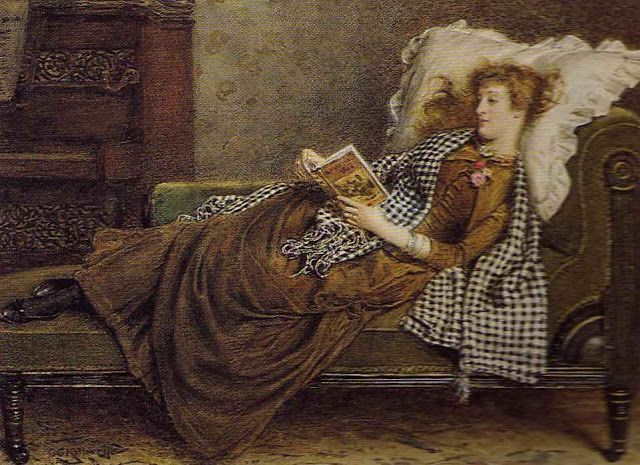
This strange new trend of reading to oneself naturally had its detractors.  Sceptics thought silent reading attracted day-dreamers and the “sin of idleness,” as Manguel writes.  And worse: it let people learn and reflect without religious guidance or censure.  Silent reading by the late 19th century was so popular that people worried that women in particular, reading alone in bed, were prone to sexy, dangerous thoughts.

Reading Girl 57

There isn’t much consensus between historians on why people would have started reading silently.  Saenger hypothesizes that a shift in the way words were laid out a page facilitated the change.  Latin words once ran all together, makingithardtoparsethem. Saenger argues that Irish monks, translating Latin in the seventh century, added spaces between words to help them understand the language better.  This key design change, he argues, facilitated the rise in silent reading.

M. B. Parkes, in his 1992 book “Pause and Effect: Punctuation in the West” argues something similar.  He writes that a “grammar of legibility”—the visual changes made to texts, like punctuation and word spaces—changed the way we read.  This early book technology was premised on the idea that the scribes, the people writing, didn’t know who their readers would be, or how fluent they might be in reading Latin, and so had to find a standardised way of telling them how to read: pause here; these are two separate words; this is a long “a.”

This scholarship applies for the most part to the Latin-based writing and reading of Europe.  In other major reading cultures of the world like Chinese, whose script doesn’t have spaces between words, and whose literature depends heavily on prosody, silent reading may have developed differently.

Mainstream historical accounts would have us think that the end of oral reading in the Middle Ages was part of the Renaissance, a new European preoccupation with the individual.  But it’s possible humans’ desire for privacy, the carving out of a little pocket in which to escape by way of a book, was there all along.  We just needed a little help getting there.

Written by Thu-Huong Ha for Quartzy newsletter, a weekly dispatch about living well in the global economy.  Original webpage The Beginning of Silent Reading was also the Beginning of an Interior Life.

Gretchen Bernet-Ward

Indigenous Astronomy

Indigenous Astronomy Moon Halo Karlie Noon 02

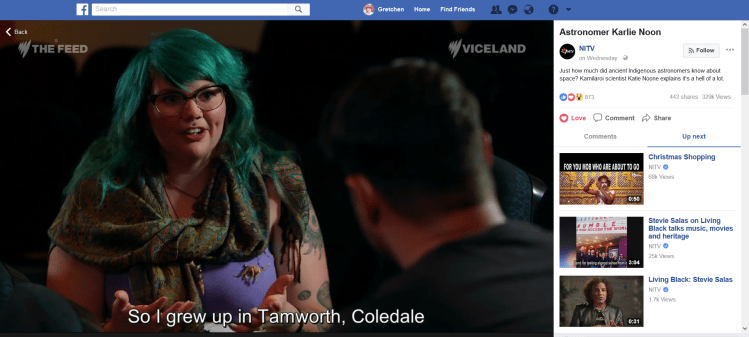
When I discovered this link to Karlie Noon and her life as an Indigenous scientist, I also learned about predicting the weather from a moon halo.

Karlie Noon, interviewed by Marc Fennell on NITV Australia/SBS The Feed, was the first Indigenous woman in NSW to graduate with a double degree in mathematics and physics… but Indigenous Australians have been practicing science long before universities were teaching it.  There is evidence in the form of rock art depicting Indigenous knowledge before Galileo, Newton or Kepler made their discoveries.

This video delves into Karlie’s early life, visits the instrumentation building for space exploration and explains the reading of a moon halo.


Gretchen Bernet-Ward

Portraits of Readers Part Two

Initially I was gathering images for a compilation to promote reading but, instead, my gallery became a montage of book-reading men and boys over the last two centuries, photographed and painted, famous or otherwise.  With every viewing, the images reshuffle.  A montage of book-reading women and girls can be found under Part One.

Reading is rightness!

Gretchen Bernet-Ward

Portraits of Readers Part One

Initially I was gathering images for a compilation to promote reading but, instead, my gallery became a montage of book-reading women and girls over the last two centuries, photographed, painted, and one carved in marble.  With every viewing, the images reshuffle.  A montage of book-reading men and boys can be found under Part Two.

Reading is rightness!

Gretchen Bernet-Ward

Save the Koala

Koala Foundation Logo 05

Imagine if all the food outlets in your city were destroyed in one day.

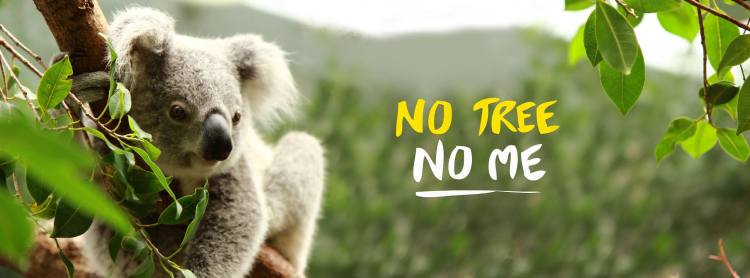
Imagine if you’re a Koala and all your food trees were destroyed in one day.

It’s unlikely to happen to you, but it’s a frightening fact of life for our Koala population.

A tree is food, shelter and safety for a Koala.

Now imagine if all that was taken away from YOU.

“No Tree No Me”

Koala Foundation Logo 04
https://www.savethekoala.com/shop

Violet Koala

“Save The Koala Month” September each year!
Website: Australian Koala Foundation Save the Koala
Follow: Facebook Australian Koala Foundation

Koala Crying in Gumtree 02

Also check website Lone Pine Koala Sanctuary, Brisbane
“World’s First and Largest Koala Sanctuary”

I visited Brisbane Koala Science Institute at Lone Pine Koala Sanctuary.
https://thoughtsbecomewords.com/2018/09/30/my-visit-to-koala-science-institute/

Gretchen Bernet-WardKoala Foundation Logo 06

Bullying

Bullying 02
Behaviour

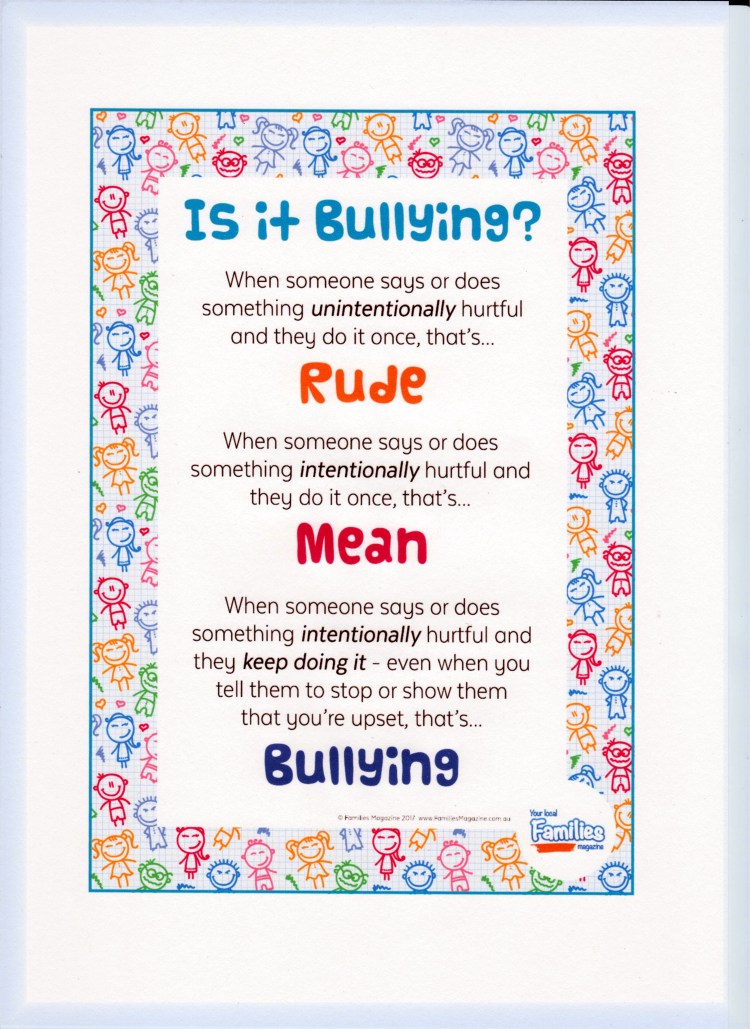
To quote Families Magazine “This poster will help your kids to differentiate and identify the difference between being RUDE, being MEAN and BULLYING.”

The self-explanatory poster is one of several free downloads on the website of Families Magazine, an A4 glossy magazine printed every two months and distributed in public libraries and places where families are in Brisbane, Ipswich, Toowoomba, Sunshine Coast and Gold Coast, Australia.

Families Magazine says “Interactions with others can be confusing.  Sometimes what is considered bullying, may in fact be something else?  Bullying is a repetitive behaviour that is designed to intentionally hurt or belittle another person.”

All three behaviours are upsetting to a child, but bullying is the most destructive.

Gretchen Bernet-Ward